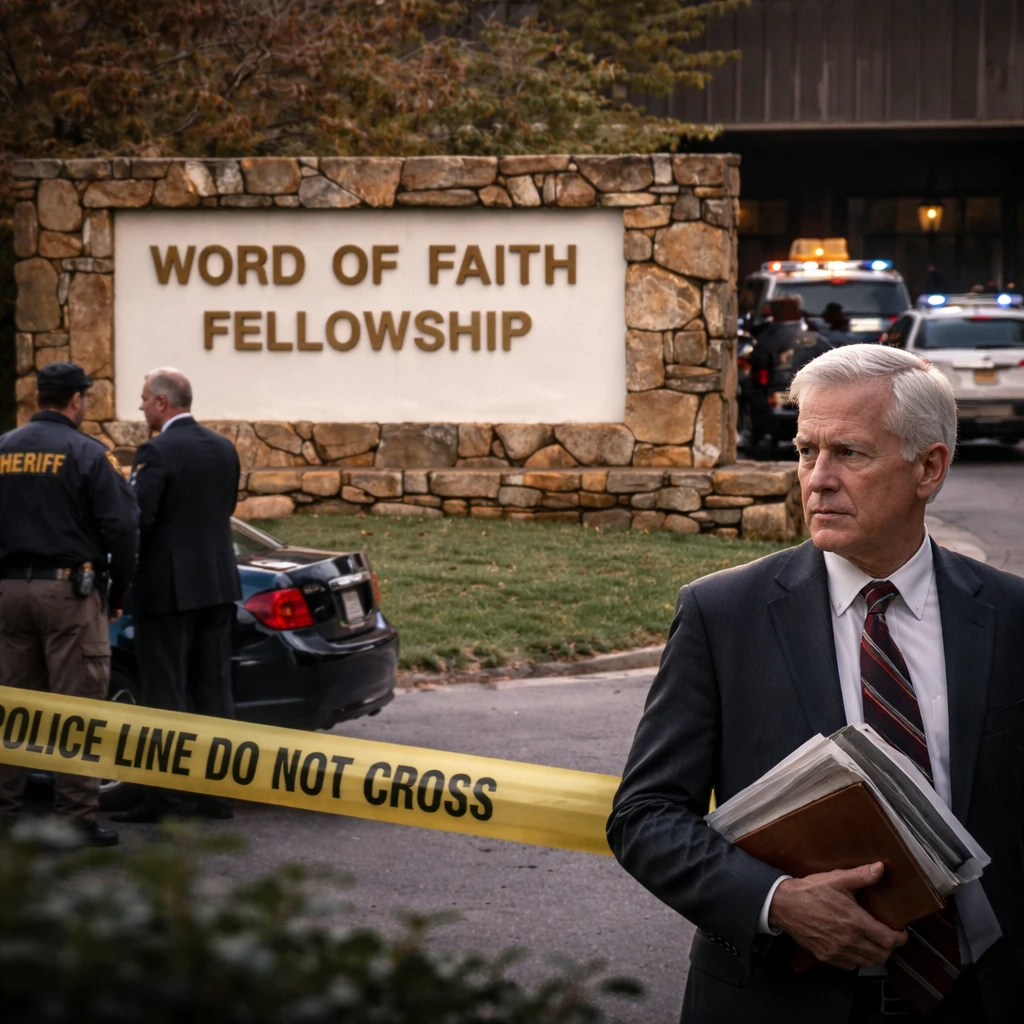
A special prosecutor has been appointed to take charge of criminal cases involving accusations against members of the Word of Faith Fellowship, a secluded religious community in North Carolina. These cases stem from claims that congregation members forcibly restrained and assaulted a former member thirteen years ago.
Recently, the alleged victim, Matthew Fenner, petitioned the court to remove District Attorney Ted Bell from the case shortly before a retrial, initially postponed for more than eight years, was scheduled to commence in December. Fenner accused Bell of siding with the Word of Faith Fellowship, which numerous ex-members have accused of various forms of abuse. However, Superior Court Judge William T. Stetzer upheld the findings of an independent investigator who attributed the significant trial delays to a combination of factors including a backlog of court cases exacerbated by COVID-19-related shutdowns and the departure or health issues of attorneys on both sides.
In 2017, Brooke Covington, a leader within the Word of Faith, was tried on charges of second-degree kidnapping and simple assault. That trial ended inconclusively due to a mistrial after the jury foreman introduced unauthorized information during deliberations. Covington has consistently maintained her innocence regarding these charges.
Fenner's involvement with Word of Faith began in 2010 when he joined alongside his mother. According to his testimony, during a service on the group's compound in Spindale, North Carolina, several members, including Covington, initiated what was referred to by the church as a “blasting” session. Fenner recounted being physically restrained, choked, and beaten for two hours while other members engaged in prayer intended to expel so-called “homosexual demons.”
The Word of Faith Fellowship is a nondenominational Protestant church established in 1979 by Sam and Jane Whaley in the foothills of the Blue Ridge Mountains, situated between Charlotte and Asheville. Jane Whaley is regarded by members as a prophet.
In 2017, investigative reports detailed allegations of abuse made by former members globally. These reports were based on interviews with dozens of ex-congregants, analysis of hours of covertly recorded conversations with church officials, and extensive review of law enforcement, court, and child welfare documents.
The independent investigator found no evidence that District Attorney Bell extended any special treatment or favor toward the church. Bell provided a text message conversation showing Jane Whaley declined to discuss Covington's case with him, and he promptly ended a meeting upon discovering it was related to the legal matter. Bell expressed relief that the court dismissed the petition aimed at his removal, labeling the claims as baseless and misleading. Further, Bell revealed he had shared his personal cell phone number with only two victims, including Fenner.
The planned trial for Covington has been postponed pending ongoing investigation, with no clear indication of when it will be rescheduled. On January 22, the district attorney formally requested that a special prosecutor take over the case, citing the victim's efforts to remove him and highlighting that any prosecutor in charge would need to assess whether potential inconsistencies in Fenner's statements should be disclosed to the defense team.
Fenner alleged that as the 2025 trial date neared, Bell’s engagement with the case diminished, citing a lack of efforts to uncover new evidence or interview possible witnesses. Bell reportedly offered a plea deal to Covington, proposing a reduction to a misdemeanor charge from the felony kidnapping accusation. While Fenner initially appeared to endorse this proposal, he later retracted support via email, citing concerns about the integrity of the investigation and desire for a more thorough judicial process.
Legal representative Andrew LaBreche indicated that Fenner wished for Bell and other key figures to testify publicly, which might have illuminated additional shortcomings in the district attorney's management of the case. At present, the timeline for progressing the trial remains uncertain.
The Word of Faith Fellowship once had approximately 700 members in North Carolina a decade ago, but a former church leader's sworn affidavit now estimates the membership at 300 to 400. Investigative reporting revealed the church's extensive influence over members' lives, including decisions about marriage, education, and college attendance. Reports also describe physical coercion during fervent group prayers involving slapping, choking, and forceful handling of participants.
The investigation further found that the church and its adherents exercised significant control over local law enforcement and social services, obstructing impartial inquiries. Jane Whaley has denied any abuse claims, asserting that any disciplinary actions fall under the constitutional protection of religious freedom.
The church has characterized the allegations shared with investigators as unfounded and the product of particular former members seeking to damage its reputation. It maintains a stance of non-tolerance toward abuse.