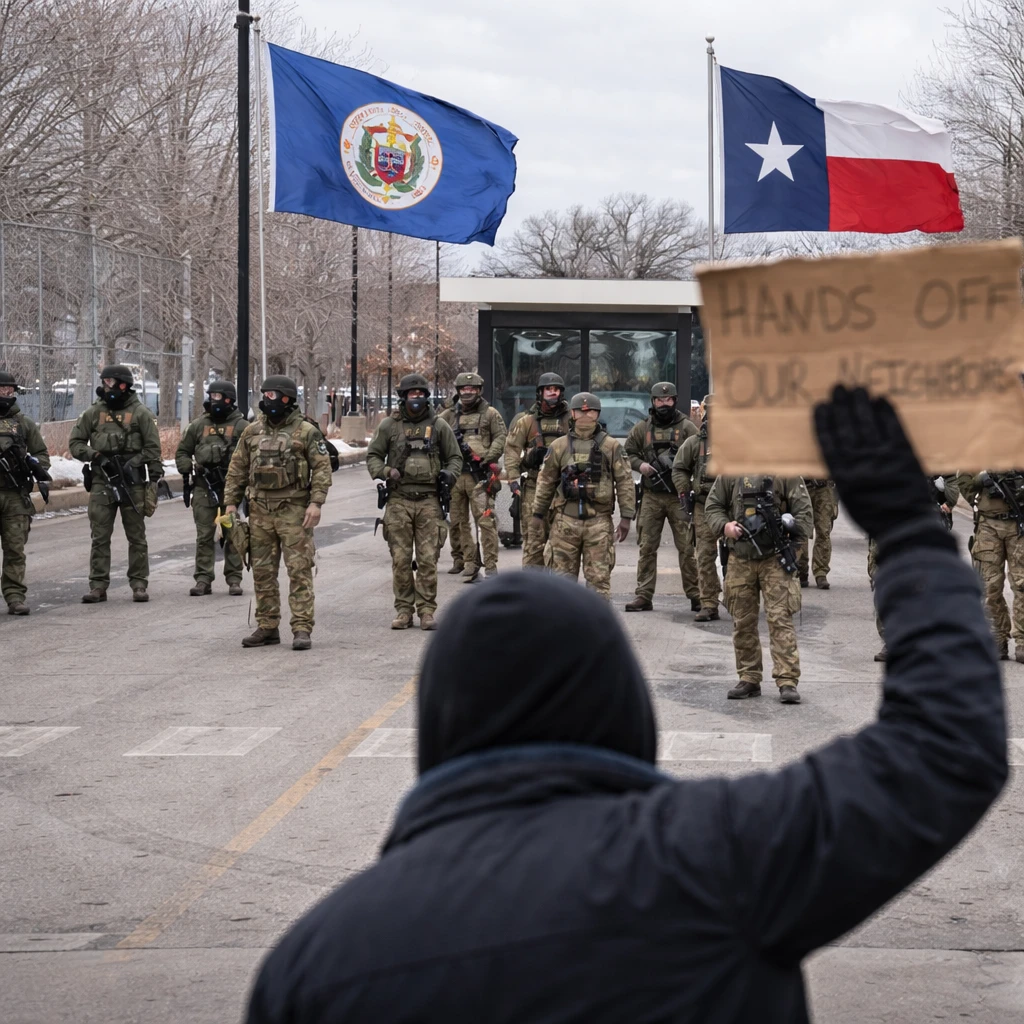

The fatal shooting of Renee Good by an Immigration and Customs Enforcement (ICE) officer in Minneapolis has intensified political and legislative conflicts surrounding immigration enforcement across the United States. In response, Democratic lawmakers nationwide have accelerated proposals to limit the scope and authority of federal immigration officers within their states, while Republican legislators, particularly in Tennessee, have introduced laws to reinforce federal immigration crackdown measures.
Democratic initiatives primarily focus on protecting constitutional rights and restricting ICE operations. For instance, New York's Democratic Governor Kathy Hochul supports legislation that would permit residents to sue federal officers for alleged constitutional violations and prevent immigration officers without judicial warrants from entering sensitive locales such as schools, hospitals, and places of worship. Similarly, Oregon Democrats aim to empower residents to challenge federal officers violating Fourth Amendment protections against unlawful searches and seizures.
New Jersey's Democratic legislature recently passed three bills championed by immigrant advocacy groups, including one that bars state law enforcement from cooperating with federal immigration authorities. Governor Phil Murphy faces a deadline to either sign or veto these measures before his term ends. California legislators have introduced bills to prohibit local and state officers from holding secondary positions with the Department of Homeland Security and to restrict ICE arrests near court proceedings, among other regulations.
At a San Francisco news conference, Democratic State Senator Scott Wiener emphasized concerns over accountability in government actions, underscoring the push for transparency and civic protections in immigration enforcement.
Democratic lawmakers in more conservative states also seek to address immigration enforcement despite slim prospects for passage. In Georgia, four Senate bills aimed at limiting immigration enforcement were introduced, though the Republican-led upper chamber, including Lt. Gov. Burt Jones who is allied with former President Donald Trump, is unlikely to approve them. State Senator Sheikh Rahman, representing a diverse suburban district with a large immigrant community, asserted the necessity of opposing what he described as aggressive immigration actions endorsed at the federal level.
Conversely, Tennessee Republicans, in alignment with the White House, unveiled a suite of legislative proposals intended to utilize state mechanisms to complement federal immigration crackdowns. These bills propose requiring verification of immigrants’ legal status for accessing public benefits, obtaining professional licenses, and even for K-12 student enrollment, a measure that could conflict with Supreme Court rulings. They also seek to criminalize illegal entry as a misdemeanor. Tennessee House Speaker Cameron Sexton stated the intent to ensure that taxpayers do not fund services for undocumented individuals beyond incarceration.
At the federal level, the Trump administration has actively resisted restrictions on ICE operations, suing local governments that adopt sanctuary policies limiting cooperation with immigration enforcement. The Justice Department has also challenged state laws in California and Illinois that impose controls on ICE activities and protect individuals’ immigration-related information, citing concerns over officer safety and constitutional conflicts.
In response, states such as Minnesota and Illinois, alongside major cities like Minneapolis and Chicago, have initiated lawsuits against the federal government. These legal challenges accuse the Trump administration of infringing on free speech rights and creating a climate of fear through aggressive immigration enforcement operations such as "Operation Midway Blitz." Department of Homeland Security spokesperson Tricia McLaughlin dismissed these allegations, accusing state officials of disregarding public safety priorities.
Legal experts note that while states possess broad authority to regulate activities within their jurisdictions, these immigration-related laws raise complex constitutional questions. Harrison Stark, senior counsel at the State Democracy Research Initiative, suggests that many of these policies will become subjects of ongoing federal litigation due to ambiguous legal precedents.
Overall, the shooting of Renee Good has catalyzed a clear ideological schism within U.S. states regarding immigration enforcement policies, with Democrats advocating for curtailment of federal ICE powers and Republicans moving to strengthen enforcement capabilities, creating a fragmented national landscape marked by political contention and legal uncertainty.