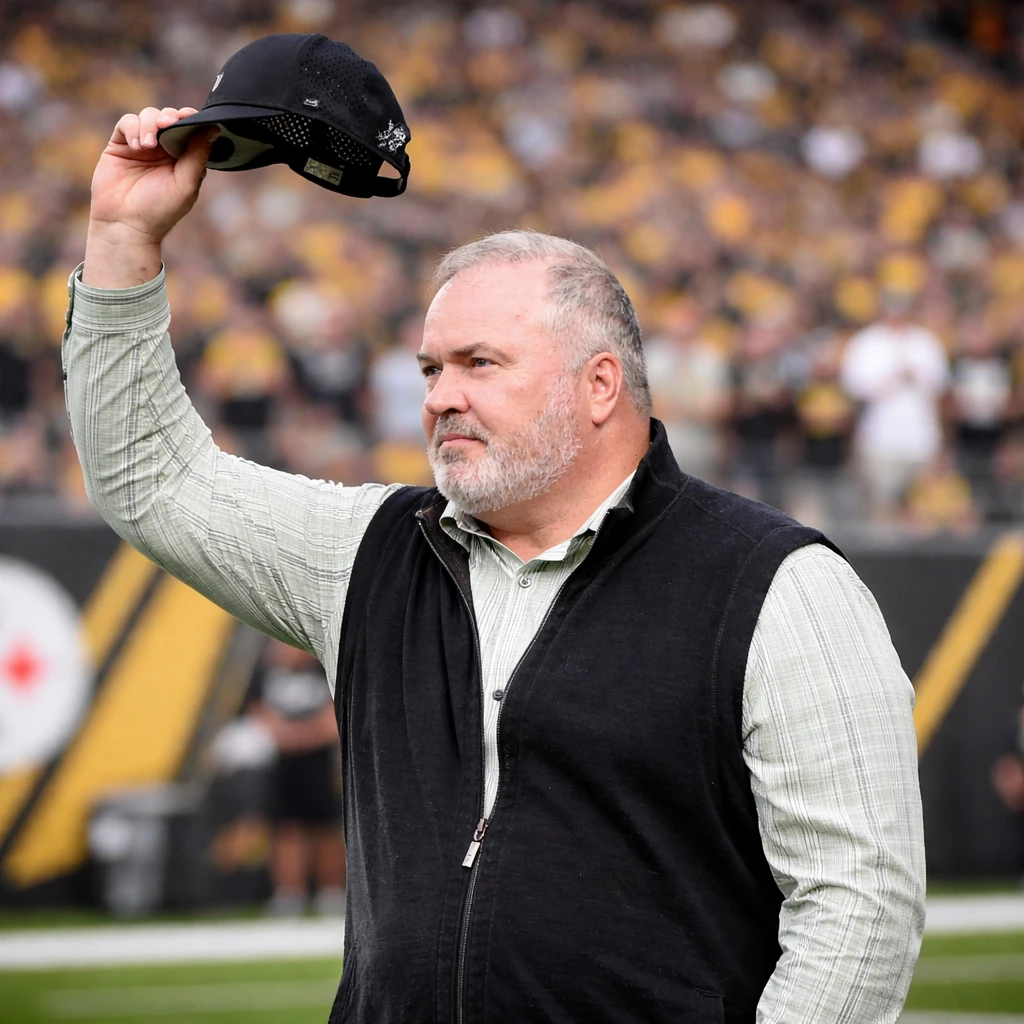

The Pittsburgh Steelers announced on Saturday that they have reached a verbal agreement with Mike McCarthy to become the team’s next head coach, replacing Mike Tomlin. McCarthy’s hiring is notable as he returns to his hometown, having grown up in the Greenfield neighborhood of Pittsburgh, located just a few miles from the team’s practice facility on the South Side.
At 62 years of age, McCarthy brings an impressive 18-season NFL head coaching record of 185 wins, 123 losses, and 2 ties, including playoff games. His 13 seasons with the Green Bay Packers notably included a Super Bowl victory over the Steelers after the 2010 season. More recently, he spent five years leading the Dallas Cowboys.
This hire represents only the fourth head coach appointment for the Steelers since 1969, breaking from the franchise’s tradition of selecting relatively unknown assistants or coordinators, such as Tomlin and Hall of Famers Chuck Noll and Bill Cowher. McCarthy’s established head coaching background makes his appointment an unusual but strategic shift for the organization.
Mike Tomlin, who stepped down earlier in the month after 19 seasons and seven consecutive playoff losses—including a home defeat to the Houston Texans—was still under contract through 2026 with an option for 2027 when he surprised the franchise with his resignation.
The Steelers conducted a comprehensive search process, interviewing nearly a dozen candidates from diverse coaching backgrounds. Candidates ranged from Brian Flores, defensive coordinator for the Minnesota Vikings who was an assistant on Tomlin’s staff in 2022, to Jesse Minter, former Chargers defensive coordinator recently hired by the Baltimore Ravens.
Ultimately, McCarthy was selected to take charge of a team that has experienced a prolonged period of stagnation over nearly ten years. Tomlin’s nearly two-decade leadership yielded 193 regular-season wins, tied for most in franchise history, and delivered the team’s sixth Super Bowl championship. Remarkably, under Tomlin, the Steelers never endured a losing season.
Despite this consistency, postseason success proved elusive, with the team exiting the playoffs after its first game in each of the last six appearances—all resulting in double-digit margin losses.
In recent years, the Steelers’ draft positioning has often fallen in the middle-to-late first round, limiting their ability to secure a franchise quarterback. Not drafting a successor to Ben Roethlisberger in his final playing years and an unsuccessful first-round pick in Kenny Pickett, who was drafted in 2022 but underperformed, have contributed to instability at the quarterback position.
If Aaron Rodgers, who will become a free agent this March, opts not to return for a 22nd season, the forthcoming season would mark the sixth consecutive year with a different Week 1 Steelers quarterback. McCarthy’s hiring could influence Rodgers’ decision, considering their past successful partnership in Green Bay, which included the Super Bowl victory against Pittsburgh. The Steelers hold the 21st pick in the upcoming draft, which is presently viewed as lacking strength in quarterback prospects.
Given that the Steelers currently have only veteran backup Mason Rudolph and 2025 sixth-round pick Will Howard under contract at quarterback for next season, the team may choose to focus its draft on positions with higher urgency, such as wide receiver and cornerback. Nevertheless, team president Art Rooney II dismissed rebuilding narratives shortly after Tomlin’s resignation, emphasizing the team’s intent to compete immediately.
McCarthy’s arrival aligns with the goal of maintaining competitiveness rather than initiating a full rebuild. His coaching resume offers an opportunity to revitalize a team that has struggled in postseason play since the late 2000s. While his tenure at Green Bay culminated in a Super Bowl, subsequent playoff appearances yielded limited success, including a 6-9 postseason record after that championship, and a disappointing 7-10 finish with Dallas in 2024 stemming partly from quarterback Dak Prescott's injuries.
Early in his career, McCarthy was a graduate assistant at the University of Pittsburgh, an institution now sharing facilities with the Steelers. Throughout his coaching career, McCarthy consistently crafted offenses capable of significant yardage, with teams finishing in the top 10 for yards gained in 12 of his 18 seasons. His initial seasons in Green Bay and Dallas were less productive, but his teams generally demonstrated offensive strength.
The Steelers have experienced an offensive transition over the past five years and now possess an aging but highly skilled defense featuring potential Hall of Famers at multiple levels, including defensive tackle Cam Heyward, linebacker T.J. Watt, and defensive back Jalen Ramsey, all in their 30s.
McCarthy will be the first head coaching hire with prior NFL head coaching experience for the Steelers since Mike Nixon in 1965. Nixon’s brief, unsuccessful tenure gave way to Bill Austin and subsequently to Chuck Noll, who ushered in an era of franchise transformation and multiple Super Bowls. Noll’s success established a high standard maintained by his successors Cowher and Tomlin, though recent playoff shortcomings suggest a decline in that standard.
The mandate for McCarthy is clear: to restore a competitive edge and postseason success to a Steelers team that has not won a playoff game since the late 2000s. His appointment also presents a significant personal and professional test, as he returns to his hometown and former professional stomping ground to lead a historic franchise into a new era.