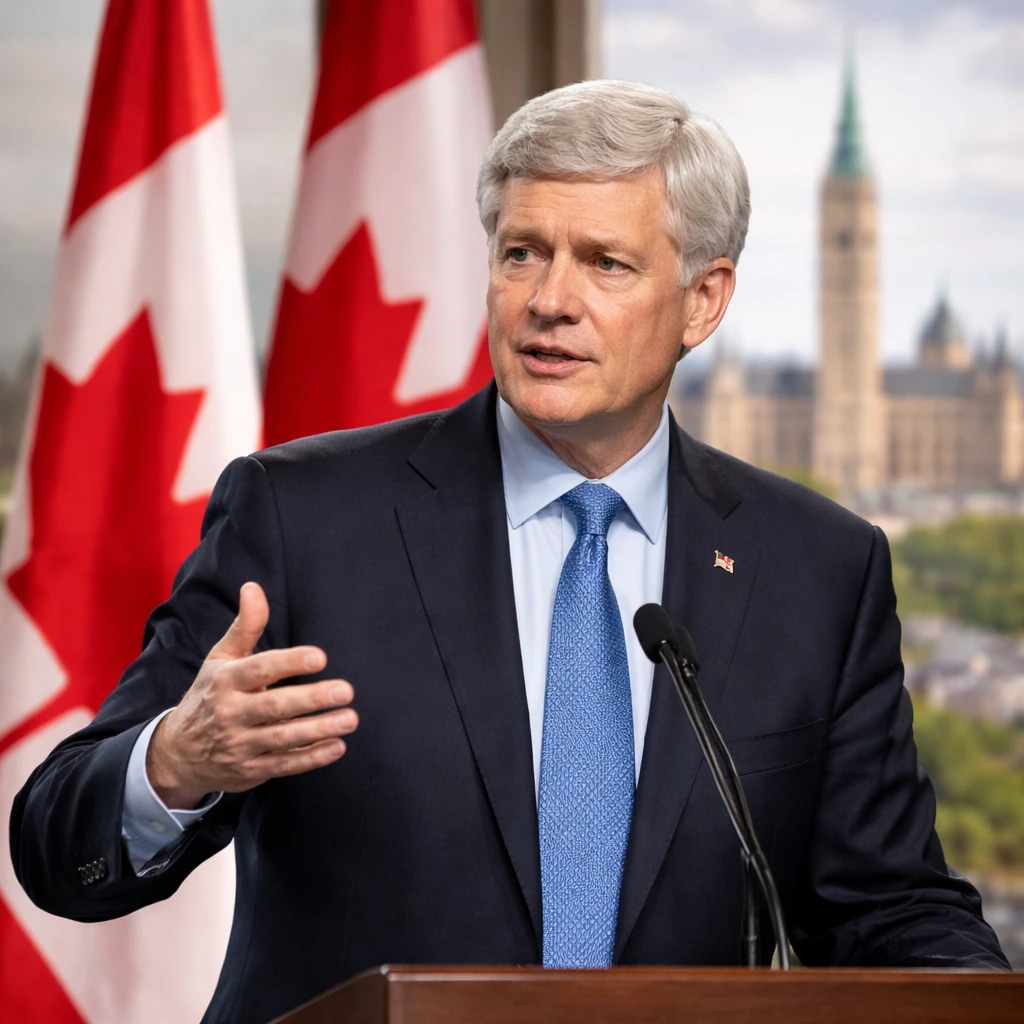

Former Prime Minister Stephen Harper addressed a gathering in Toronto on Tuesday during the unveiling of his official portrait, conveying a compelling message about the necessity for Canada to safeguard its sovereignty amid current geopolitical tensions. Harper, who led Canada as Conservative Prime Minister from 2006 to 2015, characterized the contemporary period as filled with unprecedented challenges and expressed gratitude to incumbent Prime Minister Mark Carney for his presence, emphasizing the gravity of the times they are navigating.
While refraining from directly identifying U.S. President Donald Trump, Harper’s remarks made clear the strains imposed by the United States on Canada’s autonomy. He referenced ongoing tensions including threats of tariffs on Canadian goods and provocative statements about Canada's potential incorporation as a U.S. state. Additionally, he alluded to concerns stemming from the U.S. interest in acquiring Greenland, events which have unsettled NATO partners and heightened apprehension in Canada, given its extensive Arctic maritime border with Greenland.
Harper appealed to Canada's two dominant political factions—the Liberals and the Conservatives—to promulgate a united front against such external pressures. He stated, "We must make any sacrifice necessary to preserve the independence and the unity of this blessed land." This appeal to national solidarity underlines the high stakes posed by the international environment.
Expanding on the need for enduring national representation, Harper expressed hope that his own portrait would become one among many depicting prime ministers from multiple parties to be displayed for generations, contingent on political cohesion against external threats to Canada's sovereignty.
Aside from foreign pressures, Harper also highlighted domestic challenges jeopardizing national unity, notably the rising separatist sentiment in Alberta. He noted that upcoming provincial elections could prompt a referendum on Alberta’s independence, with Premier Danielle Smith acknowledging separatist support nearing 30%. Furthermore, Harper pointed to Smith’s efforts to secure federal and British Columbia provincial approval for a proposed oil pipeline to the Pacific coast, situating energy infrastructure development squarely within the discourse on unity and economic continuity.
Harper reminisced positively about Mark Carney’s qualifications when Carney applied to lead Canada’s central bank during Harper’s tenure as prime minister. He humorously acknowledged Carney’s subsequent career success, including his prominent role as Governor of the Bank of England starting in 2013 and, more recently, a term as Canada’s Prime Minister.
Prime Minister Carney, responding at the portrait ceremony, expressed appreciation for Harper’s denunciation of forces threatening Canadian sovereignty amidst escalating trade disputes and political pressures. Carney reinforced Harper’s call to build a stronger Canada, less dependent economically and politically on the United States, and valued Harper’s counsel.
Carney further commended Harper’s economic leadership during the global financial crisis of 2008. Despite Harper’s conservative fiscal philosophy of governing with balanced budgets and prudent spending, Carney noted that Harper prioritized the national interest when the crisis struck by authorizing deficits for a sustained five-year period, thereby reinforcing the economy during a global downturn not seen in generations. This fiscal strategy underlined Harper’s understanding that robust economic foundations in prosperous times enable responsive measures in periods of adversity.