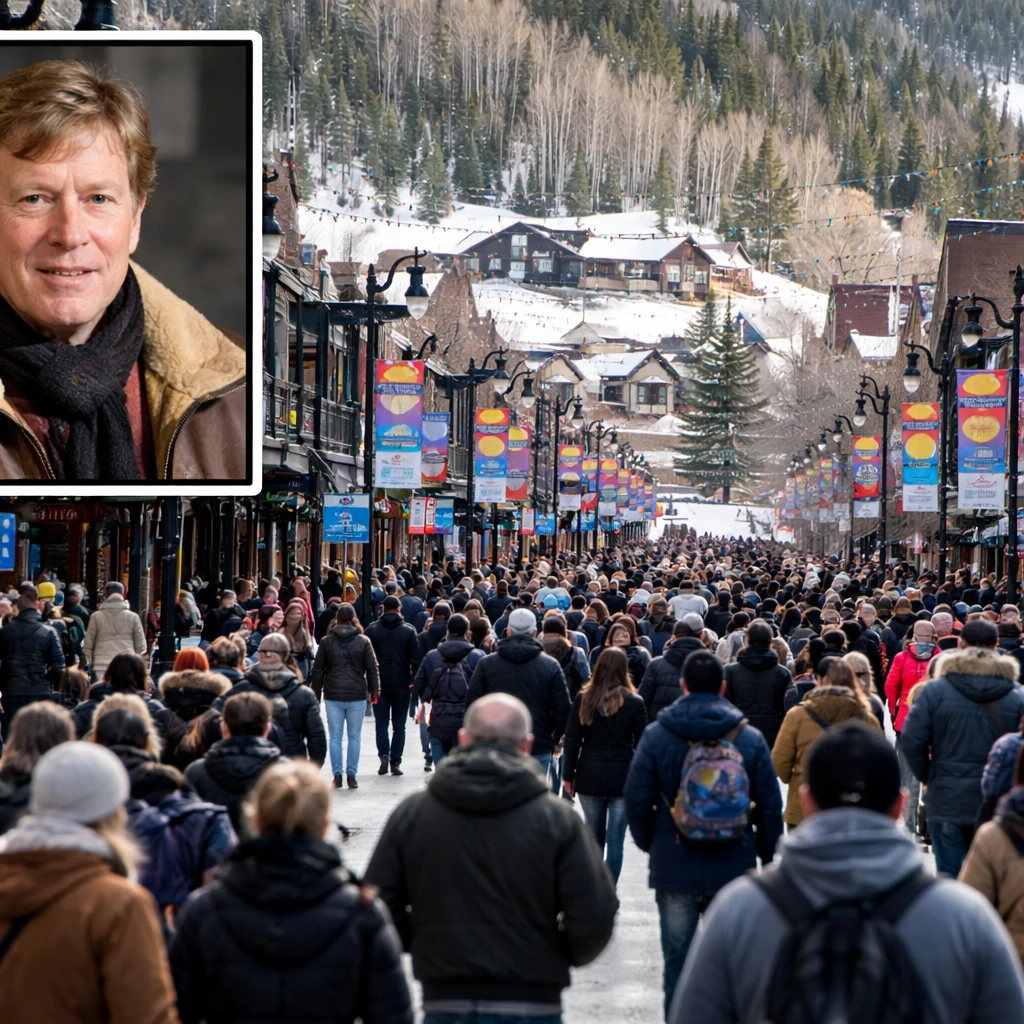
In the mountain town of Park City, Utah, this year's Sundance Film Festival marked a poignant milestone as attendees grappled with the news that the event will be moving to Boulder, Colorado, next year. Visitors found themselves repeatedly asked whether they intended to follow the festival to its new location.
Butch Ward, a media professional from Fort Lauderdale, Florida, and a Sundance attendee since the early 1990s, exemplifies the sentiment shared by many veterans. Though he has been a committed participant for decades, Ward stated emphatically that this festival would be his last in the event's traditional mountain setting. He believes that relocating Sundance outside Utah fundamentally changes its character, remarking, "a Sundance outside Utah just isn’t Sundance." Such reflections resonate across the community of festivalgoers who have long treasured the unique environment of the Utah gathering.
Evidence of this affection was visible throughout the town; a group of women walking along Main Street wore yellow scarves bearing the message "Our last Sundance 2026," while another attendee carried a sign atop her head declaring the event "the last Sundance." The emotional undercurrent was palpable.
Among those voicing their connection to the festival’s origins, actor Suzie Taylor, who has attended intermittently since 1997, highlighted the festival’s ties to Robert Redford. She observed that his recent passing, just prior to this final Utah iteration, almost poetically marks the closing of a significant chapter. "It's not just a resistance to change," she explained. "Robert Redford’s vision was rooted here."
Julie Nunis, another actor with a long history at Sundance since 2001, spoke of the joy derived from the tradition that Redford established in Park City over four decades ago. For Nunis, attending the festival elsewhere lacks the authentic experience forged in Utah.
Robert Redford, who died in September at age 89, founded Sundance and its associated filmmaker development programs as a refuge for independent films away from Hollywood's influence. Importantly, before his death, Redford, an alumnus of the University of Colorado Boulder, endorsed the relocation of the festival to Boulder.
This decision followed an extensive, yearlong search among several U.S. cities aspiring to host the premier independent film festival. The organizers felt the festival had outgrown Park City, which had itself become a symbol of exclusivity and shifted focus away from the films themselves.
Some film professionals and volunteers expressed apprehension about the move. Lauren Garcia, a Seattle-based volunteer for the past six years, conveyed a mix of curiosity about Boulder and melancholy about leaving Utah behind. She questioned how the festival would maintain its identity and honor Redford’s legacy in a new setting. "How is the festival going to express itself in a new place and continue his legacy? It’s a huge question mark," she said. Garcia also noted a profound shift now that Redford has passed, suggesting, "the truth is, it’s never going to be the same."
Amy Redford, Robert Redford’s daughter and a member of the Sundance Institute’s board of trustees, meanwhile expressed optimism despite acknowledging the challenges ahead. Actor and filmmaker Nik Dodani, who values the festival for its inclusivity and support for LGBTQ+ narratives, is enthusiastic about experiencing Sundance in a more diverse environment but also worries about a potential loss of such stories in Utah after the move.
Amy Redford assured that key elements of her father's legacy, specifically the institute’s laboratory programs supporting emerging writers and directors, will remain anchored in Utah near the resort he founded, roughly 34 miles south of Park City. She emphasized that these programs will continue to foster important civil discourse in the state.
“Boulder, Colorado, will be a new adventure. It will feel like our beginnings when we were trying to figure things out, and that will have an important impact on what we do,” she said. “But the way that we meet artists where they need to be, well, that evolves out of a heartbeat that is here” in Utah.
The 2026 festival thus closes an important chapter in Sundance history, as it transitions from its original mountain hometown, confronting questions of identity, tradition, and future direction amid changes in location and leadership.