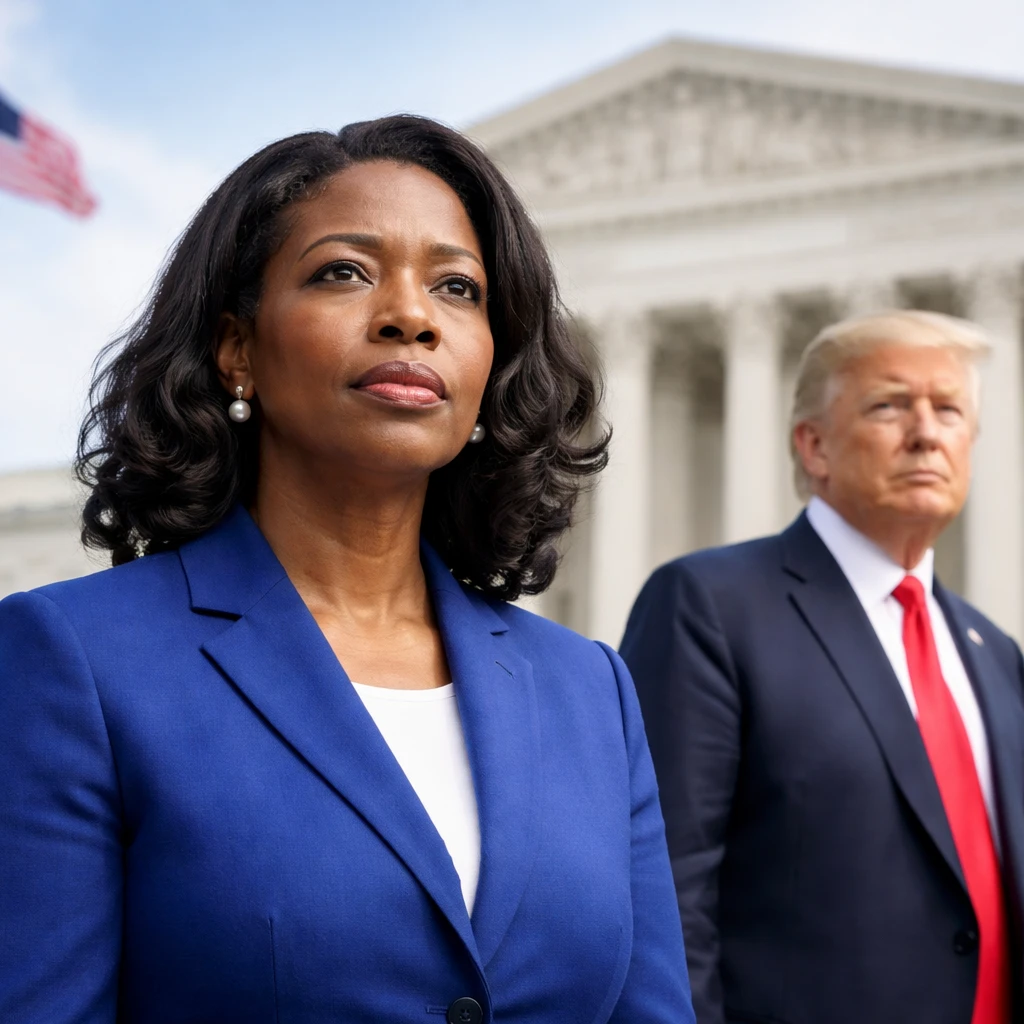

On Wednesday, the Supreme Court exhibited an apparent inclination to maintain Federal Reserve Governor Lisa Cook in her position, casting skepticism on former President Donald Trump’s attempt to depose her from the central bank’s board.
The proceedings centered on allegations that Cook engaged in mortgage fraud, accusations which she firmly denies. Historically, no president in the 112-year history of the Federal Reserve has succeeded in firing a sitting governor. The Fed’s design as an institution insulated from everyday political influence underscores the uniqueness of this legal challenge.
This case highlights one of the more remarkable endeavors by Trump to extend presidential powers. While the Court has regularly ruled in his favor on emergency petitions, the outcome in Cook's scenario may diverge from this trend.
Justice Brett Kavanaugh, a Trump appointee, warned that permitting Cook’s dismissal risked undermining the Federal Reserve’s independence. His remarks were echoed in resonance by at least five other justices, indicating broad judicial wariness of the executive’s grounds for removal.
Both Cook and Federal Reserve Chair Jerome Powell attended the nearly two-hour courtroom session, an unusual sight reflecting the high stakes involved. Following the hearing, Cook emphasized her dedication to upholding the Federal Reserve’s political independence in service to American citizens.
Critics of Trump contend that the firing attempt aims to assert firmer presidential control over the nation's monetary policy, particularly interest rates. Removing Cook, recognized as the first Black woman to serve on the Fed's board, would enable Trump's preferred nominees to gain dominance, potentially swaying policy decisions.
The financial markets and wider U.S. economy are closely observing this case, given its potential to affect investor confidence and policy stability. Trump has expressed dismissiveness toward concerns that accelerated rate cuts might spurn inflation, advocating for substantial reductions in borrowing costs to stimulate government borrowing and reduce consumer financing expenses amid economic pressures.
In a speech delivered in Davos, Switzerland, the former president reiterated his stance that the U.S. should secure the lowest interest rates globally, pressing for aggressive monetary easing.
While the Fed lowered a key interest rate three times in late 2025, this pace fell short of Trump's expectations. Additionally, the Federal Reserve has suggested a likely pause in rate adjustments to address inflation concerns.
The Supreme Court’s current deliberation centers on whether Cook should be permitted to maintain her role while legally contesting her dismissal. Lower courts have allowed her to remain in office pending judicial review, but the Supreme Court could opt to deny Trump's emergency appeal, allowing the case to progress through lower tribunals.
Chief Justice John Roberts, also expressing skepticism regarding the president’s actions, indicated the possibility that the Court might prefer rendering a definitive ruling rather than remitting the matter back to lower courts.
A ruling is anticipated by early summer.
Trump’s confrontation with the Federal Reserve has intensified amid this legal battle. The Justice Department has initiated a criminal investigation into Chairman Powell and issued subpoenas to the Federal Reserve, moves Powell criticized as strategic distractions motivated by Trump’s irritation over interest rate policies.
The Department of Justice attributed its inquiry to Powell’s congressional testimony concerning substantial renovation costs of Fed properties. Throughout Trump’s early second term, the Supreme Court has generally favored his requests for emergency measures overriding lower court decisions. However, the current case suggests more deliberate judicial caution due to the Federal Reserve’s distinct quasi-private status.
In this litigation, Trump does not affirm an unfettered authority to remove Fed governors, according to Solicitor General D. John Sauer. The mortgage fraud allegations against Cook are also directed at several other prominent individuals, all of whom have denied wrongdoing.
The controversy regarding Cook involves the classification of two properties as primary residences, influencing mortgage terms. According to government claims, such misrepresentations constitute severe negligence warranting removal. Yet, critics point out that such determinations merit judicial scrutiny, including a fair hearing, which Trump’s argument opposes.
Justice Amy Coney Barrett remarked that affording Cook an opportunity to address the allegations would not be burdensome.
Cook maintains her innocence, and has not faced any criminal charges. Her legal counsel argued that no fraudulent or criminal intent exists, highlighting a minor discrepancy as inconsequential amid comprehensive disclosures.
She indicated her Atlanta condominium would serve as a vacation home and identified it as a second residence on security clearance forms. Justices Roberts and Sonia Sotomayor, both multiple property owners, exhibited some empathy toward the complexities involved in such declarations.
Roberts acknowledged the practical difficulties in navigating extensive documentation related to property purchases, while Sotomayor related personally to the challenges of relocating due to professional appointments.
Contributors to this report include Fatima Hussein, Christopher Rugaber, and Lindsay Whitehurst.