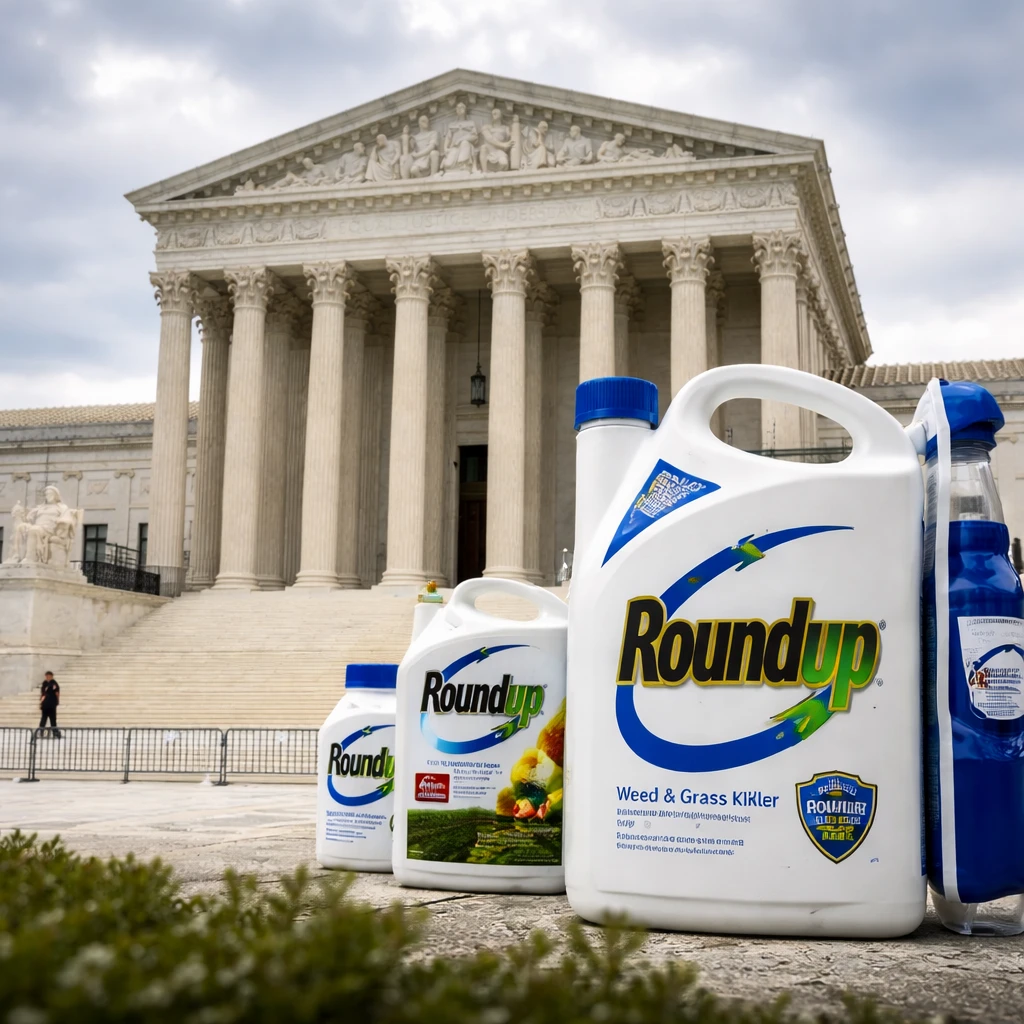

In a move with significant implications for the agricultural and legal landscapes, the U.S. Supreme Court has decided to hear an appeal brought forth by Bayer, the international agrochemical corporation, concerning thousands of lawsuits alleging the company failed to warn consumers about cancer risks associated with its widely used weedkiller, Roundup.
The pivotal issue before the Court is whether the Environmental Protection Agency's (EPA) authorization of Roundup, without requiring a cancer warning label, effectively precludes claims brought in state courts. Bayer asserts that because the EPA approved the herbicide's safety, lawsuits premised on its alleged carcinogenic risks should be barred.
The appellate review is spotlighted by contrasting governmental positions, notably a reversal by the Trump administration supporting Bayer’s immunity bid, which diverges from the current Biden administration’s stance. This differentiation extends to factions that typically back health-related policy initiatives opposing legal protections for Bayer, highlighting the complex political and regulatory dynamics entwined in the case.
Scientific perspectives on glyphosate, Roundup’s active ingredient, remain divided. Some research correlates glyphosate exposure with cancer development, particularly non-Hodgkin’s lymphoma, while the EPA maintains it is unlikely to be carcinogenic when used as directed. Bayer disputes claims linking Roundup to cancer yet has earmarked approximately $16 billion to settle related lawsuits. Concurrently, the company advocates for legislative measures restricting such suits, a step already taken by states including Georgia and North Dakota.
The Supreme Court’s review follows a notable case from Missouri, where a jury awarded $1.25 million to a man who developed non-Hodgkin’s lymphoma after using Roundup in a community garden. This case represents just one of the numerous claims Bayer faces.
Previously, the Supreme Court declined to hear a comparable appeal from Bayer regarding a California case where plaintiffs received over $86 million. However, Bayer emphasizes the need for the Court's intervention now due to inconsistencies in rulings among lower courts. For example, the Third U.S. Circuit Court of Appeals ruled in Bayer’s favor in 2024.
Currently, Bayer is confronted with roughly 181,000 claims concentrated mostly among residential users of Roundup. In response, Bayer ceased containing glyphosate in Roundup for the U.S. residential lawn and garden market, though the chemical remains integral to Roundup's agricultural formulations. These are primarily used alongside genetically modified crops like corn, soybeans, and cotton, engineered to resist the herbicide. This synergy allows for increased farming efficiency and soil conservation through reduced tillage practices.
Bayer has suggested that ongoing litigation pressure could necessitate withdrawing glyphosate from the U.S. agricultural market entirely. Bayer’s CEO Bill Anderson articulated the company's position, asserting the need for clear legal precedent that companies should not face penalties under state laws when complying with federal labeling requirements.
Environmental advocates criticize Bayer's efforts to bar lawsuits, interpreting the company’s strategy as an attempt to avoid accountability given its frequent losses in state courts. Lori Ann Burd, environmental health director at the Center for Biological Diversity, expressed concern over the Supreme Court's willingness to consider restricting access to justice for individuals allegedly harmed by Roundup.
The timeline for the case’s oral arguments has yet to be determined, with potential hearings scheduled for as early as the spring or at the commencement of the Court’s October term.