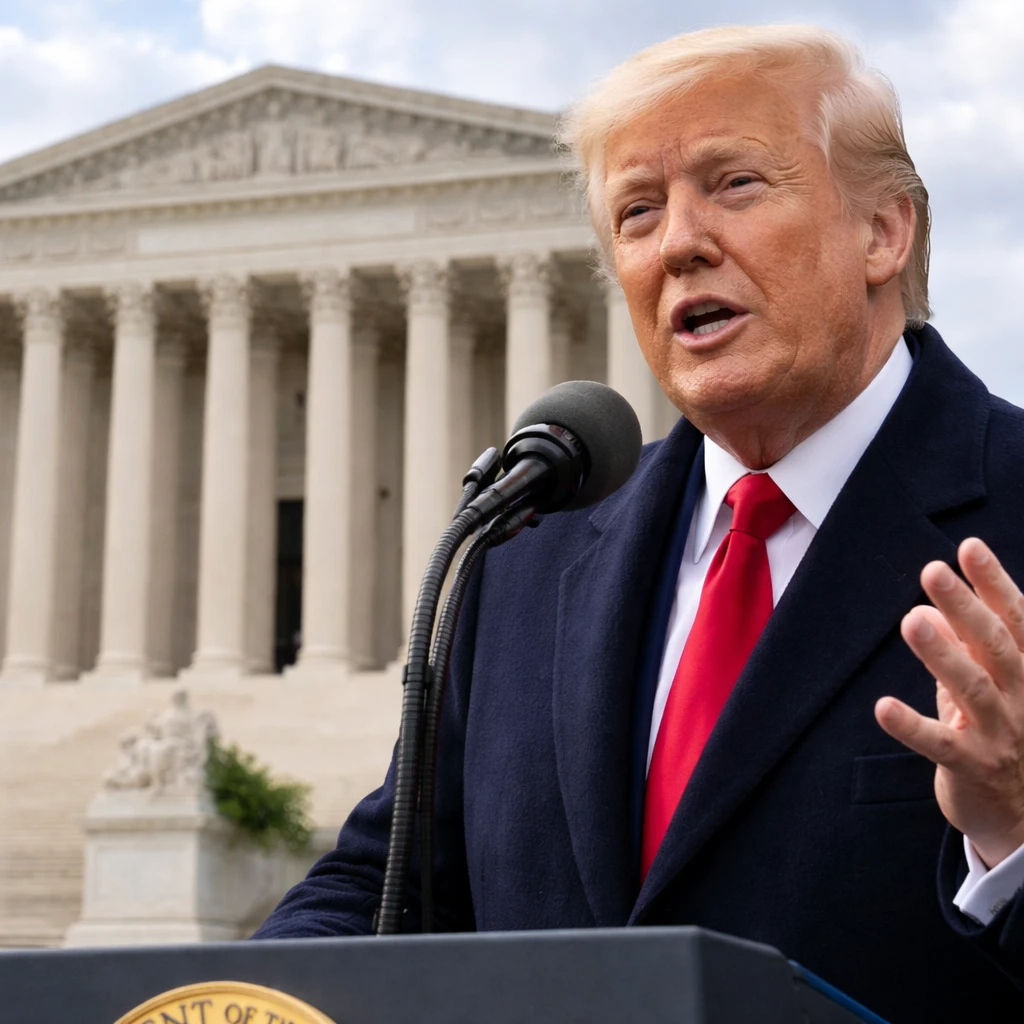

WASHINGTON — The Supreme Court has now spent close to three months deliberating a case concerning tariffs imposed during President Donald Trump’s tenure, following a period of quick initial briefing. While early indications suggested the Court might expedite its decision due to the urgent economic issues highlighted by the case, the timeline has since reverted to a more measured pace typical of its operations.
The Trump administration emphasized the critical nature of a prompt ruling, underscoring the impact on the economy. Treasury Secretary Scott Bessent pointed to the risks posed by delaying a final determination, highlighting the possibility of economic disruption as the decision remained pending.
Despite these appeals, the Court’s calendar shows no public session to announce the verdict for another several weeks, departing from the expectation of a rapid conclusion soon after oral arguments took place in November. Observers remain uncertain about the internal deliberations of the nine justices, many of whom expressed doubts about the tariffs' legality during the hearings.
Legal analysts and scholars who frequently monitor Supreme Court proceedings caution against interpreting the extended timeframe as a sign of procrastination or reluctance to rule against the administration. Jonathan Adler, a law professor at the College of William & Mary, noted that such assumptions often lack solid evidence, highlighting that speculation about delays is common but rarely founded on concrete information.
Timing considerations also fail to clearly indicate how the justices might be leaning. Veteran Supreme Court practitioner Carter Phillips, who has argued before the Court numerous times, suggested that the deliberative process could be complicated by an uncertain alignment among the justices. Phillips pointed out that the justices may be closely divided, with some votes potentially shifting and additional opinions, especially dissenting ones, contributing to the extended timeline.
Recent decisions illustrate how the Court handles similar scheduling. Last week, opinions were released on two cases argued in October, each involving unanimous decisions. The presence of separate opinions in these cases nevertheless contributed to a delay before release. The Court’s decision-making process has generally slowed, perhaps due to the increased workload from emergency appeals, particularly from the Trump administration, pushing some resolutions into the new year rather than the usual end-of-year period.
Analysis of historical data indicates that the Supreme Court typically averages a turnaround of just over three months to publish opinions. This timeframe has trended longer in recent years, with a significant share of rulings now issued in June. Decisions vary widely depending on case specifics; for instance, cases with tight external deadlines such as Bush v. Gore and more recent TikTok rulings were expedited, sometimes resolved within days.
Conversely, other matters, including Gundy v. U.S., related to sex offender registries, have taken in excess of eight months to conclude when no external constraints guided timing. Prominent rulings on pivotal issues such as gun rights expansion, the overturning of Roe v. Wade, and ending affirmative action admissions policies historically have required six to eight months post-argument for resolution.
Meanwhile, a second significant case involving redistricting and a core provision of the Voting Rights Act also remains undecided despite accelerated briefing, further reflecting the Court's careful deliberations on politically sensitive and complex statutory issues.
The tariffs case carries particular urgency due to ongoing real-world impacts, which include both benefits and drawbacks. Marc Busch, a trade policy expert at Georgetown University, expressed that although an expedited ruling would have been preferable given the economic stakes, the duration aligns with the Court's deadline in June and the intricate constitutional questions at play.
Fundamental separation of powers issues are central to the case, ensuring that the final language of the ruling will determine its significance and influence. Both majority and dissenting opinions are anticipated to be carefully crafted to address these complexities.
In the meantime, President Trump continues to advocate for the tariffs, underscoring their political and economic importance and framing the case as the Supreme Court’s most critical pending issue. Observers note that the ongoing debate reflects the broader implications of the Court’s decision beyond the immediate legal questions.