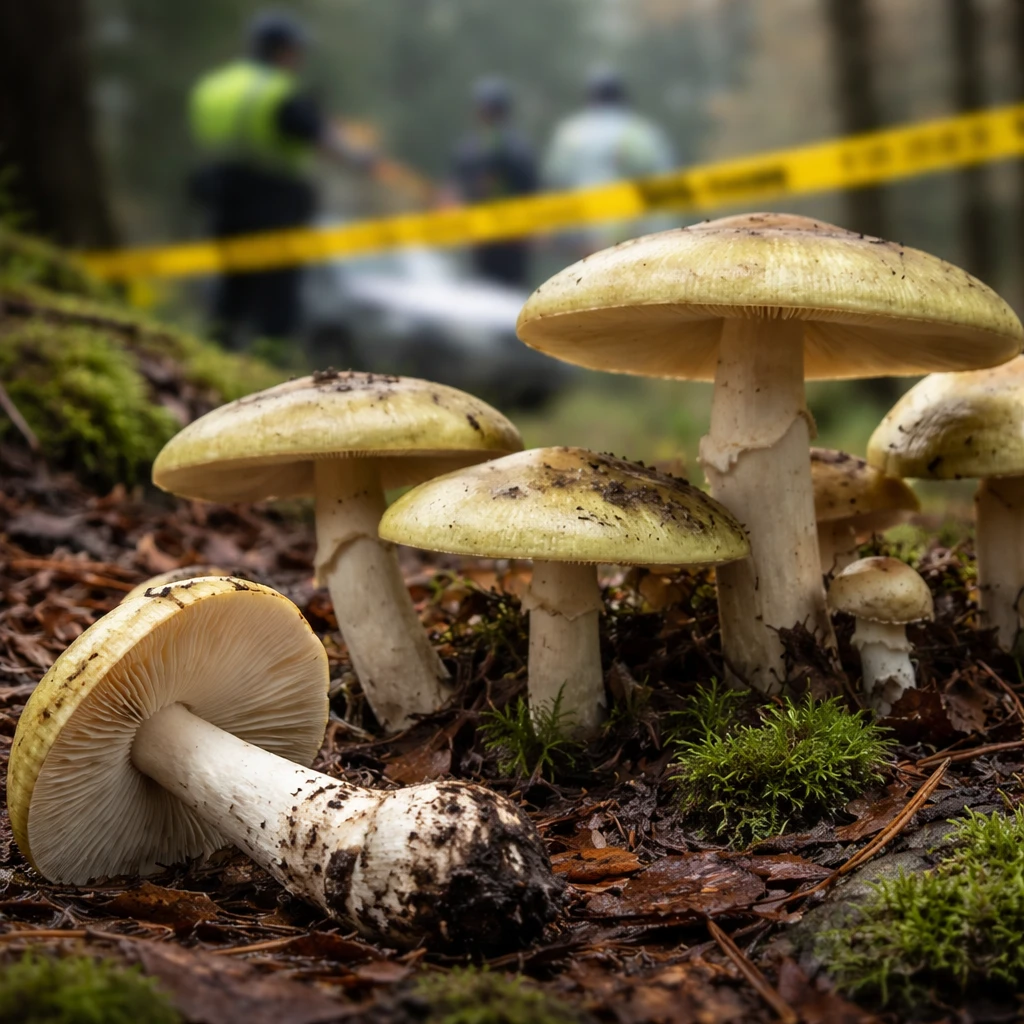

In recent months, California has faced a significant public health crisis as the toxic death cap mushroom has proliferated after a rainy winter season. This surge has resulted in four confirmed deaths and three individuals undergoing liver transplants after consuming these highly poisonous fungi. The California Department of Public Health has strongly recommended that the public refrain from collecting wild mushrooms this year, citing the difficulty in differentiating death cap mushrooms from edible species.
Since November 18, over thirty-six cases of poisoning linked to death cap mushrooms have been reported, encompassing the fatalities and transplant cases. Many patients presented with rapidly progressing acute liver injury and liver failure, with several requiring intensive care unit admission. Affected individuals ranged broadly in age, from infants just 19 months old to seniors aged 67 years.
The death cap mushroom is notorious as one of the most venomous mushrooms globally, classified within a small group that contains amatoxins. These potent toxins are responsible for approximately 90% of fatal mushroom poisonings worldwide. The mushrooms have been found in diverse settings, including urban parks and forested areas, often growing beneath oak trees.
Typically, California records between two to five poisonings from death cap mushrooms annually, as noted by Dr. Craig Smollin, medical director for the San Francisco Division of the California Poison Control System. However, this year’s outbreak is highly unusual in its scale, approaching 40 cases.
Experts attribute this unprecedented proliferation to a "super bloom" effect triggered by a combination of warm fall temperatures and early seasonal rains. Consuming even minimal amounts of death cap mushrooms can prove fatal. Furthermore, relying on mushroom coloration is unreliable for toxicity assessment, and the lethal nature of death caps remains unaffected by whether they are eaten raw, dried, or cooked.
One striking case involves Laura Marcelino from Salinas in Northern California. She and her husband, both seasonal farmworkers originally from Oaxaca, Mexico, mistakenly harvested and consumed death cap mushrooms resembling varieties familiar to them from their home region. Despite initial symptoms such as dizziness and fatigue, they consumed the mushrooms again in a soup preparation. Their children, who typically avoid mushrooms, were not affected. Both adults subsequently experienced severe gastrointestinal distress, and Marcelino required a five-day hospital stay while her husband underwent a liver transplant.
Medical professionals report that symptoms like stomach cramping, nausea, diarrhea, or vomiting can manifest within 24 hours of ingesting toxic mushrooms. While early symptoms may subside quickly, serious or fatal liver damage often develops within two to three days. Death cap specimens have been collected from various locales, including local and national parks across Northern California and the Central Coast, with clusters noted in the Monterey area and the San Francisco Bay region.
The public health department’s data indicates that a majority of those poisoned speak Spanish, Mixteco, or Mandarin Chinese. Consequently, warnings and educational outreach have been expanded in these languages. Spanish speakers, in particular, accounted for over 60% of poisoning cases, emphasizing the mushroom’s ability to mimic many edible varieties familiar to diverse ethnic groups.
Dr. Smollin emphasizes the mushroom’s variable appearance, transitioning from a brownish-white cap to a greenish shade, complicating identification by laypersons. Children have been among the victims this year, leading officials to advise vigilance in monitoring children and pets in mushroom-prone outdoor areas and to purchase mushrooms solely from trusted commercial sources. Prompt medical treatment is critical, as intervention becomes more challenging once poisoning symptoms develop.
Furthermore, the U.S. Poison Centers have documented a 40% increase in reported exposures to all mushroom varieties—beyond just death caps—between September and January compared to the previous year. While not all exposures lead to illness, the rising trend underscores the growing public health concern surrounding wild mushrooms.
In emergency situations or when questions arise concerning mushroom ingestion, individuals are urged to contact U.S. Poison Control Centers at 1-800-222-1222 or visit PoisonHelp.org for guidance.