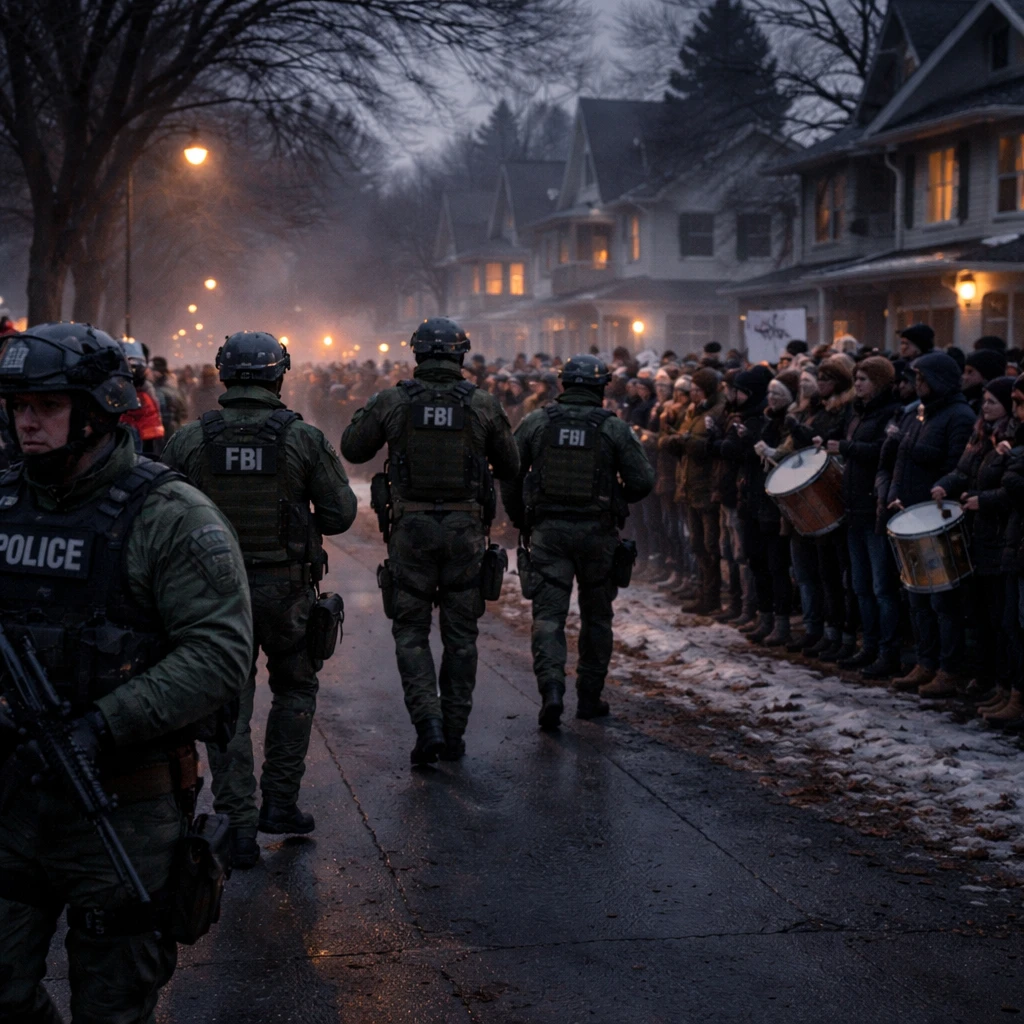

Minnesota's Twin Cities are currently navigating a period of considerable unrest as a substantial federal immigration crackdown unfolds simultaneously with community shock from the recent death of Renee Good, who was fatally shot by an immigration enforcement officer.
Since the Department of Homeland Security announced what it described as the most extensive immigration enforcement operation in Minnesota's history, residents have witnessed a surge in federal agents actively engaging throughout neighborhoods, particularly in Minneapolis areas populated by single-family homes.
In response, residents and activists have organized protests characterized by vocal opposition. Demonstrators deployed a range of tactics including shouting at heavily armed federal personnel, sounding car horns, beating drums, and blowing whistles. These efforts aim to interrupt or impede law enforcement activities amid growing concern about the impact on immigrant communities.
One notable incident saw federal agents forcibly enter a residence, leading to a confrontation involving physical pushing and the deployment of chemical spray affecting several individuals. The agents detained and handcuffed a man during this operation.
Jason Chavez, a Minneapolis city council member and son of Mexican immigrants, remarked on the sizable federal presence. Representing a constituency with an expanding immigrant population, Chavez indicated ongoing monitoring of community communications to identify federal activity locations.
Within the neighborhood where Renee Good, 37, was shot on the preceding Wednesday, local volunteers took to street corners in cold weather, equipped with whistles, vigilantly observing for federal agent movements in an effort to serve as community sentinels.
Supporting this grassroots involvement, Unidos MN—a human rights organization—reported training over 20,000 individuals since the 2024 election to act as "observers" of immigration enforcement activities. Luis Argueta, a spokesperson for Unidos MN, emphasized that these roles are voluntarily undertaken by citizens committed to safeguarding their neighbors.
The protests have predominantly maintained peaceful conduct, yet apprehension remains palpable among residents. Reflecting safety concerns, Minneapolis public schools announced a transition to remote learning starting Monday and extending for a month, aiming to protect students amid the ongoing unrest.
School closures had also occurred previously following the fallout from Good’s death and subsequent community disturbances.
Amidst the heightened enforcement and protests, prominent Democratic officials from Minnesota expressed doubts about the federal government’s capacity to conduct an impartial investigation into the shooting incident. Minneapolis Mayor Jacob Frey and U.S. Senator Tina Smith suggested state authorities should share oversight responsibilities with federal agencies.
Senator Smith voiced reservations about the objectivity of the federal inquiry, critiquing preemptive federal declarations about the shooting's circumstances as undermining trust in the fairness of the investigation.
The Trump administration, which oversaw immigration enforcement at the time, publicly defended the officer responsible for Good’s shooting. Officials characterized the officer’s actions as self-defense and protection of colleagues in the face of Good allegedly ‘‘weaponizing’’ her vehicle.
Todd Lyons, the acting director of U.S. Immigration and Customs Enforcement (ICE), reiterated this defense on a national news program, highlighting the rapid decision-making the officer faced to preserve life.
Lyons further critiqued local jurisdictions, suggesting that enforcement measures such as these would be unnecessary if local authorities cooperated in referring individuals deemed public safety threats to federal agents, highlighting tension between federal and local law enforcement approaches.
Homeland Security spokesperson Tricia McLaughlin confirmed that, since early December, over 2,000 immigration-related arrests have been executed in Minnesota as part of the operation.
The lethal encounter involving Good, alongside two additional shootings by federal agents in Portland, Oregon, precipitated nationwide demonstrations throughout the prior weekend, underscoring the widespread controversy and public mobilization regarding federal immigration enforcement tactics.
In Minneapolis alone, where Homeland Security labeled current officer deployments as their largest immigration enforcement initiative, thousands convened on Saturday to protest.