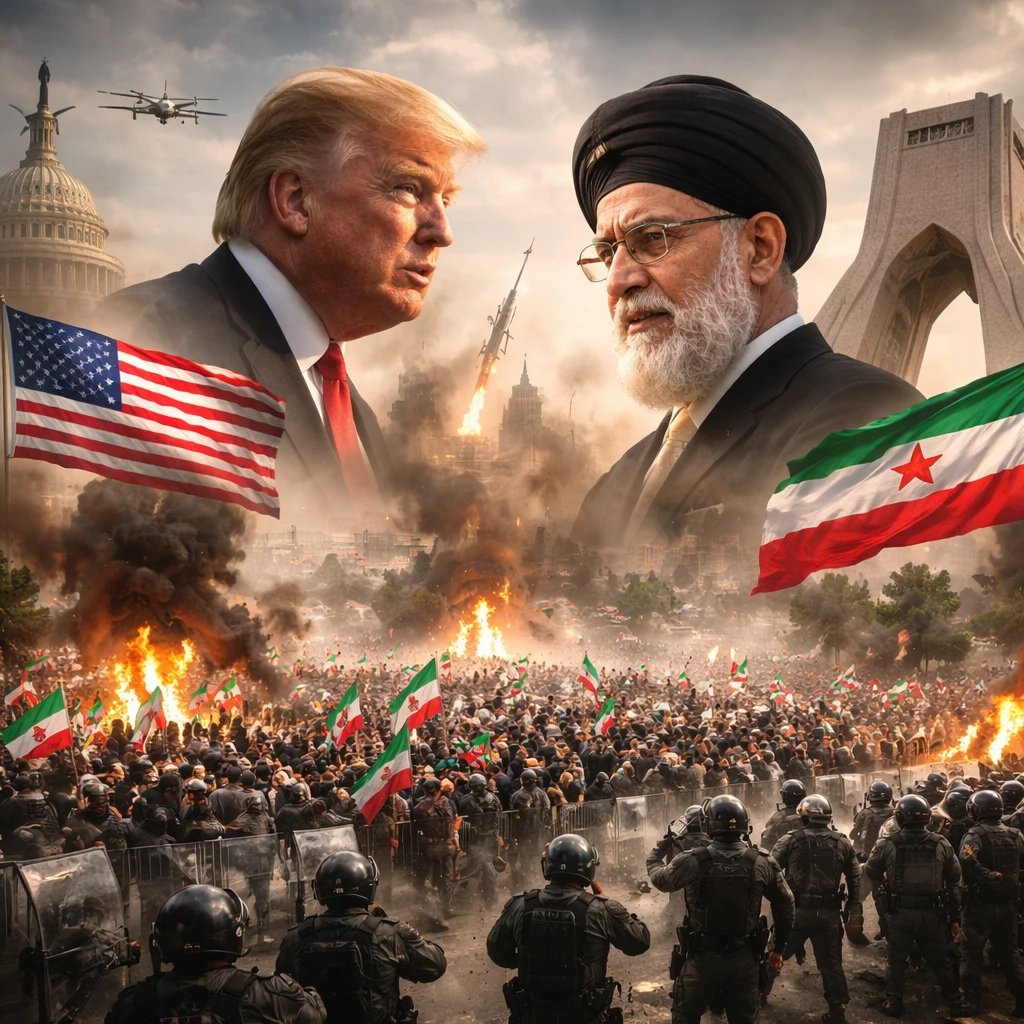

Recent days have seen a sharp escalation in hostilities between the United States and Iran, as President Donald Trump and senior Iranian authorities exchanged strong warnings amidst ongoing, widespread economic protests throughout parts of Iran. These demonstrations, driven largely by economic distress notably linked to the severe depreciation of Iran's rial currency, have sparked heightened tensions following US airstrikes on Iranian nuclear sites earlier in June.
President Trump used his Truth Social account to caution Iran against using violence against peaceful protesters, declaring the United States' readiness to intervene if such actions occur. "We are locked and loaded and ready to go," he asserted, though he did not provide further details on the nature of the potential response. So far, the protests, which have entered their sixth day, have resulted in at least seven fatalities amid clashes.
In reaction, Ali Larijani, former speaker of Iran's Parliament and current secretary of the Supreme National Security Council, accused Israel and the United States of instigating the unrest, sharing his claims on the social platform X. These allegations reflect a recurring narrative by Iranian officials during episodes of civil unrest, although no concrete evidence has been presented to substantiate these assertions.
Larijani warned that any American interference in Iran's internal affairs would lead to regional chaos and damage U.S. interests, advising the American public to focus on the well-being of their own military personnel. His comments likely referenced the heavy American military presence in the Middle East and Tehran's retaliatory missile strikes on Al Udeid Air Base in Qatar following the June attacks on Iranian nuclear sites.
Ali Shamkhani, an adviser to Supreme Leader Ayatollah Ali Khamenei and former secretary of the National Security Council, issued a stark warning, stating that any intrusive action threatening Iran's security would be met with severe consequences. He reminded that the Iranian public's perception of “being rescued” by Americans is shaped by experiences in Iraq, Afghanistan, and Gaza.
The current wave of protests, while smaller in scale and intensity than the nationwide demonstrations of 2022 triggered by Mahsa Amini's death in custody, represents the most significant unrest in the country since then. Although not yet encompassing the entire nation, protestors have voiced grievances not only regarding economic instability but also broader dissatisfaction with Iran's theocratic system.
Reformist President Masoud Pezeshkian's administration has indicated a willingness to engage with demonstrators; however, Pezeshkian acknowledged limited ability to address the root causes, like the rial's rapid fall to approximately 1.4 million rials per US dollar. The precipitous currency depreciation has been a key catalyst for discontent, contributing to rising living costs and economic hardship.
In the background of these internal challenges, Iran announced it ceased uranium enrichment at all sites, signaling potential openness to negotiation with Western countries amidst ongoing sanctions. Nonetheless, diplomatic talks have stalled, punctuated by warnings from President Trump and Israeli Prime Minister Benjamin Netanyahu against efforts to revive Iran’s nuclear program.