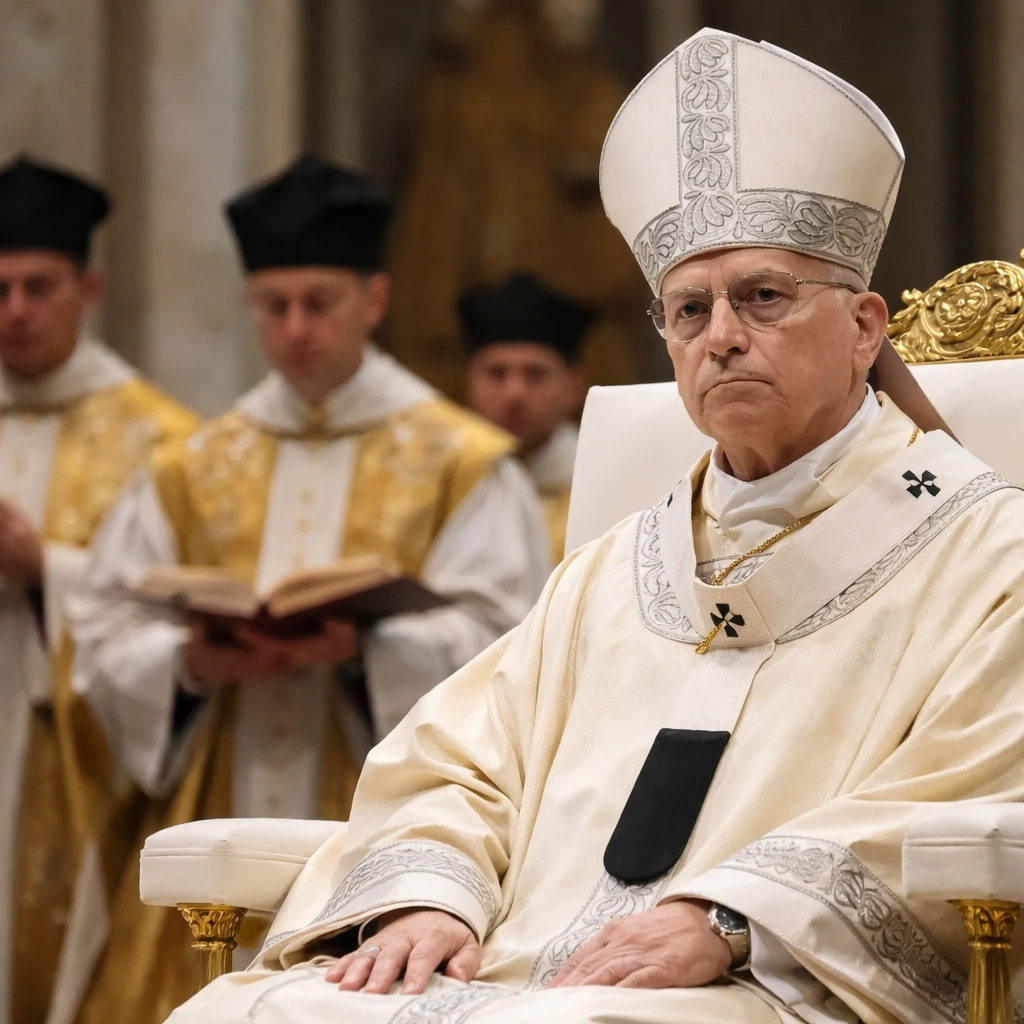

Vatican City — The papacy of Leo XIV is currently navigating a serious dispute with a traditionalist Catholic faction tied to the celebration of the Latin Mass prior to the reforms of the Second Vatican Council. The Swiss-based Society of St. Pius X (SSPX), known for its extensive network of schools, chapels, and seminaries worldwide, recently announced intentions to consecrate bishops independently, without obtaining papal approval, an act the Vatican considers a potential schism.
Founded by Archbishop Marcel Lefebvre in opposition to the modernization efforts during the 1960s, the SSPX has long been a contested entity within the Catholic Church. In 1988, Lefebvre illicitly consecrated four bishops without the Vatican's consent, justifying the action as necessary to preserve traditional Catholic practices. This led to immediate excommunications of him and the newly consecrated bishops, and to this day, the SSPX holds no formal canonical status within the Church.
Despite this division, the society has persevered and expanded over recent decades, retaining a loyal base of priests, religious members, and laity devoted to the pre-Vatican II liturgical celebrations.
Central to the Vatican's position is the doctrine asserting that episcopal consecrations must occur with papal authorization, ensuring apostolic succession as traced directly to Christ's original apostles. Consecrating bishops unilaterally is viewed as a severe challenge to ecclesiastical unity, capable of instigating schism since bishops possess the authority to ordain priests. Church law prescribes automatic excommunication for individuals who perform or receive such unauthorized consecrations.
Historically, Vatican efforts aimed at reconciliation; Pope Benedict XVI notably removed the excommunications of surviving SSPX bishops in 2009 and eased restrictions on the traditional Latin Mass to welcome adherents attuned to the older rite. However, controversy arose when SSPX Bishop Richard Williamson made public statements denying the Holocaust gas chambers, resulting in widespread condemnation.
Under Pope Francis, these tensions intensified. Francis rescinded Benedict's allowances for the old Latin Mass, citing concerns that such provisions exacerbated divisions within the Catholic community. Pope Leo XIV has since sought to de-escalate the impasse, offering an openness to dialogue and selectively permitting exceptions to the previous restrictions.
Nevertheless, on Monday, the SSPX declared it was compelled to proceed with the consecration of new bishops scheduled for July 1, citing an urgent need to maintain its episcopal ministry. Rev. Davide Pagliarani, SSPX's superior general, explained that he had submitted a letter to Pope Leo XIV outlining the necessity of these consecrations to sustain the society's global pastoral activities catering to faithful committed to church tradition. Receiving a formal response from the Vatican that did not address these requests, the SSPX regards the current situation as a serious emergency for the spiritual well-being of its followers.
The Vatican spokesperson, Matto Bruni, responded on Tuesday emphasizing ongoing negotiations aimed at resolving differences and avoiding unilateral decisions that could fracture the Church.
Discussions surrounding the traditional Latin Mass, characterized by Latin texts and a priest facing the altar, contrast markedly with post-Vatican II Mass celebrations conducted in local languages with a more participatory congregation. Advocates of the ancient rite tout its reverential and contemplative qualities over the reforms introduced by Vatican II.
Within this context, groups such as Una Voce International and The Latin Mass Society, which practice the Latin Mass while maintaining communion with the Holy See, expressed concerns regarding the SSPX's planned consecrations. Although not fully aligned with the SSPX's positions, these organizations empathize with the needs of their adherents and call upon the Vatican and Pope Leo XIV to consider pastoral realities carefully to avert a crisis with unpredictable consequences.
Associated Press religion coverage receives support through the AP’s collaboration with The Conversation US, with funding from Lilly Endowment Inc. The AP is solely responsible for this content.