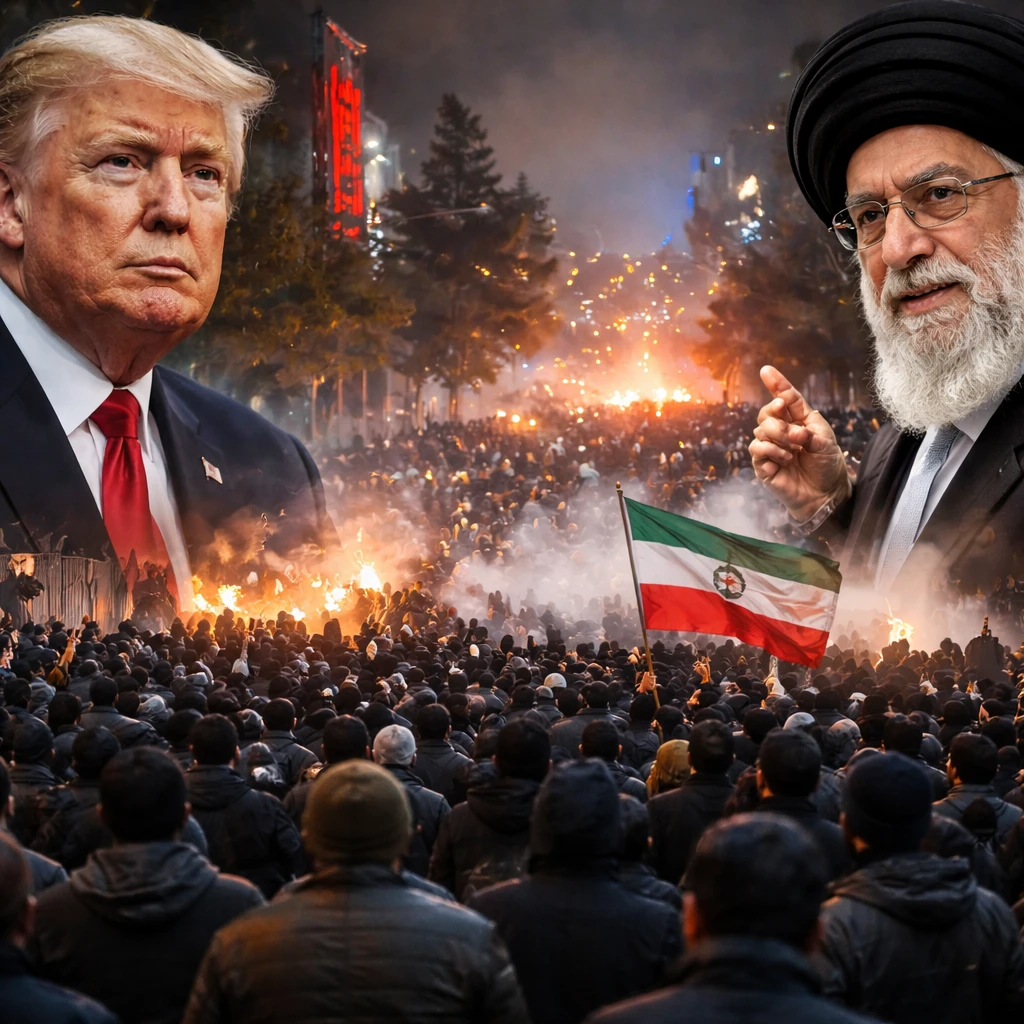
In Dubai, United Arab Emirates, the political climate between the United States and Iran appeared fraught yet tentatively hopeful as U.S. President Donald Trump announced that Iran desires to engage in talks with the U.S. This statement came on the heels of escalating tensions centered around Tehran's severe response to nationwide protests, with activists reporting that the number of fatalities has increased to at least 572 as of Monday.
Trump’s remarks followed a visit by Oman's foreign minister to Iran—a nation that has historically facilitated communication between Washington and Tehran. Despite this diplomatic movement, Tehran has not issued an official response to Trump's comments, and there remains considerable ambiguity about what Iran might offer in negotiations. This uncertainty is largely driven by the stringent conditions laid out by Trump’s administration, chiefly concerning Iran’s nuclear ambitions and its ballistic missile program, which Iranian officials affirm as vital to their national security.
Addressing foreign diplomats in Tehran, Iranian Foreign Minister Abbas Araghchi asserted that the situation within Iran is fully controlled. He attributed the unrest to external interference, specifically pointing to Israel and the United States as instigators of violence, a claim presented without accompanying evidence. Araghchi suggested that the violent nature of the demonstrations was exploited as a pretext by the U.S. to justify intervention.
His statements, broadcast by Al Jazeera—which retains the capability to report live from inside Iran despite internet blackouts—emphasized that Iran remains "open to diplomacy." Additionally, Iranian Foreign Ministry spokesman Esmail Baghaei indicated that communication channels with the United States remain operational, though any dialogue must respect mutual interests rather than unilateral demands.
On the domestic front, pro-government demonstrations swelled on Monday, showing support for Iran’s theocratic governance and its supreme leader, 86-year-old Ayatollah Ali Khamenei. State-run media conveyed scenes of tens of thousands chanting slogans against America and Israel, reinforcing the government's narrative. Iran’s attorney general has warned that charges against protesters could carry the death penalty, reflecting an intensified crackdown on dissent.
President Trump and his national security advisors reportedly are considering a spectrum of responses to Iran’s actions, including cyber operations and potential strikes by either the U.S. or Israel, as disclosed by anonymous sources familiar with internal deliberations. Trump stated from Air Force One that military options are under thorough review and warned of unprecedented repercussions should Iran retaliate.
He further acknowledged ongoing discussions to arrange diplomatic talks with Tehran, cautioning, however, that preemptive actions might be necessary given the mounting death toll and continued arrests of demonstrators. Trump posited that Iran is "tired of being beat up by the United States" and is inclined to negotiate. Conversely, the Iranian parliamentary speaker threatened that both U.S. and Israeli forces would become "legitimate targets" if they interfere militarily in favor of protesters.
According to the U.S.-based Human Rights Activists News Agency, more than 10,600 individuals have been detained during the two weeks of unrest. The organization, known for reliable reporting in prior unrest, attributes 503 deaths to protesters and 69 to security personnel. Due to communication blackouts imposed within Iran, independent verification of these figures remains challenging, as does assessing the ongoing scale of demonstrations and governmental responses. Iranian authorities have yet to release comprehensive casualty data.
The information blackout has raised concerns among international observers, fearing it emboldens hard-line security forces to adopt even harsher measures. Witness accounts confirm persistent protests in Tehran and other major cities, with some footage captured online suggesting continuing demonstrations into the following week, corroborated partially by state media acknowledgment.
On Monday afternoon, Iranian state television aired images of large gatherings around Enghelab Square in Tehran, labeling the event an "Iranian uprising against American-Zionist terrorism." Government officials encouraged public participation throughout the day, aiming to counter the narrative of dissent tied to economic grievances exacerbated by sanctions and currency depreciation.
The atmosphere in Tehran is reported as tense, with residents avoiding public spaces during prayer times out of fear of security crackdowns. Messages from police and paramilitary intelligence warn citizens against participating in protests, citing risks of violence and lethal force, further indicating a heavy-handed approach to maintaining order.
The protests initially sparked on December 28 due to the dramatic collapse of the Iranian rial, which now exchanges at more than 1.4 million to one U.S. dollar. The economic hardship is largely attributed to international sanctions linked to Iran's nuclear program. Over time, these demonstrations have expanded from economic complaints to direct challenges against Iran's theocratic leadership.
Adding a grim dimension, videos purportedly depicting numerous corpses at the Kahrizak Forensic Medicine Center near Tehran have circulated online. Individuals familiar with the facility and human rights monitors report the images show dead bodies in body bags in a large hall, with some corpses displayed on tarps outside. Such revelations starkly illustrate the human cost of the unrest and the government's severe response.