
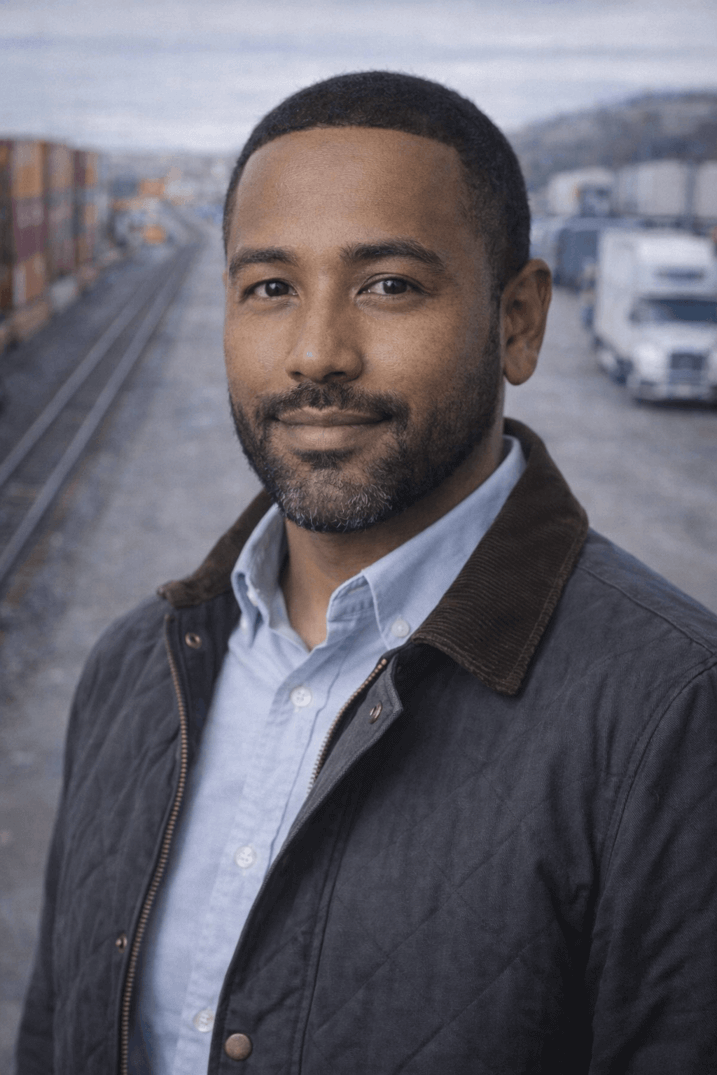
Christian Menefee commenced his congressional term on Monday as the newest representative of Texas’ 18th District, but he now confronts an immediate challenge: persuading constituents that he merits reelection in less than a month. His recent opponent in Saturday’s runoff, Amanda Edwards, is once again contesting for the seat in the Democratic primary scheduled for next month. Adding to the competition, Rep. Al Green, who previously served an adjacent district for numerous years, has been redistricted into the reshaped 18th District and is standing for election there as well.
Houston’s heavily Democratic electorate is navigating an unprecedented series of electoral events. After the unfortunate passing of their former representative nearly a year ago, residents were left without direct representation in the House. Before this vacancy was filled, Texas saw a state-led redrawing of congressional boundaries aimed at bolstering Republican prospects for the midterms, complicating the political landscape further and raising apprehension over potential voter disenfranchisement, especially in areas predominantly Black and Hispanic.
Shamier Bouie, chairwoman of the Black American Democrats of Houston, observed the toll these changes have taken on voters, calling the situation “exhausting” and emphasizing widespread confusion even among well-informed citizens.
The complexities emerge against the backdrop of the 2026 midterm election cycle, with Texas’ March 3 primary adopting freshly delineated congressional maps driven by a redistricting battle ignited by former President Donald Trump. This has heightened uncertainties regarding district boundaries and electoral representation.
Shampu Sibley, a novelist and Houston resident within the current 18th District borders, criticized the early mid-decade redistricting as a politically motivated maneuver orchestrated by the GOP-controlled state legislature. He expressed doubts about whether his residence would remain within the 18th District and voiced concerns the changes create barriers for Black and brown communities to effectively participate in the voting process.
The 18th District remains a Democratic enclave within a predominantly Republican Texas. In 2024, Democratic presidential candidate Kamala Harris secured about 69% of the district’s votes. The late Rep. Sylvester Turner, who passed away in March 2025, had also held the seat with significant support. Following Turner’s death, Republican Governor Greg Abbott called for an all-party primary to fill the vacancy months later than some Democrats preferred, a delay critics attributed to potential political advantage for House Republicans facing a narrow majority.
When the multi-candidate primary failed to yield a majority winner in November, Menefee secured victory against Edwards in a runoff held in early 2026. Both candidates voiced discontent with the interim period during which the district — encompassing large parts of Houston, the nation’s fourth-largest city — lacked direct representation.
Of particular concern has been the ongoing presence of Immigration and Customs Enforcement (ICE) agents operating in Houston with little public attention, a situation amplified by the absence of a sitting representative to advocate on behalf of the community, as noted by Edwards. She highlighted that the silence in Congress deprived residents of coordinated advocacy and collective action on pivotal justice issues.
Meanwhile, the Republican-led Texas Legislature enacted new congressional district lines in August under directive from Trump, intended to preserve Republican control of the U.S. House by strategically redrawing districts. Other states, including Democratic stronghold California, also created new maps post-2020 census data.
The reconfigured 18th District in southeast Texas, fully contained within Harris County, was fragmented across nearly six districts. Significant portions of its population now reside in districts other than the current 18th. This redistricting compelled Menefee and Edwards to campaign in a district with altered territory. Al Green's own home was placed in a newly drawn Republican-leaning district, prompting his decision to seek election in the more Democratic-leaning new 18th District.
This has set the stage for a notable contest featuring a generational contrast: Green, age 78 and an 11-term incumbent; Menefee, 37 and a former county attorney; and Edwards, 44 and a former Houston city council member.
Both Menefee and Edwards report spending significant campaign efforts clarifying election schedules and district boundaries to alleviate voter confusion, sometimes more than discussing policy agendas. Menefee cited instances where he discovered voters residing in different districts than expected, complicating outreach.
Voter confusion has also been exacerbated by overlapping election schedules. For example, on one occasion, a Houston voter approached a polling station expecting to participate in the March 3 primary early voting period, only to be turned away due to timing conflicts between the special runoff and the primary elections.
The simultaneous mail-in voting for a new district’s primary and the runoff for the current seat led to circumstances where voters effectively faced two elections concurrently. Edwards explained that the elections were not merely consecutive but overlapping, demanding campaign teams to navigate filing deadlines and preparation for successive contests simultaneously.
Such conditions have dampened morale among constituents. Menefee acknowledged a sense of disillusionment among voters, who may feel manipulated by the political process. Local entrepreneur Tobin Hellums described difficulties arising from changes in polling locations and limited early voting options tailored for the runoff ballot, which featured only one race, making the process more perplexing.
Weather also posed challenges; a winter storm forced closure of churches — key venues for voter education by local political groups like Bouie’s organization, which had planned to provide extensive outreach across ten prominent Black churches. Extended early voting periods due to weather disruptions further intensified overlaps between runoff and primary voting stages.
Looking ahead to March 3, the Democratic primary presents a crowded field: Menefee, Edwards, Green, and Gretchen Brown, a seasoned Defense Department official. Should no candidate achieve a majority, a May runoff is likely, prolonging the electoral contest.
Bouie summarized the sentiment among voters: “It feels like it’s going to go on forever,” reflecting the ongoing electoral intricacies in Houston’s 18th District as the 2026 midterms approach.