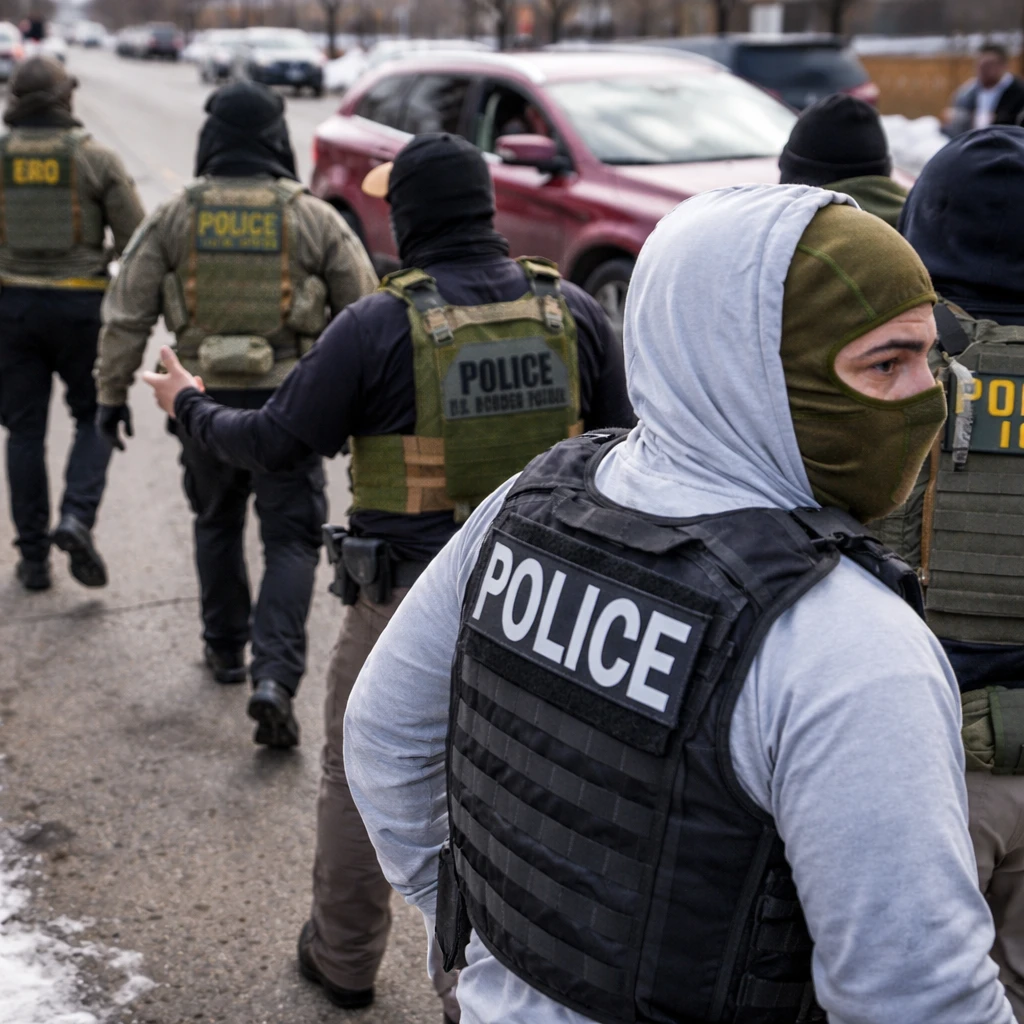

In recent immigration enforcement operations under the Trump administration, the sight of federal officers wearing masks has emerged as a contentious issue amid broader public unease about immigration tactics. The Department of Homeland Security (DHS) cites the need to protect agents from online harassment and threats as justification for masking, but critics argue that concealing officers’ identities sows fear within communities and threatens longstanding norms of transparency and trust between law enforcement and the public.
Masked federal agents have become a persistent image during immigration actions in cities such as Los Angeles and Chicago. The use of masks extends across thousands of officers, a scale unprecedented in modern U.S. policing. Despite DHS’s focus on safeguarding personnel, experts warn that this practice can undermine accountability and deteriorate community relations. The question of whether to prohibit or permit masking has become a pivotal issue in congressional debates over Homeland Security’s funding, which faces a deadline with the risk of partial government shutdown.
Justin Smith, former sheriff of Colorado and current CEO of the National Sheriffs’ Association, pointed out the communication barrier posed by masked agents: "Humans read each others’ faces — that’s how we communicate. When you have a number of federal agents involved in these operations, and they can’t be identified, you can’t see their face, it just tends to make people uncomfortable. That’s bringing up some questions." The inability to see officers’ faces is seen as a factor increasing public discomfort during enforcement actions.
Democrats have intensified calls for federal immigration agents to remove masks during operations, adopting the rallying cry "Cameras on, masks off." Their demands include the use of body cameras to enhance oversight and transparency. Public incidents, such as the shooting deaths of two American citizens during protests against Immigration and Customs Enforcement (ICE) raids in Minneapolis, have amplified these calls.
House Democratic Leader Hakeem Jeffries described lifting the masks from federal agents as a "hard red line" in upcoming Homeland Security funding negotiations. In response, ICE has maintained that masking safeguards officers and their families from "doxing," while affirming that officers carry badges and credentials to identify themselves when legally required. This defensive posture comes as ICE has rapidly expanded, doubling its personnel to 22,000 agents and offering $50,000 signing bonuses amid increased funding from the Trump administration’s tax overhaul.
Republicans generally oppose mandates to unmask officers, stressing that agents face real threats from individuals wishing to harm them or their families. Senator Thom Tillis, a North Carolina Republican, highlighted the dangers agents face when their identities are made public, citing threats to their loved ones as justification for continued anonymity.
ICE’s extensive use of masks stands in contrast to other law enforcement agencies, where masking is typically limited to undercover assignments or specific crowd control scenarios. Experts, including ACLU’s Naureen Shah, note that such widespread use of masks is "without precedent in modern American history" and suggest that the strategy deliberately intimidates communities. The ACLU warns that masked patrols can provoke fear and confusion, potentially making community members reluctant to engage constructively with law enforcement.
Legislative efforts to restrict masking have precedent. In 2020, Congress included provisions requiring masked federal officers to identify themselves in a defense authorization bill. California enacted legislation prohibiting most law enforcement officers from covering their faces, but the Justice Department has challenged the state, claiming such policies endanger agents.
Some officials advocate for a middle ground that balances officer safety with public transparency. Justin Smith proposed that officers could continue masking while clearly displaying badges or identification numbers to address community concerns about anonymity.
Still, advocates emphasize that removing masks alone may not sufficiently address broader issues in immigration enforcement. They urge Congress to reform enforcement methods, including restricting the use of administrative warrants—particularly for home entries—and eliminating practices that allow officers to stop individuals based on race, language, or workplace location. These efforts aim to increase judicial oversight and reduce racial profiling, citing concerns linked to the Supreme Court’s recent rulings.
Greg Chen of the American Immigration Lawyers Association emphasized the urgency of reforms given the significant funding DHS has received from recent tax legislation. Lawmakers like Rep. Ayanna Pressley point to the pervasive impact of the enforcement presence, noting the “heavy presence of surveillance and intimidation” affects all community members, regardless of immigration status.
The ongoing debate over masked federal immigration agents highlights the tension between officer safety and public accountability within the broader context of aggressive immigration enforcement policies. The outcome of this debate will influence operations, public trust, and the course of Homeland Security funding priorities in the near term.