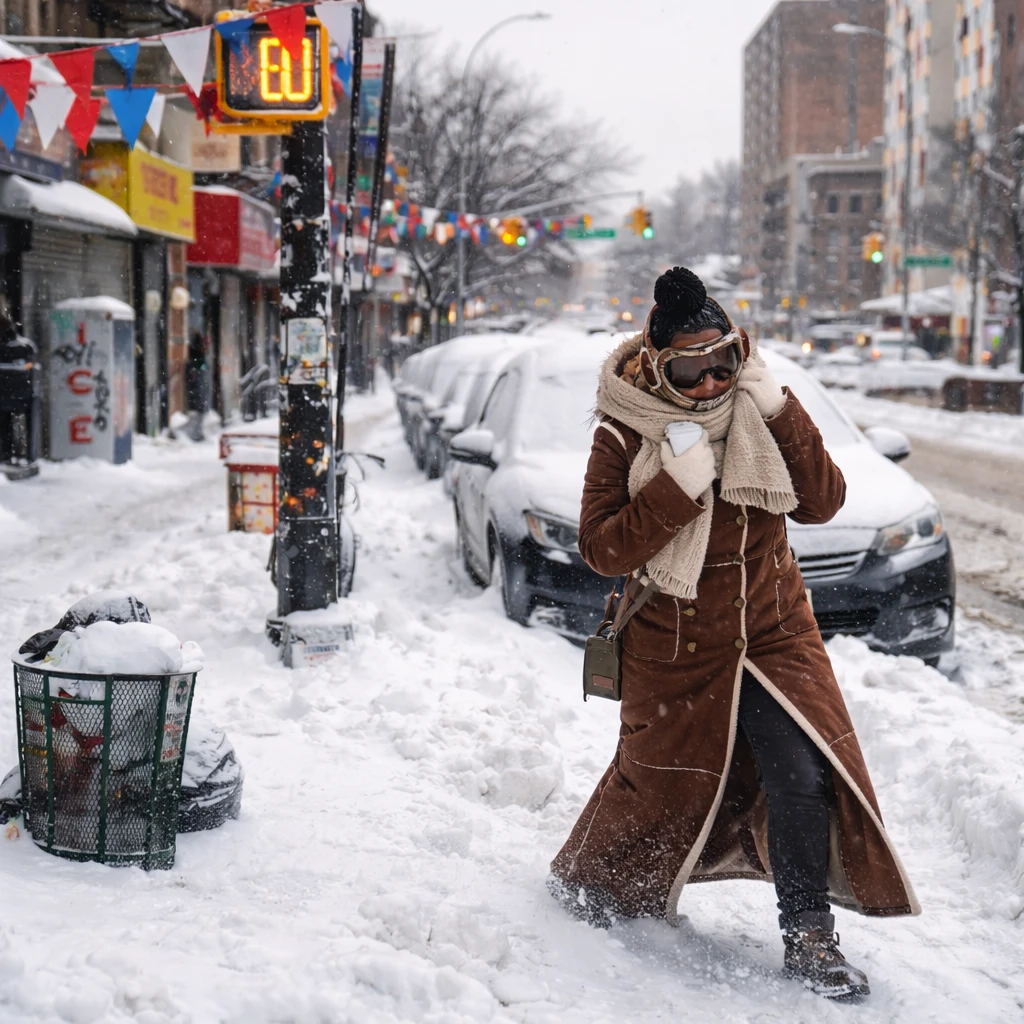

Across vast portions of the United States, a harsh cold front has dominated weather reports for the past 11 days. While such frigid conditions are by no means extraordinary from a historical standpoint, many Americans perceive this winter chill as especially severe. The divergence largely stems from the relatively warm climate experienced in the first 25 years of the 21st century, primarily influenced by human-driven climate change. This warming trend has rendered prolonged cold spells increasingly unfamiliar, particularly to younger individuals.
Experts specializing in meteorology and human behavior highlight that the rarity of bone-chilling cold in recent times intensifies its felt severity. Hannah Perfecto, a consumer behavior scholar at Washington University in St. Louis, notes the human tendency to adapt to repeated stimuli. She draws a parallel with how the pleasure of a dessert diminishes after multiple bites, similarly, the initial day of a cold snap causes greater shock compared to subsequent days, which feel easier to endure.
This year’s experience contrasts notably with recent winters marked by milder temperatures. Charlie Steele, aged 78 and a retired federal employee from Saugerties, New York, describes his own affinity for cold weather, including previous winter outings in shorts and barefoot in snow. Despite this, he comments that this January’s deep freeze is the coldest he’s encountered in memory.
Supporting Steele's observations, Climate Central’s data reveal a decline of approximately four subfreezing days annually in the U.S. from 2001 to 2025 compared to the previous 25 years. Additionally, these cold spells have become less geographically extensive and shorter in duration—trends reversed only by the current winter. In Albany, New York, situated near Steele’s residence, the drop in subzero days exceeds the national average by five, translating to 11 fewer days below freezing in the recent quarter-century.
Steele reflects on this shift in weather patterns, suggesting a collective societal lapse in acclimatization to extreme cold, leading to a sense of complacency. This phenomenon is particularly evident among younger populations, for whom this could be the coldest period experienced to date. Daniel Swain, a climate expert at the University of California's Water Resources Institute, observes that for those under 30, segments of this deep freeze might represent an unprecedentedly cold interval in their lifetime.
Jennifer Francis, a climatologist at the Woodwell Climate Research Center, underscores human adaptation to environmental conditions, noting familiarity with city noise, heat, political discourse, and even bitter winter cold. She adds that when a typical cold episode occurs, it strikes more keenly due to the absence of recent regular encounters.
Historical data further elucidate this sensation of unfamiliar cold. Examination of average daily low temperatures shows a pronounced reduction in the frequency of extremely chilly days. Meteorologist Ryan Maue points out that over the past 30 years, continental U.S. temperatures falling below 10 degrees Fahrenheit occurred 40 times, a stark contrast to 124 occurrences during the preceding 30 years. Texas A&M University climate scientist Andrew Dessler emphasizes how public memory of 20th-century cold extremes has faded, with the recent surge in severe lows creating a jarring rediscovery. Late last month, the national average dipped below this threshold three times in a single week, underscoring the dramatic nature of the cold snap.
Beyond perceptual impacts, the cold weather poses tangible risks. Increased road hazards from ice, potential power outages leaving homes without heat, and dangerous travel conditions have been reported. Since January, over 110 fatalities have been linked to the winter storms and freezing conditions.
Thomas Rutledge, a psychiatrist at the University of San Diego, describes a phenomenon he terms "weather rustiness," reflecting diminished skills or readiness to manage recurrent winter-related challenges after extended periods of milder conditions. Rutledge recounts his observations in Alaska, where despite presumed expertise, accidents spike after the first major snowfalls each season due to lapses in practical cold-weather driving proficiency.
While Alaska has long contended with such conditions, the present cold front’s reach into southern cities like Dallas and Miami exacerbates vulnerabilities. Jennifer Francis points out that these locales lack not only habitual acclimatization but also infrastructure and utilities equipped for severe cold, amplifying difficulties.
Despite the perception of abnormal duration, the current cold snap does not break records for length when considering more than a century of regional weather data from 400 continental U.S. weather stations, as compiled by the Southeast Regional Climate Center. Only a small subset of 33 stations have recorded sufficient subzero extremes in early 2026 to rank them among the coldest 10% for the first month of any year in the past hundred years.
Looking to Steele’s personal history illustrates regional climate shifts. When he relocated to the Hudson Valley in 1949, the average daily low temperature across the previous decade’s winters was 14.6 degrees Fahrenheit. Comparatively, the last 10 years have seen an average daily low of 20.8 degrees Fahrenheit, indicating a warming trend. Steele recalls youthful winter activities such as hunting and sitting on cold rocks for prolonged periods, a capacity diminished with advancing age and presumably altered climate patterns.
The ongoing financial support for climate and environmental journalism remains critical to illuminating such topics. Editorial control and content decisions rest solely with the reporting institution and adhere to rigorous standards for transparency and ethical partnerships.