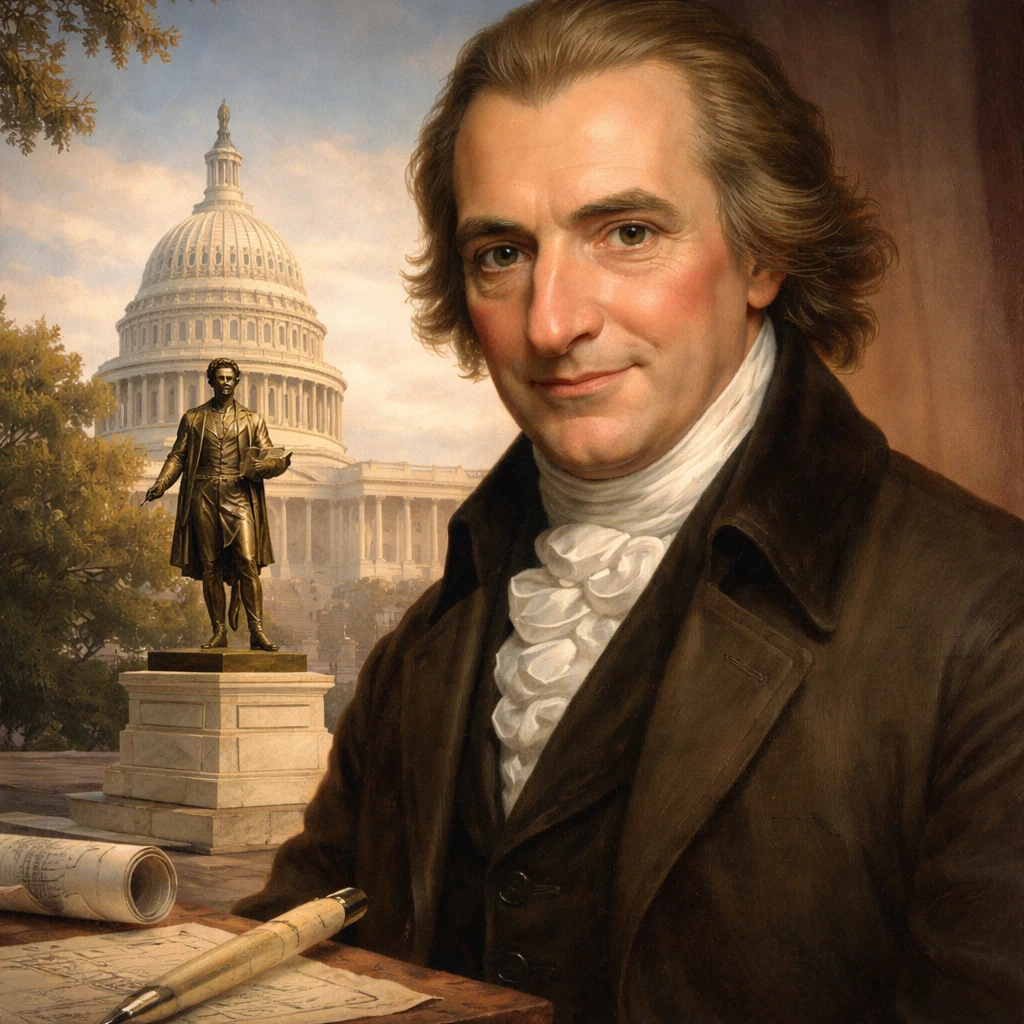

As the nation reflects on the 250th anniversary of Thomas Paine’s influential pamphlet "Common Sense," which helped propel the American colonies toward independence, a longstanding initiative to honor Paine with a memorial in Washington, D.C., is approaching a pivotal juncture. Authorized in 2022, this proposed memorial awaits the approval of the U.S. Department of Interior, a crucial step toward establishing the first official monument in the capital dedicated exclusively to one of the Revolutionary era’s most compelling and controversial figures.
U.S. Representative Jamie Raskin, a Democrat from Maryland who sponsored the bill endorsing the memorial, emphasized Paine’s vital role and ongoing underappreciation. He described Paine as “a critical and singular voice” whose contributions have long been overlooked despite their profound impact on American independence.
The timing of the memorial proposal coincides with the quarter-century commemoration of the Declaration of Independence, highlighting Paine’s enduring influence. While supporters of the memorial have awaited such recognition for decades, the project still confronts obstacles typical of federal memorial efforts: congressional initiation paired with reliance on private funding. This pattern has previously hindered similar undertakings, as exemplified by a 1992 bipartisan legislation signed by President George H.W. Bush that authorized a Paine memorial but ultimately stalled due to insufficient financial backing and diminished momentum by the mid-2000s.
Currently, the memorial's progress depends in part on the endorsement of Doug Burgum, the Secretary of the Interior. In September 2024, the National Capital Memorial Advisory Commission recommended the memorial for placement on the National Mall, but Burgum’s support is needed before the plan can be forwarded back to Congress for final approval. Once enacted, the memorial’s construction would need to be completed by 2030. When questioned about the timeline for a decision, a department spokesperson declined to comment.
Margaret Downey, president of the Thomas Paine Memorial Association, expressed optimism regarding the outcome: “We are staying optimistic because we feel that Thomas Paine is such an important figure in the founding of the United States of America.” This association remains committed to establishing the memorial in Washington.
Despite Paine’s celebrated role in American independence, his legacy remains complex. His earlier acclaim from "Common Sense" contrasts with the controversy surrounding his later publications, particularly "The Age of Reason," which launched a critical examination of organized religion. Paine acknowledged belief in a divine creator but rejected adherence to any single faith, denouncing aspects of Christianity as unreasonable. Due to these views, Paine's later years were marked by estrangement from many former allies; reports indicate that only a few mourners attended his funeral in New York in 1809.
Historically, federal recognition of Paine's contributions faced resistance. Prominent figures openly disparaged him; for instance, Theodore Roosevelt labeled him a "filthy little atheist." Nevertheless, Paine has been championed by a broad ideological spectrum over time, from labor leaders and communists to inventors like Thomas Edison. Physical memorials dedicated to Paine exist in other parts of the country, such as New Rochelle, New York, and Morristown, New Jersey, although some communities have been hesitant or rejected commemorations, citing his polarizing character.
Author Harvey J. Kaye highlights a turning point with the election of Ronald Reagan in 1980. Reagan, despite representing a conservative movement, cited Paine during his Republican National Convention acceptance speech, advocating for Paine’s call to action: “We have it in our power to begin the world over again.” This gesture reportedly helped bridge political divides concerning Paine’s legacy and paved the way for bipartisan support, culminating in the 1992 congressional approval of the memorial, which garnered backing from diverse senators including Democrat Ted Kennedy and Republican Jesse Helms.
Paine’s personal journey reflects a quintessential American narrative. Born Thomas Pain in 1737 near London, he immigrated to the colonies with limited financial means but with a vision for a better future. Prior to arriving in America in 1774, Paine experienced varied employment and financial difficulties in Britain, including working as an apprentice, educator, government officer, and shopkeeper. Encounters with London’s intellectual circles equipped him with radical ideas on governance and religion.
Upon settling in Philadelphia, Paine connected with Benjamin Franklin, who facilitated his involvement with The Pennsylvania Magazine. When the Revolutionary War commenced in 1775, Paine’s advocacy through pamphlets like "Common Sense," released in January 1776, resonated widely. Though the exact number of copies sold is uncertain, the pamphlet’s influence in advancing calls for complete independence was significant. Paine’s arguments against monarchy were bold, decrying hereditary rule as both "evil" and "ridiculous." His accessible prose helped sway public opinion from reluctant opposition to an urgent quest for liberty.
While admired by figures such as George Washington and Thomas Jefferson, Paine’s writings drew sharp criticism from others, including John Adams, who disparaged him as a "star of disaster." Franklin expressed reservations about Paine’s blunt style. Nevertheless, Paine’s insistence on the sovereignty of the people and skepticism toward entrenched institutions have ensured his continued relevance.
In contemporary times, Paine’s words still reverberate across the political spectrum. For example, Supreme Court Chief Justice John Roberts invoked "Common Sense" in his 2025 year-end report on the federal judiciary, highlighting Paine’s avoidance of complex legal jargon and his assertion that government exists to serve the citizenry. Moreover, the pamphlet’s themes surfaced prominently during recent nationwide demonstrations under the "No Kings" banner, opposing certain policies with signs echoing Paine’s rejection of tyranny.