
On Monday, the Tokyo District Court delivered a ruling assigning responsibility to North Korea for long-standing human rights violations against four plaintiffs who were misled by the North Korean government’s postwar assurances of an idyllic life. The court mandated compensation payments totaling 22 million yen (approximately $143,000) per individual, a decision hailed by survivors and advocates as unprecedented.
Kenji Fukuda, representing the plaintiffs, emphasized the importance of the court’s recognition of North Korea’s violations. However, he cautioned that the ruling’s practical impact remains uncertain, stating that receiving the monetary damages presents a considerable challenge.
The repatriation program, which ran from 1959 through 1984, promised overseas Koreans and some Japanese a life enriched by free healthcare, education, employment, and other benefits within North Korea—described equivocally as a "paradise on Earth." Instead, the court found that the plaintiffs endured protracted deprivation of liberty and lived under harsh, restrictive conditions without the freedom to choose their residence, schooling, or work opportunities. Judge Taiichi Kamino noted that many faced severe food shortages and lived through extreme cold, and remarked that the consequences effectively shattered their lives. The judgment ordered North Korea to pay a combined sum of 88 million yen (roughly $572,000) to the plaintiffs.
The lawsuit originated in 2018 with five plaintiffs demanding 100 million yen each, citing unjust solicitation and unlawful detention. Since then, two plaintiffs have passed away, though one represented by a son remains active in the case, resulting in four current plaintiffs. An earlier 2022 verdict acknowledged that the plaintiffs had been deceived by false information disseminated by North Korea and Chongryon, a pro-North Korean organization in Japan. Yet the court at that time dismissed compensation claims due to jurisdictional ambiguities and statute of limitations concerns.
Following an appeal, the Tokyo High Court in 2023 upheld the position that North Korea infringed upon the plaintiffs’ fundamental rights and affirmed Japan’s jurisdiction over the matter. It returned the case to the lower court with instructions to reassess damages owed. Notably, Japan and North Korea lack formal diplomatic relations, and North Korea has not participated or responded to the proceedings.
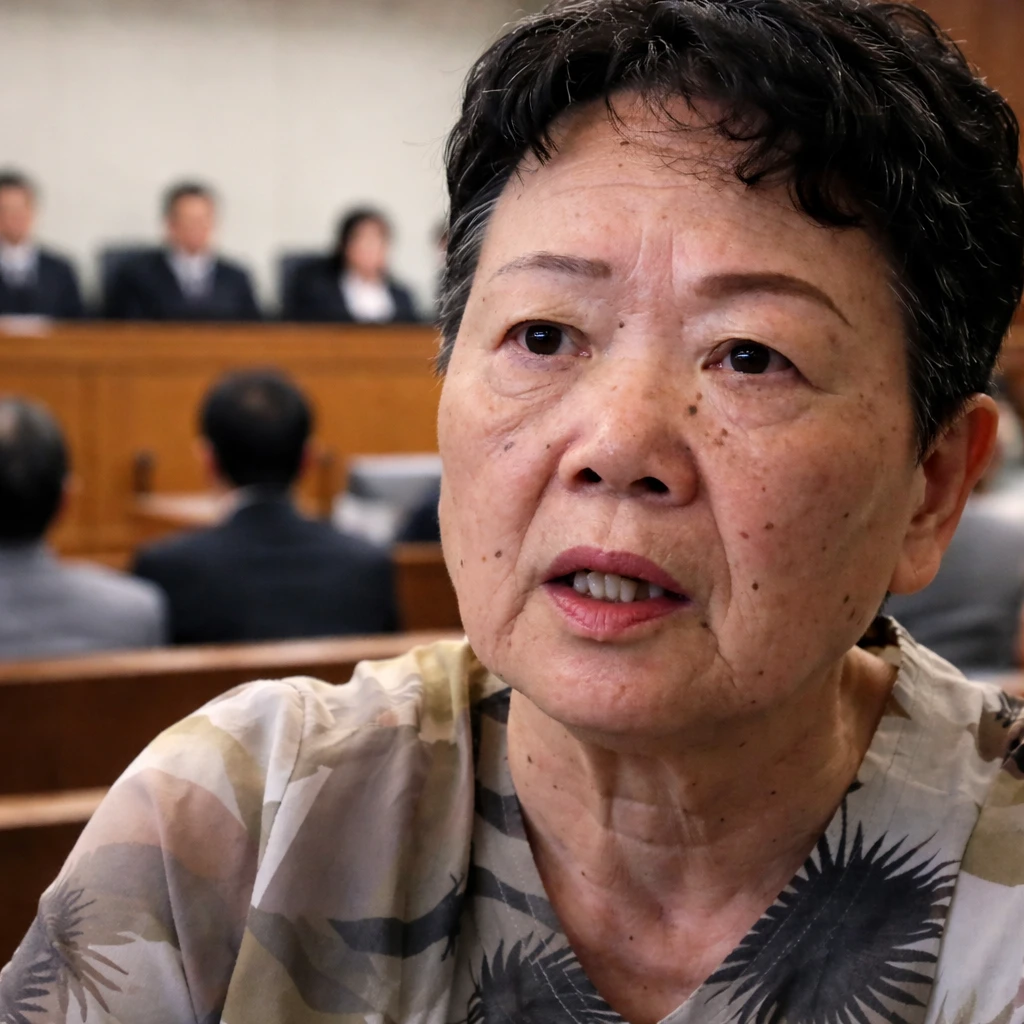
Among the plaintiffs is 83-year-old Eiko Kawasaki, a second-generation Korean born in Kyoto. Kawasaki recounted boarding a ship to North Korea in 1960 after enticement campaigns by Chongryon. Upon arrival, she encountered destitute conditions, observing the suffering of many and dilapidated infrastructure—realities starkly at odds with the promised utopia. She remained in North Korea for 43 years, ultimately defecting through China in 2003, becoming one of the very few survivors to escape. While some of her family have since fled, Kawasaki has been unable to contact others following North Korea’s border closures during the COVID-19 pandemic, leaving her uncertain about their wellbeing.
Kawasaki characterized the court ruling as an initial step, anticipating North Korea will disregard the decision. Her lawyer suggested potential avenues such as seizing North Korean assets within Japan to facilitate compensation, although specific plans were not detailed.
The plaintiffs also advocate for governmental acknowledgment of Chongryon’s role and seek an apology from the Japanese government regarding its involvement in brokering the repatriation agreement between the Japanese and North Korean Red Cross societies, despite Japan not actively promoting the program. Furthermore, Kawasaki stressed the need for assistance from the Japanese government to support repatriation victims who remain stranded in North Korea, paralleling the suffering experienced by Japanese citizens abducted in the 1970s and 1980s.
Kane Doi of Human Rights Watch underscored the ruling’s significance and called on Japan to expand efforts holding North Korea accountable, facilitating resettlement options for survivors and their families.
Japan is home to approximately half a million ethnic Koreans who often confront societal discrimination. Many are descendants of Koreans forced into labor during Japan’s colonial rule of the Korean Peninsula from 1910 to 1945, a historical legacy that continues to complicate relations between Japan and the Korean states.
North Korea initiated its resettlement program in 1959 to compensate for labor shortages following the Korean War, attracting over 93,000 ethnic Korean residents of Japan, their Japanese spouses, and relatives. The Japanese government, viewing ethnic Koreans as outsiders, facilitated the departures. To date, only around 150 individuals from this group have returned to Japan, according to organizations assisting North Korean defectors.