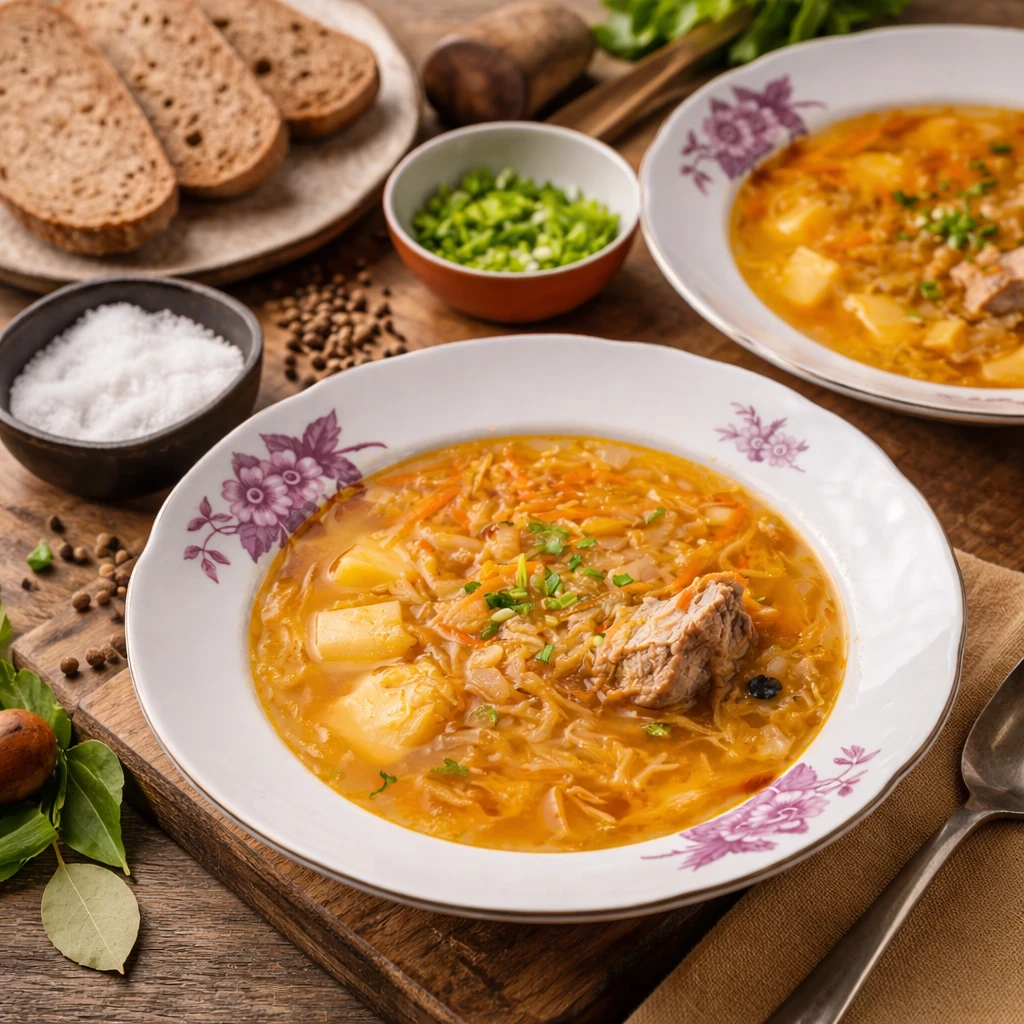

In Ukrainian culinary traditions, incorporating fermented vegetables in the initial course of a meal is a widespread practice. Among these dishes, sauerkraut soup, known locally as kapusnyak, holds significant popularity. While the concept of a soup based on pickled ingredients might seem unconventional to some, kapusnyak delivers an impressive blend of flavors that resonate deeply within Ukrainian gastronomy. The recipe outlined here is adapted from the cookbook The Authentic Ukrainian Kitchen and is simple enough for regular preparation throughout the colder months.
The defining characteristic of this dish lies in its combination of sauerkraut with pork, where the acidic profile of the fermented cabbage expertly counterbalances the pork’s fatty richness, creating a layered taste experience. A note for those interested in variations: some Ukrainian cooks opt for versions made with fresh cabbage instead of sauerkraut. To replicate this, simply substitute half the sauerkraut with finely shredded fresh cabbage to create a different texture while maintaining authenticity.
Kapusnyak (Sauerkraut Soup) Recipe
Servings: 4 to 6
Ingredients
- 1 pound (450 grams) boneless pork shoulder
- 1 bay leaf
- 2 allspice berries
- 1 large carrot
- 1 large onion
- 2 tablespoons (30 milliliters) sunflower oil
- 2½ cups (300 grams) sauerkraut
- 4 to 5 medium starchy potatoes
- Kosher salt and freshly ground pepper, to taste
Instructions
- Begin by cutting the pork shoulder into bite-sized pieces and place them in a medium-sized stockpot. Cover the meat completely with cold water and bring to a vigorous boil over medium heat. Once boiling, reduce the temperature to maintain a simmer and cook the meat for approximately one hour. Throughout the cooking, intermittently skim away and discard any foam that forms on the surface.
- After one hour, add the bay leaf and allspice berries to the simmering broth. Continue to cook gently over low heat, allowing the spices to infuse.
- While the broth simmers, prepare the vegetables. Use a box grater to shred the carrot and peel and dice the onion. Heat sunflower oil in a sauté pan over medium heat; add the shredded carrot and diced onion, cooking until aromatic.
- Incorporate the sauerkraut into the sauté pan and ladle some broth from the pot to keep the vegetable mixture moist as it cooks. Once the sauerkraut and vegetables have softened, remove the pan from heat.
- Next, peel and dice the potatoes, adding them directly to the broth. Simmer this mixture for roughly 20 minutes until the potatoes are tender.
- Add the sautéed vegetables to the pot with the potatoes and broth. Increase the heat to bring the soup to a rapid boil, then lower it to a simmer for about five minutes. Remove the pot from heat afterward.
- Season the soup to taste with kosher salt and freshly ground black pepper. Allow the soup to rest briefly before serving to let the flavors meld.
Kapusnyak presents a distinctive blend of the sharpness inherent in fermented vegetables alongside the hearty, comforting force of pork-infused broth. This dish not only embodies Ukrainian culinary heritage but also showcases the versatility of sauerkraut as a key ingredient capable of balancing richer components in traditional cooking.