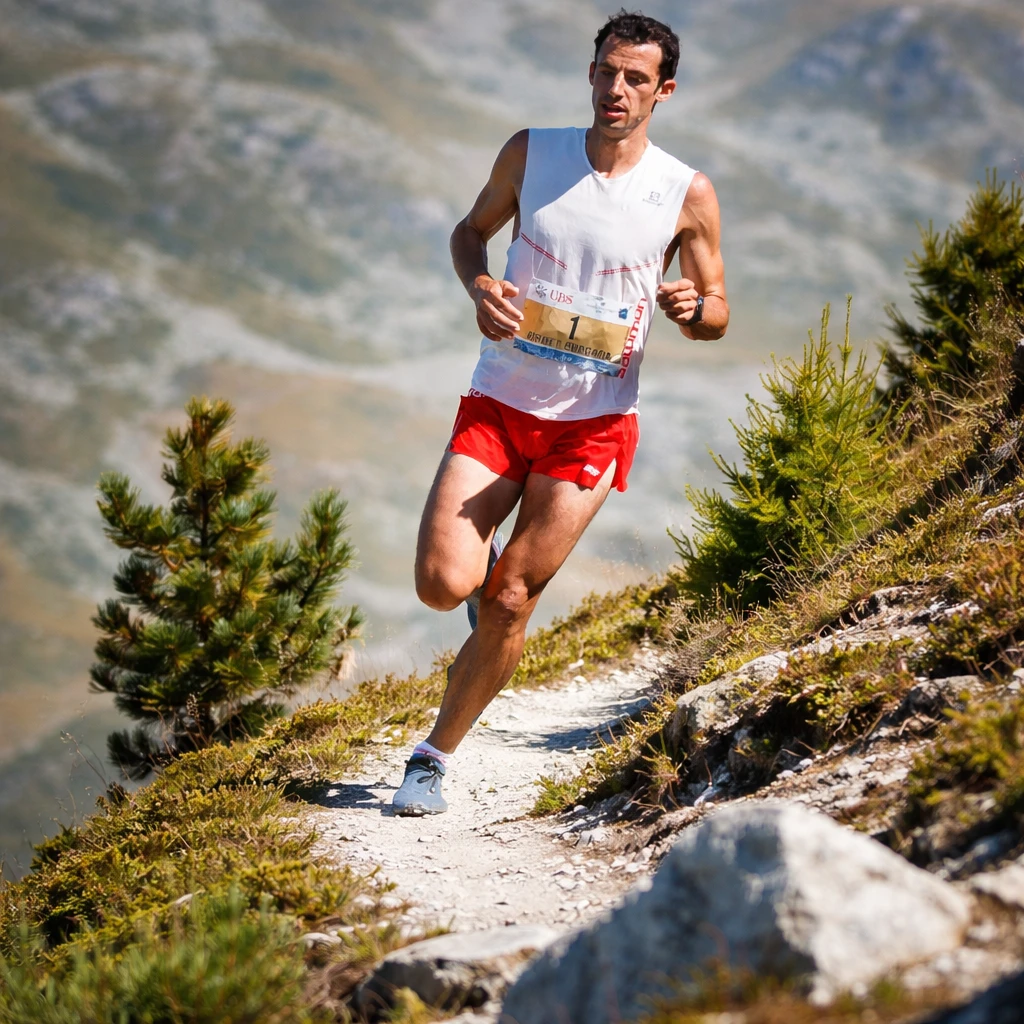

Increasingly, hikers along demanding terrains have likely observed an emerging trend: individuals swiftly traversing trails with a nimbleness that recalls mountain goats adept at maneuvering rocks and roots. This phenomenon is tied to the rapid rise in trail running's popularity, a sport encompassing a spectrum of outdoor running experiences. These range from off-road jogging along unpaved coastal routes to highly demanding alpine ultramarathons. Among these variants, mountain running involves propulsion along steep, varied surfaces often requiring climbing or scrambling, while sky running pertains to even steeper ascents typically occurring above 2,000 meters (approximately 6,562 feet).
Kilian Jornet, an esteemed Spanish athlete hailing from the Catalan Pyrenees, has significantly contributed to popularizing long-distance running in natural wilderness settings. His accomplishments include holding multiple world records in trail running and ski mountaineering. Jornet has won Europe’s Ultra-Trail du Mont-Blanc four times—a grueling 170-kilometer (105-mile) ultramarathon with a vertical gain of 10,000 meters (32,808 feet)—and has claimed victory five times at the Hardrock Hundred, a similarly challenging endurance race set in Colorado.
Most recently, in early October, the 38-year-old Jornet completed an extraordinary challenge: ascending 72 mountains of 4,200 meters (14,000 feet) elevation in the American West over 31 days, traveling solely on foot or by bicycle between peaks. Despite these remarkable feats, Jornet stresses that trail running is accessible to anyone willing to approach it with respect for nature and a focus on safety. In a correspondence conducted via email from his home in Norway while caring for his newborn, Jornet provided insights and practical advice for newcomers to the sport. His responses have been edited for brevity.
When asked about foundational guidance for aspiring trail runners, Jornet advises adopting a patient and appreciative attitude. He recommends savoring the natural surroundings and gradually conditioning the body to cope with diverse terrain and environmental conditions. A suggested method is to begin by walking on easy trails and progressively integrate short intervals of running, concentrating on comfort and safety.
Jornet identifies a prevalent error among novices: attempting excessive distances or speeds prematurely. The human body demands time to acclimate to aspects including altitude, technical trail challenges, and physical impacts. Underestimating rapid weather fluctuations or overestimating endurance levels is common. He cautions, however, that his own extensive daily training for over 30 years endows him with adaptations not present in beginners.
For those just starting, Jornet suggests targeting loops between 3 and 5 kilometers (approximately 1.8 to 3.1 miles) with gentle elevation changes and trails that are broad and unobstructed by technical difficulties. The indication of a healthy progression is finishing with the energy and readiness to continue further. He recommends practicing two to three times per week initially, blending walking and running while prioritizing enjoyment over volume.
Regarding prerequisite skills, Jornet notes that while road running may provide beneficial experience, it is not mandatory to be proficient in road running before exploring trail running. The latter demands additional competencies such as enhanced balance, coordination, and heightened terrain awareness, all of which can be developed through experience.
Trail running differs from road or track running in safety considerations due to the unpredictable and rugged terrain featuring rocks, roots, and mud. Participants must maintain heightened attentiveness and physical stability. Moreover, mountain weather can shift quickly, and emergency assistance may be located far from the trail, highlighting the need for thorough preparation.
Jornet emphasizes that trail running is inclusive and suitable for all, provided participants exercise responsibility. A broad spectrum of routes can accommodate varying skill levels, ranging from straightforward to highly technical trails. Essential safety practices include informing trusted individuals about planned routes, recognizing personal limits, and progressing gradually. Above all, he underscores the importance of enjoyment.
While running with a companion can benefit beginners, it is not compulsory; solo runs are viable with proper preparation. Whether alone or not, sharing one's intended path and expected return time with someone else is crucial. Prior to embarking, detailed route planning, weather assessment, and knowledge of local emergency contact procedures are necessary. Specialized mountain rescue teams often exist, and awareness of how to reach them is valuable. Utilizing GPS tracking apps can further enhance safety by enabling loved ones to monitor progress.
Essential gear includes appropriate footwear, lightweight jackets, hydration, nourishment, and basic safety equipment. Jornet typically carries a charged phone, protective clothing for weather, water, and easily digestible energy sources such as gels, nuts, dried fruit, or bars. Beginners might also consider a compact first-aid kit and thermal blanket. Consistent intake of fluids and food in small amounts throughout activity is advisable.
Complementary sports that aid trail running performance include hiking, skiing, cycling, and climbing; these activities build endurance and strength with minimal joint impact. Cross-training serves as a preventive measure against injuries, and gym-based exercises can enhance strength, flexibility, and balance.
As for participation in competitions, Jornet recommends entering races like short 5–10 kilometer events after running begins to feel natural and usual routes are completed comfortably. Such events should inspire excitement, not stress.
There is no rigid age restriction for initiating trail running; children can start with hiking and exploring trails, while adults can begin at almost any age by adjusting intensity. The pivotal element is to find pleasure in the activity.
Reflecting on the sport's evolution, Jornet observes significant growth since his youth, when mountain running was a rarity and met with skepticism. The current widespread involvement is positive, provided it is coupled with respect and care for the natural environment.
He acknowledges that some popular trails experience crowding, particularly during summer months, preferring solitude himself and thus selecting less frequented locales.
Jornet confirms the presence of environmental degradation linked to trail running, including littering, noise pollution, and damage to sensitive areas. He calls on newcomers to regard nature as a living entity warranting stewardship by adhering to established trails, practicing leave-no-trace principles, respecting wildlife, and fostering courteous interactions with others encountered.
The true reward in trail running, according to Jornet, lies not in speed but in the discovery of landscapes, self-awareness, and a profound connection with nature.