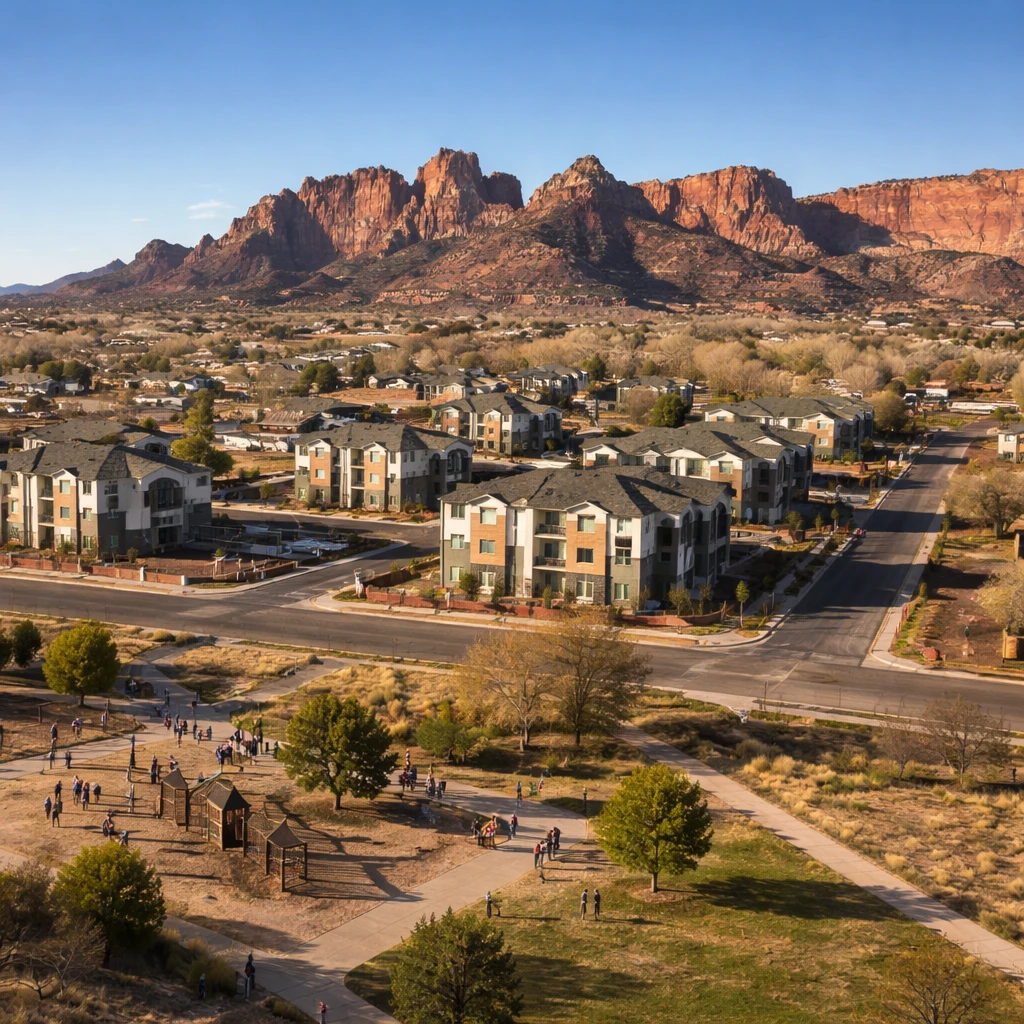

The towns of Colorado City, Arizona, and Hildale, Utah, located near Zion National Park along the Arizona-Utah border, have undergone a profound change in recent years. Historically characterized by distinctive prairie dresses, isolated compounds, and a strong mistrust of outsiders, the towns now resemble more typical small communities with recreational youth sports, bars, and even a local winery.
This shift was catalyzed by judicial intervention that wrested control from the Fundamentalist Church of Jesus Christ of Latter-Day Saints (FLDS), a polygamous sect led by Warren Jeffs, who is currently serving a life sentence for sexual assault of minors. Activities previously prohibited under sect rule, including youth sports and public celebrations, are now part of everyday life. The towns were released from court supervision last summer, nearly two years before the expected timeframe.
Willie Jessop, former spokesperson for the FLDS who later dissociated from the group, described the current state as "life after Jeffs," highlighting the extensive internal upheaval required for the community’s transformation.
While some former members recall positive memories within the FLDS, such as communal care among mothers and children's recreational activities, conditions deteriorated after Jeffs assumed leadership in 2002. His regime involved forcibly separating families, redistributing wives and children, removing children from public schools, and tightly controlling community life and resources.
Shem Fischer, who left the towns in 2000 following familial separation imposed by the church and later returned as a business owner, characterized the period under Jeffs as a descent into a dark, cult-like atmosphere.
The community origins trace back to the 1930s when FLDS adherents settled in these towns to continue practicing polygamy after separating from the mainstream Mormon church, which renounced the practice in 1890. Authorities largely ignored polygamy in the area until Jeffs’ leadership drew intense scrutiny in the 2000s. His 2005 charge for arranging an underage marriage and subsequent evasion led to his addition to the FBI's Ten Most Wanted list, arrest, and eventual imprisonment in 2011.
Post-arrest, the towns faced significant legal challenges. Federal prosecutors accused municipal authorities of operating under FLDS direction, denying services such as building permits and police protection to non-members. A 2017 court order removed church officials from local government and police, with oversight extended to a trust controlling FLDS real estate. This trust was gradually transitioned to a community board responsible for property sales.
Roger Carter, the court-appointed monitor, noted the towns’ transition from a theocracy to a more standard form of representative government. The legacy of the FLDS’s land control via the trust introduced challenges, including unfamiliarity with private property rights and concerns about religious bias in civic decisions. Nevertheless, Carter documented a shift toward governance attentive to the broader residents' interests prior to the lifting of court supervision.
With diminished FLDS influence and leadership imprisoned, many members left or relocated. New places of worship have emerged, and practitioners are estimated to now represent a small minority of the towns' populations.
Hildale Mayor Donia Jessop, previously distantly related to Willie Jessop, emphasized community progress and personal reconciliation, noting that tragic events such as the 2015 flood brought former residents back together to search for missing loved ones, fostering renewed family connections.
Longtime resident Isaac Wyler, expelled from the FLDS in 2004 and previously subjected to social ostracism and denial of services, observes that current interactions with businesses and police no longer hinge on religious affiliation. He highlights the arrival of new amenities such as supermarkets, banks, and pharmacies, indicative of standard town life, alongside incoming residents unaffiliated with the FLDS.
Gabby Olsen and her husband Dion Obermeyer, newcomers attracted by the region's natural environment, noted frequent skepticism about their choice to live in an area once dominated by polygamy, only to discover a community that includes unexpected elements such as a winery.
Despite these advancements, residual FLDS presence persists, and new challenges have surfaced. The increased openness has been accompanied by typical societal problems including drug use. Moreover, instances of polygamy continue, highlighted by a 2024 conviction of a Colorado City sect member for coercing underage girls into sexual acts, resulting in a lengthy prison sentence.
Briell Decker, who entered an arranged marriage with Jeffs as a teenager and later left the church, now works at a residential support center aiding those exiting polygamy. She believes recovery from FLDS abuses will span generations, noting ongoing denial and lack of accountability within parts of the community.