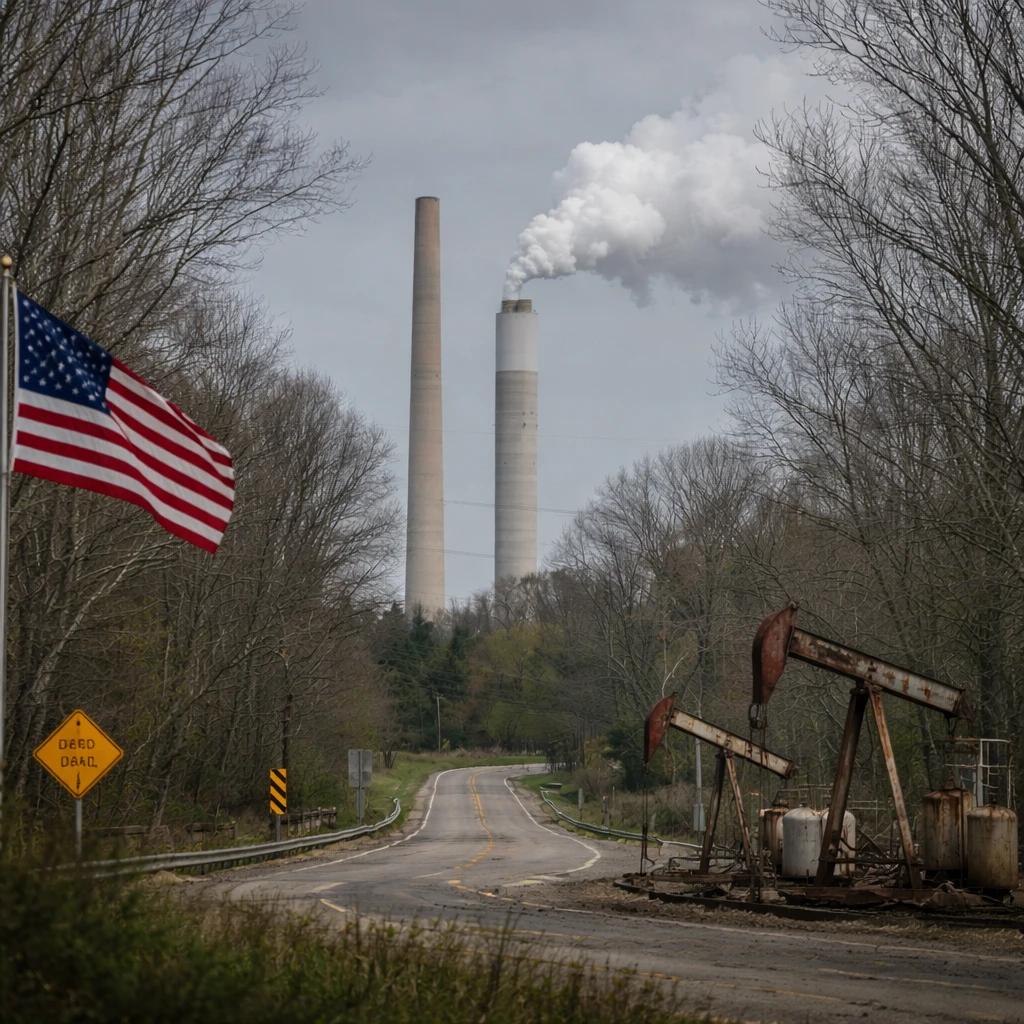

During the first year of the Trump presidency, the Environmental Protection Agency (EPA) has experienced a fundamental transformation, marked by reductions in federal limits on air and water pollutants and an emphasis on supporting fossil fuel production. This reorientation diverges notably from the agency's historic role focused on protecting human health and preserving the environment.
According to agency leadership, such changes aim to stimulate economic growth across the United States. However, environmental advocates warn that this rapid shift threatens to dismantle substantial progress made on climate-friendly policies—developments that may prove difficult or impossible to reverse in the future.
Historian Douglas Brinkley critiqued the agency's direction, stating that the administration appears intent on reversing environmental protections back to a period prior to the EPA's creation during the Nixon era, effectively favoring the fossil fuel industry.
The agency, frequently referred to as "Trump’s EPA" by its administrator Lee Zeldin, has embarked on a series of initiatives including proposals to overturn the established finding that climate change poses a threat to human health. Zeldin has vowed to repeal numerous environmental regulations, describing this agenda as the nation's most extensive deregulation effort in recent memory. Furthermore, billions of dollars allocated for clean energy initiatives were frozen, and ongoing agency research activities were disrupted.
Zeldin maintains that economic growth and environmental protection can progress simultaneously. He outlined five guiding principles for the EPA's operations, four of which focus specifically on economic objectives such as pursuing energy dominance—a term used to describe increased fossil fuel production—and revitalizing the automotive industry.
Although previously recognized as a moderate Republican on certain environmental matters, Zeldin described a shift in his stance regarding climate change policies, contending that many federal and state targets are unachievable in the near term and entail substantial financial burdens.
Addressing reporters, he expressed concern over imposing severe economic hardships on individuals or families through environmental measures intended to combat climate change.
Scientific and environmental professionals, however, caution that the EPA's new regulatory approach could increase pollutant emissions including mercury, lead, and fine particulate matter, with serious health implications. These pollutants, particularly tiny airborne particles, can penetrate deep into the lungs, contributing to respiratory and cardiovascular conditions. Additionally, higher greenhouse gas emissions are projected to exacerbate climate warming, intensifying the frequency and severity of extreme weather events with significant financial and human costs.
Christine Todd Whitman, who administered the EPA under President George W. Bush, expressed dismay at the legislation rollbacks, underscoring the potential consequences for future generations’ access to clean air and water, and lamented the agency's current trajectory.
Established in 1970 in response to environmental crises such as severe smog and chemically contaminated waterways, the EPA has traditionally relied on Congressional legislation designed to protect air, water, and wildlife. Its enforcement vigor has varied with presidential administrations. The Biden administration notably reinforced rules promoting renewable energy, electric vehicles, and stricter emissions limitations, prompting some industries to adapt to more rigorous standards now being rescinded.
The EPA spokesperson, Brigit Hirsch, asserted that the Trump-era agency prioritizes compliance with Congressional laws and achievement of tangible outcomes for the public, contrasting its efforts with the prior administration’s approach.
Zeldin has targeted a broad array of environmental regulations for rollback, including rules on soot pollution, harmful refrigerants, wetlands preservation, and vehicle fuel efficiency. He also proposed exemptions for certain polluting sectors from emissions reduction mandates. Many of these measures align with conservative strategies advocating for workforce reductions, deregulation, and the cessation of policies perceived as hostile to coal and fossil fuel industries.
Critics such as former EPA officials emphasize that the regulations cited for elimination previously delivered substantial health benefits by preventing premature deaths and illnesses. Observers warn that current policies send a clear signal to polluting industries that regulatory oversight will be diminished.
Staffing within the EPA has decreased approximately 20 percent, reaching levels comparable to the mid-1980s. The reduction has been described by union leaders as devastating, citing closures of research units and dismissals of employees who opposed agency cuts.
While many new regulatory rollbacks are still pending formal rulemaking, the administration has expedited deregulation by curtailing enforcement and funding. The volume of new environmental civil actions under the EPA has fallen to about one-fifth of the rate seen in the early months of the Biden administration. Experts note that lower enforcement activity effectively advances deregulation by reducing compliance pressures.
EPA officials contend that legal filings are not an optimal measure of enforcement effectiveness, highlighting efforts to resolve violations efficiently without imposing demands beyond statutory requirements.
Specific program areas experiencing significant reductions include climate change initiatives and environmental justice projects aimed at mitigating pollution in impoverished and minority communities—areas which were priorities under the prior administration. Substantial grant funding was withdrawn and diversity and inclusion programs were halted, following criticisms from Trump administration officials.
Funding for a $20 billion green investment fund, established under recent climate legislation to support clean energy projects, was canceled by the EPA. Allegations that this fund was mismanaged were rejected by a federal court.
Environmental law experts express pessimism regarding the EPA’s current capacity to address critical issues such as biodiversity loss and climate change, warning of severe future consequences.