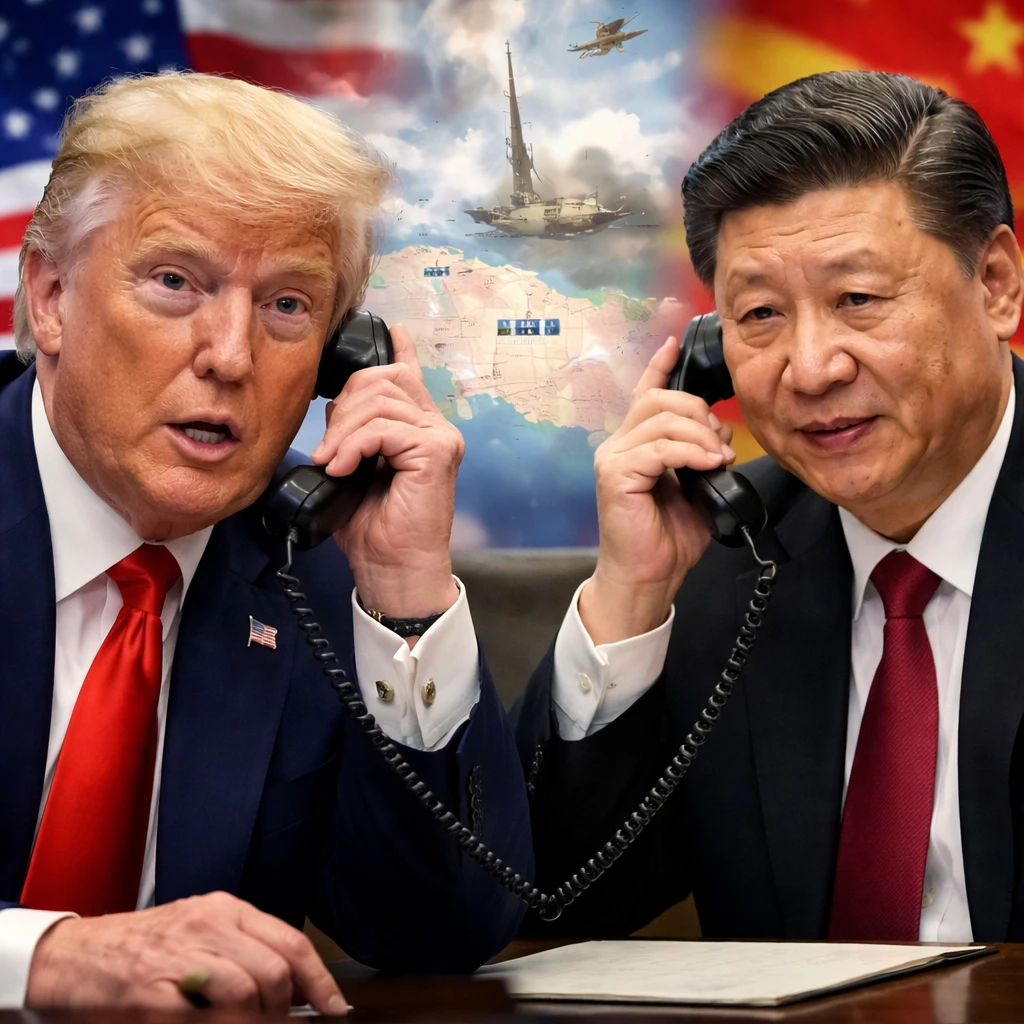

In a recent telephone conversation marked by wide-ranging dialogue, President Donald Trump confirmed that he and Chinese President Xi Jinping addressed the complex situation surrounding Iran. This dialogue comes as the United States government intensifies its diplomatic engagement, aiming to prompt Beijing and other international actors to isolate Tehran economically and politically.
During the call, Trump and Xi also expanded their discussion to encompass a variety of critical aspects of the US-China relationship. Among these were trade matters, the sensitive issue of Taiwan, and confirmation of plans for Trump’s visit to Beijing scheduled for April.
On social media, President Trump described his rapport with President Xi as "extremely good," emphasizing the mutual acknowledgment of the importance in preserving a positive and cooperative bilateral relationship.
Meanwhile, the Chinese government issued a statement summarizing the call, highlighting the discussions about major upcoming summits both nations plan to host within the next year. These forums are viewed as opportunities for potential direct meetings between the two presidents. Notably, the statement did not publicly confirm President Trump’s anticipated April visit to China.
The Chinese communiqué also reiterated Beijing's unwavering stance regarding Taiwan. China firmly communicated that it maintains its long-term objective of reunification with Taiwan, which operates as a self-governing democratic island distinct from mainland China but is claimed by Beijing as part of its territory.
"China will never allow Taiwan to be divided," the Chinese statement asserted, underscoring the persistent tension in cross-Strait relations.
In parallel to these diplomatic discussions, President Trump is reported to be considering military options against Iran. Last month, he announced intentions to implement a 25% tariff on imports to the US from countries that continue business with Iran, signaling a strategic attempt to economically pressure Tehran further.
Sanctions efforts targeting Iran's nuclear program have resulted in considerable international isolation for Tehran. Nevertheless, Iran’s trade remained substantial in 2024, with nearly $125 billion in global trade activity. Key trading partners included China with approximately $32 billion, the United Arab Emirates with $28 billion, and Turkey with $17 billion, per World Trade Organization data.
Additionally, President Xi engaged in a separate conversation with Russian President Vladimir Putin on the same day, a significant interaction coinciding with the imminent expiration of the New START treaty. This treaty, the last remaining nuclear arms control agreement between Russia and the United States, is set to expire Thursday. Its lapse will result in the absence of limits on the two largest nuclear arsenals for the first time in over fifty years.
President Trump has expressed support for maintaining nuclear arms limitations but also advocates for China’s participation in any future agreements. He emphasized in a recent interview that any extension or new treaty should include China as a party to the nuclear arms control framework.