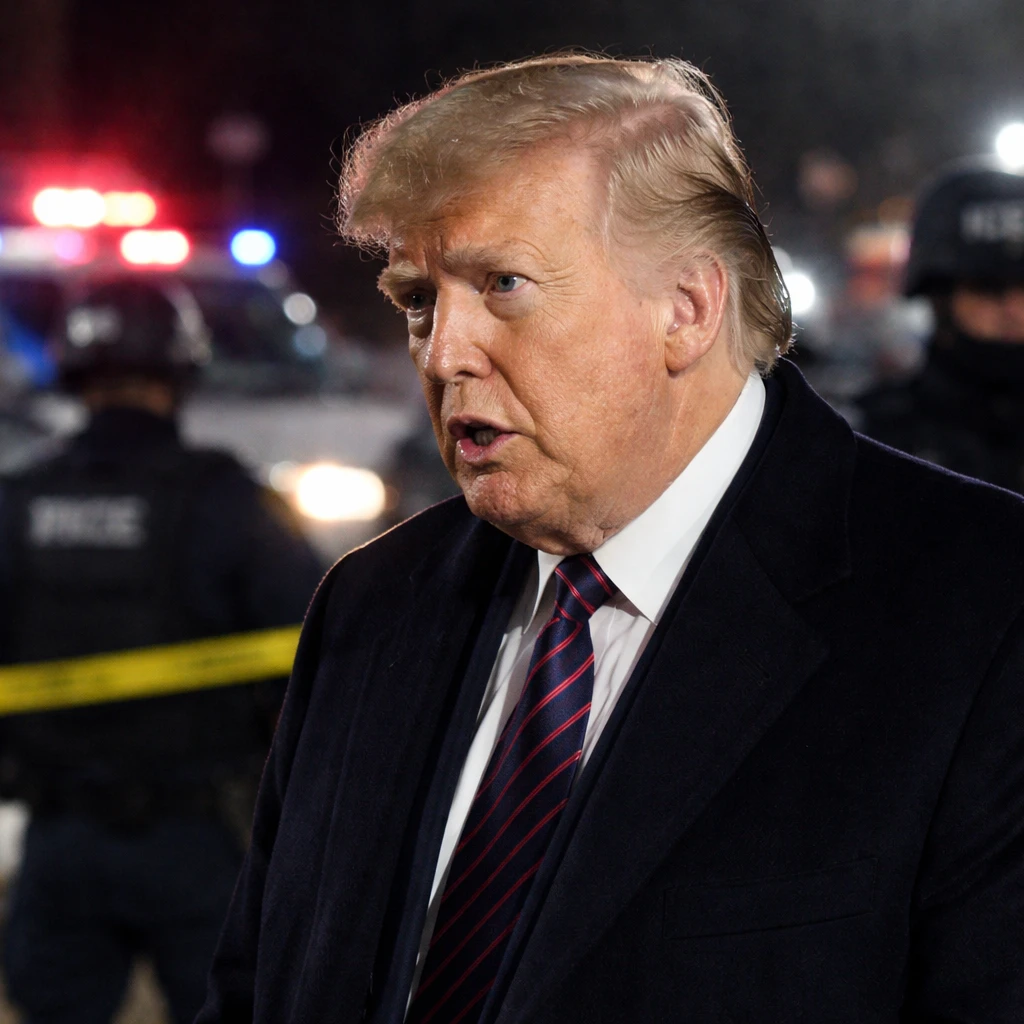
The recent fatal shooting of a Minneapolis protester by a federal immigration officer has sparked intense national discussions regarding the administration's immigration enforcement approach and heightened political tensions between President Donald Trump and Democratic officials. Despite initial silence on the matter, the President issued two detailed posts on his Truth Social platform, asserting that Democratic leadership has fostered conditions that encourage disruption of law enforcement activities.
Trump specifically urged Minnesota officials to cooperate fully with immigration authorities, emphasizing the need to surrender individuals residing in the United States without legal authorization. On his social media outlet, he lamented that "two American Citizens have lost their lives as a result of this Democrat ensued chaos," a comment underscoring his attribution of local disorder to Democratic governance.
This event and the President's firm commitment to executing an unprecedented deportation initiative have generated unease among some members of his own party. There is growing advocacy among Republicans for an expanded inquiry into the incident and apprehension about the administration's enforcement methods, especially given the deployment of immigration officers to cities with substantial Democratic constituencies.
In an interview with The Wall Street Journal conducted on Sunday, Trump indicated that his administration is reviewing all aspects of the case but refrained from commenting on the adequacy of the officer's conduct in the shooting of 37-year-old Alex Pretti.
Official responses from the White House did not specify whether President Trump had viewed the body camera footage or other videos that reportedly challenge the administration's initial narrative. Additionally, there was no confirmation of any impending communication with Minnesota's Democratic Governor Tim Walz, who had previously urged the President to assist in restoring calm to the area.
Instead, the President vowed to advocate for congressional action to prohibit sanctuary cities—jurisdictions characterized by policies that limit cooperation with federal immigration enforcement agencies. This legislative push comes amid escalating tensions that threaten to precipitate a partial government shutdown due to disagreements over supplemental funding for immigration enforcement.
Following the shooting of Pretti on Saturday, President Trump's immediate response via Truth Social questioned the protester's possession of a firearm and accused Governor Walz and Minneapolis Mayor Jacob Frey of provoking "Insurrection, with their pompous, dangerous, and arrogant rhetoric." However, throughout the weekend, despite the gravity of the killing, the President refrained from public appearances or direct expressions of condolence, allocating his social media activity to unrelated grievances regarding Canada and legal challenges to his proposed White House ballroom expansion. He also used the platform to commend U.K. military forces and Fox News guests, possibly seeking to recalibrate public focus.
When he addressed the incident again on Sunday evening amid mounting criticism, Trump remained resolute. He urged the surrender for deportation of individuals held in state prisons or local jails in Minnesota who are unlawfully present in the country, as well as anyone with outstanding arrest warrants or histories of criminal behavior. In reference to Pretti, the President expressed disapproval of the protester's armed presence in the demonstration, emphasizing that carrying a loaded firearm with extra ammunition was unwise.
Despite not providing a specific timeline, Trump suggested that immigration enforcement agents would eventually withdraw from Minneapolis. Within the administration, officials quickly characterized the shootings—two American citizens have now died in interactions with immigration officers—as the outcome of violent provocations by armed individuals.
Deputy White House Chief of Staff Stephen Miller publicly labeled Pretti as "an assassin" who allegedly attempted to kill federal agents, a claim presented without accompanying evidence. Vice President JD Vance echoed Miller's sentiments and additionally condemned local authorities, attributing the unrest in Minneapolis to "engineered chaos" driven by far-left agitators collaborating with municipal officials.