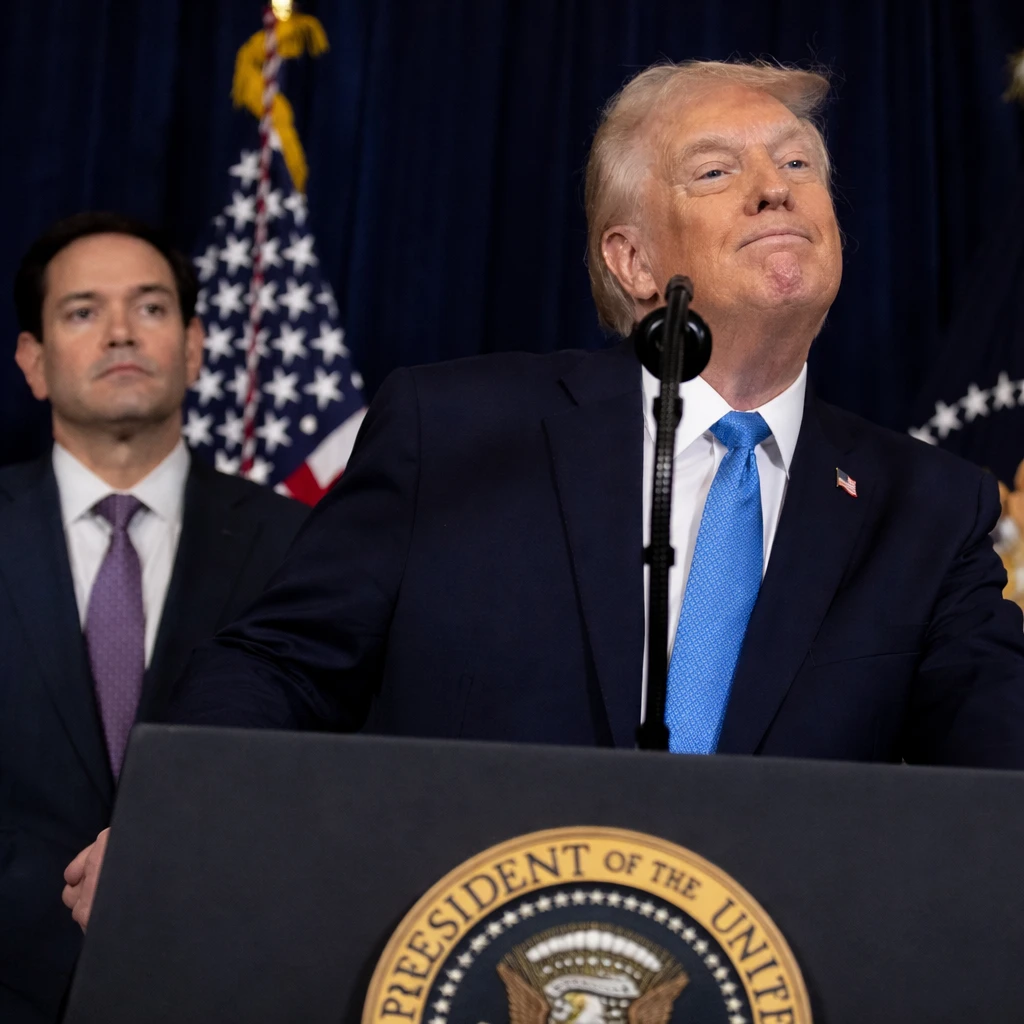

WASHINGTON – President Donald Trump praised the military operation conducted on Saturday that led to the overthrow of Venezuelan leader Nicolás Maduro, characterizing it as an exceptional display of American military capability. Speaking from his Mar-a-Lago resort in Florida, Trump asserted the United States had demonstrated one of its most powerful and effective uses of force in history.
Since taking office, Trump promised to reduce U.S. foreign entanglements, yet this latest development signals a robust engagement in Venezuela aimed at ushering in an era of "peace" and "justice" after years marked by authoritarian regimes. Despite no visible U.S. presence in Caracas, Trump emphasized his administration's intention to "lead" Venezuela towards a democratic transition.
Confronted with the challenge of stabilizing a country grappling with hyperinflation, shortages of essentials like food and medicine, and significant brain drain despite its oil wealth, the White House faces a precarious path forward. Ensuring governance and avoiding a power vacuum post-Maduro remain critical concerns.
The international response has been cautious and, at times, critical. European allies expressed unease about the U.S.'s increasing military footprint in the Caribbean, noting the recent escalation of targeted strikes against alleged narcotics traffickers, some accused of ties with the Maduro government.
The extradition of Maduro and his wife, executed under the Trump administration, alongside plans for the U.S. to "govern" Venezuela, have sparked intense debate over the legality of such moves. While Maduro’s 2018 and 2024 elections were widely criticized for irregularities, many global partners approached the operation with apprehension about unilateral military interventions.
European Commission President António Costa voiced considerable concern regarding Venezuela's situation post-operation. French Foreign Minister Jean-Noël Barrot highlighted that the military action violated established international norms against the use of force. Similarly, Russian and Chinese foreign ministries condemned the U.S. operation, denouncing it as aggression infringing on Venezuela's sovereignty rights.
The action reflects the influence of Secretary of State Marco Rubio, a long-standing critic of Maduro, particularly within the substantial Venezuelan diaspora in Florida. Rubio and other officials view the event as a pivotal turning point for democracy in the Western Hemisphere, with Republican representatives lauding the operation as a historic intervention.
In the aftermath, Rubio issued a warning to Cuba, a close Maduro ally, suggesting uncertainty about its future stance. Trump voiced confidence that the removal of former regime elements would enable Venezuela to "make itself great again," emphasizing that U.S. expenditures would be reimbursed from the country's natural resource revenues, particularly oil.
The president’s recent history includes calculated military actions, balancing a rhetoric of avoiding broader wars with targeted operations against strategic adversaries, such as Iran. The Caracas operation represents a further step in this assertive foreign policy approach, marking a departure from traditional multilateral consensus-seeking methods.
Looking ahead, questions remain regarding the governance model to be implemented in Venezuela. Opposition factions identify exiled politician Edmundo González and opposition leader María Corina Machado as legitimate representatives, though Trump has yet to endorse any particular figure. Instead, he stresses ongoing U.S. involvement to prevent a power transfer to undesired parties.
Parallel to U.S. moves, Venezuelan officials had reportedly proposed phased political transitions that the U.S. declined to accept, citing Maduro’s government as illegitimate and implicated in narcotics trafficking. Recent overtures by Maduro toward cooperation on drug enforcement and foreign investment did not deter the administration’s firm stance.
As the situation evolves, the international community watches closely, balancing responses to Venezuela’s crisis with concerns about sovereignty, international law, and regional stability in a world of competing global powers.