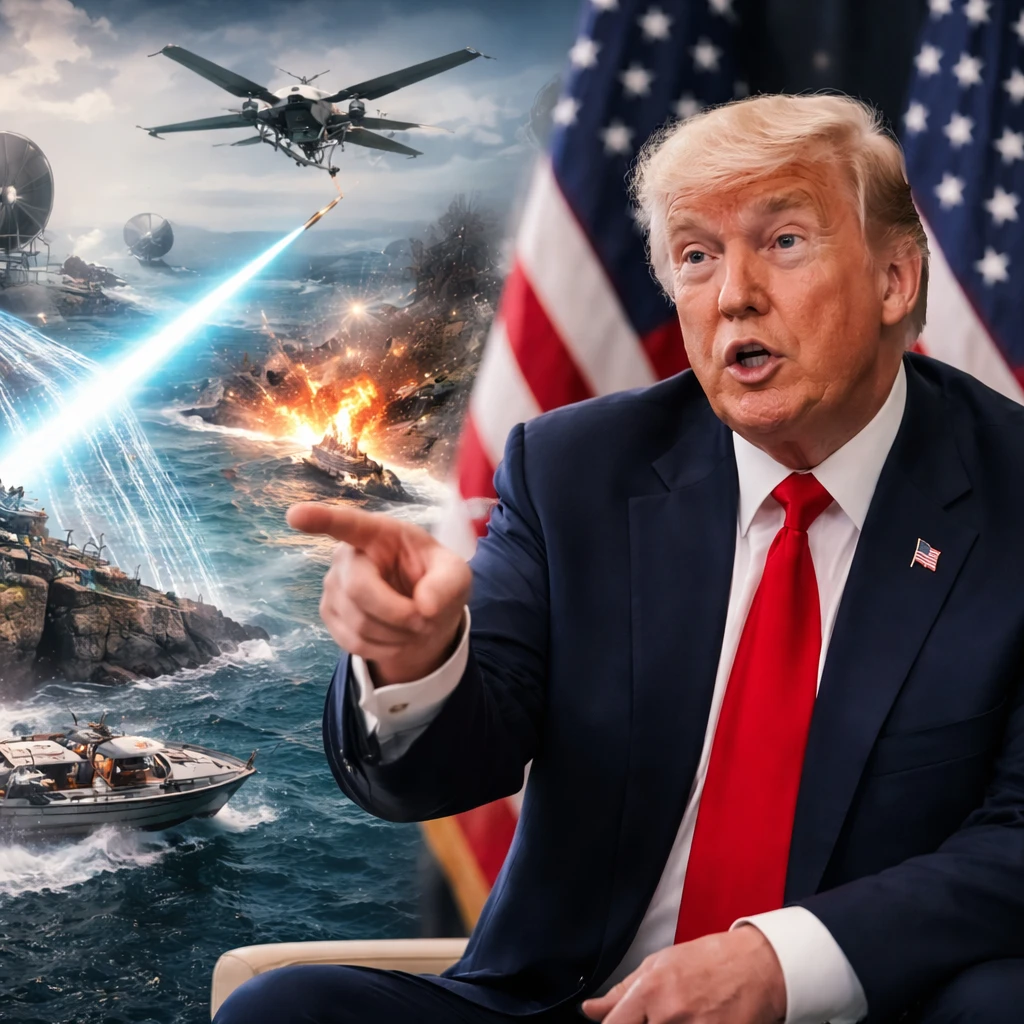

In a recent interview, President Donald Trump disclosed use of a covert weapon, referred to as "The Discombobulator," that incapacitated Venezuelan defense systems during the operation targeting Nicolás Maduro. Trump described the technology as a pulsed energy device that prevented the launch of Venezuelan rockets, which included Russian and Chinese models, thereby neutralizing potential counterattacks.
According to Trump, when U.S. forces intervened, operators in Venezuela attempted to activate their rockets but failed as the equipment was effectively disabled. "They pressed buttons and nothing happened," Trump noted. He previously mentioned that during the raid, the U.S. managed to curtail power across Caracas without divulging specifics of the method employed.
Extending beyond the Venezuelan context, Trump reiterated plans to intensify military strikes against drug cartels. These efforts are not confined to South America but may also expand into Central America and Mexico. Emphasizing the depth of U.S. intelligence, the president stated, "We know their routes. We know everything about them. We know their homes." He confirmed that strikes could potentially occur "anywhere," signaling a broad geographical scope for ongoing counter-narcotics measures.
On the ground enforcement has been active, with the U.S. executing a recent strike against an alleged drug-smuggling vessel in the eastern Pacific Ocean — the first since Maduro’s capture. This operation adds to a pattern, representing at least 36 known strikes targeting drug boats in the Caribbean and eastern Pacific since early September, resulting in at least 117 fatalities.
Further, Trump revealed that the U.S. has confiscated oil from seven tankers linked to Venezuelan interests but withheld the current location of these vessels for security reasons. "I'm not allowed to disclose their whereabouts, but they don't have any oil," he said firmly, emphasizing U.S. control over seized resources.
Aside from discussing military operations, Trump shared that Venezuelan opposition leader María Corina Machado recently awarded him a Nobel Peace Prize, which he has yet to decide where to display in the Oval Office. He also touched upon negotiations involving an Arctic security arrangement with NATO Chief Mark Rutte that could secure U.S. ownership of bases within that region, though some aspects remain ambiguous amid sovereignty assertions from Denmark and Greenland.
In a separate cultural note, Trump announced he would not attend the upcoming Super Bowl, criticizing the choice of performers Bad Bunny and Green Day while recalling his attendance at the previous year's game in New Orleans.