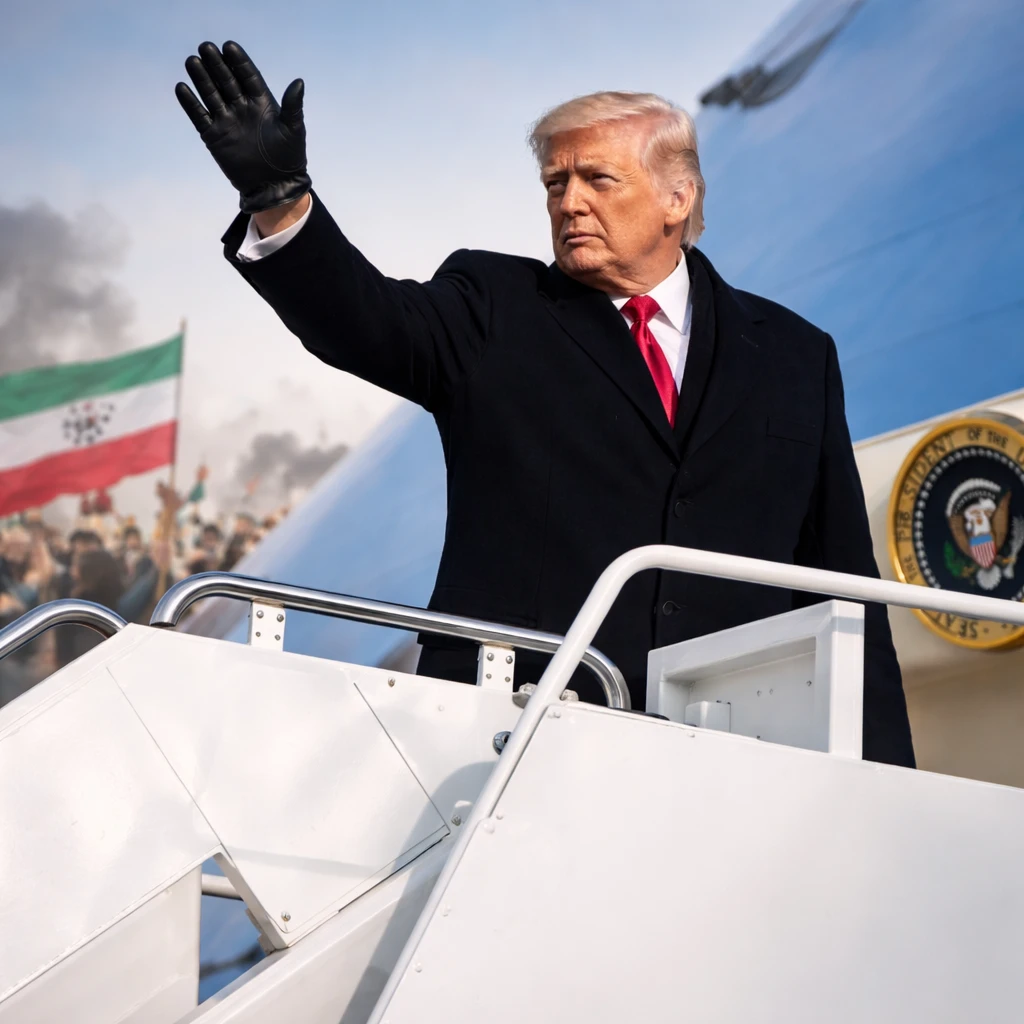
On Friday, President Donald Trump acknowledged the Iranian government's decision to halt the planned executions of more than 800 political prisoners, an uncommon gesture of gratitude toward a foreign regime. Speaking to the press while departing the White House for his Mar-a-Lago estate in Florida, Trump stated, "Iran canceled the hanging of over 800 people," and added his deep respect for this action, emphasizing the significance of the cancellation.
Alongside these verbal remarks, the president also used his social media platform to underscore the number of individuals who were reportedly scheduled for execution, posting a succinct "Thank you!" to the Iranian authorities. This announcement arrived in the context of recent widespread protests in Iran, which initially ignited over economic strife and later burgeoned into larger movements challenging theocratic rule.
Trump's commendation followed several days of speculation that the United States might initiate military action if the Iranian regime proceeded with mass executions related to the protests. However, with the reported suspension of these death sentences, the president’s commentary suggested a possible retreat from the imminence of such military strikes. When questioned about ongoing support for the Iranian protestors, Trump offered a cautious response, saying, "Well, we’re going to see." Asked if external parties such as Arab or Israeli officials influenced his position regarding military action, he refuted such claims, asserting, "Nobody convinced me. I convinced myself."
Despite President Trump’s positive framing, the reality within Iran remains grave and complex. Official sources have not clarified the details surrounding the cancellation of the executions, and the demonstrations, which erupted on December 28, have been met with severe governmental crackdowns. Activist groups report thousands of deaths—Human Rights Activists News Agency put the toll at approximately 2,797—and ongoing internet blackouts continue to restrict communication within Iran.
The last week has seen little evidence of mass protests in Tehran or other regions, with public life appearing outwardly normal and government security measures seemingly successful in suppressing public dissent. Nevertheless, opposition figures in exile, including Iran’s Crown Prince Reza Pahlavi, have urged the United States to follow through on earlier promises of assistance, lamenting a perceived decrease in American engagement.
In summary, while President Trump’s statements herald a pause in one of the most severe forms of political repression in Iran, the country remains engulfed in unrest and a precarious human rights situation. The suspension of executions is a notable development but does not resolve the broader tensions and security concerns gripping the nation.