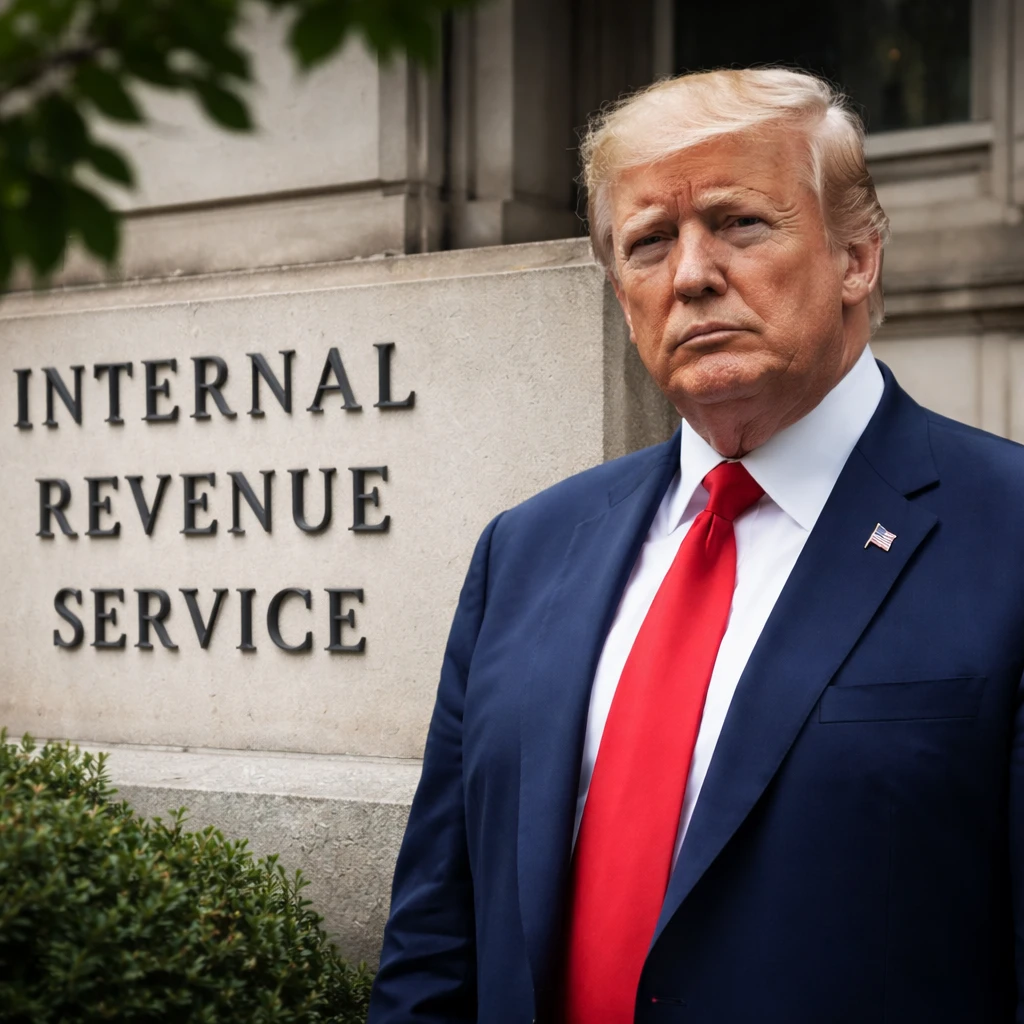

In a significant legal move, former President Donald Trump has launched a $10 billion lawsuit targeting two key federal agencies, the Internal Revenue Service (IRS) and the U.S. Treasury Department. The complaint was officially submitted to a federal court in Florida on Thursday and involves additional plaintiffs including Trump's sons, Eric Trump and Donald Trump Jr., along with the Trump Organization.
The core of the allegation centers on the unauthorized disclosure of confidential tax records belonging to the former president and his family business. The lawsuit asserts that these leaks, taking place between 2018 and 2020, inflicted extensive reputational and financial harm on the plaintiffs. It claims that the divulgence led to public embarrassment, distorted their business reputations, and cast them in a misleading light which, in turn, adversely influenced Trump's public image.
Legal records highlight that these tax documents were made public through leaks culminating in news reports by major outlets. A key figure convicted in connection with the dissemination of this sensitive information is Charles Edward Littlejohn, a former IRS contractor based in Washington, D.C. Known colloquially as Chaz, Littlejohn was employed by Booz Allen Hamilton, a consultancy specializing in defense and national security technology. Earlier this year, Littlejohn received a five-year prison sentence after pleading guilty to unlawfully sharing tax data not only about Trump but other individuals as well.
According to prosecution statements, Littlejohn’s actions represented unprecedented breaches in the IRS's history of confidentiality. The leaking violated Section 6103 of the IRS Code — a stringent statute designed to safeguard taxpayer information from disclosure.
News coverage stemming from these leaks included a 2020 report by The New York Times highlighting that Trump had paid no federal income taxes over several years prior to 2020. Subsequently, ProPublica published an investigative series in 2021 revealing discrepancies in Trump’s financial records. Complementing these disclosures, the House Ways and Means Committee, under Democratic control at the time, later released six years’ worth of the former president's tax returns.
The lawsuit explicitly ties the leaks to negative impacts on voter support for Trump during the 2020 presidential election cycle. Beyond Trump, Littlejohn was also found to have stolen tax information relating to other high-profile billionaires, including Jeff Bezos and Elon Musk.
Following the revelation of these unauthorized disclosures, the U.S. Treasury Department recently took decisive action by terminating contracts with Booz Allen Hamilton. Treasury Secretary Scott Bessent stated that the firm had failed to implement sufficient safeguards necessary to protect highly sensitive taxpayer data accessed through its contracts with the IRS.
At the time of this announcement, representatives from the White House, Treasury, and IRS did not provide immediate comments in response to the ongoing litigation and associated developments.