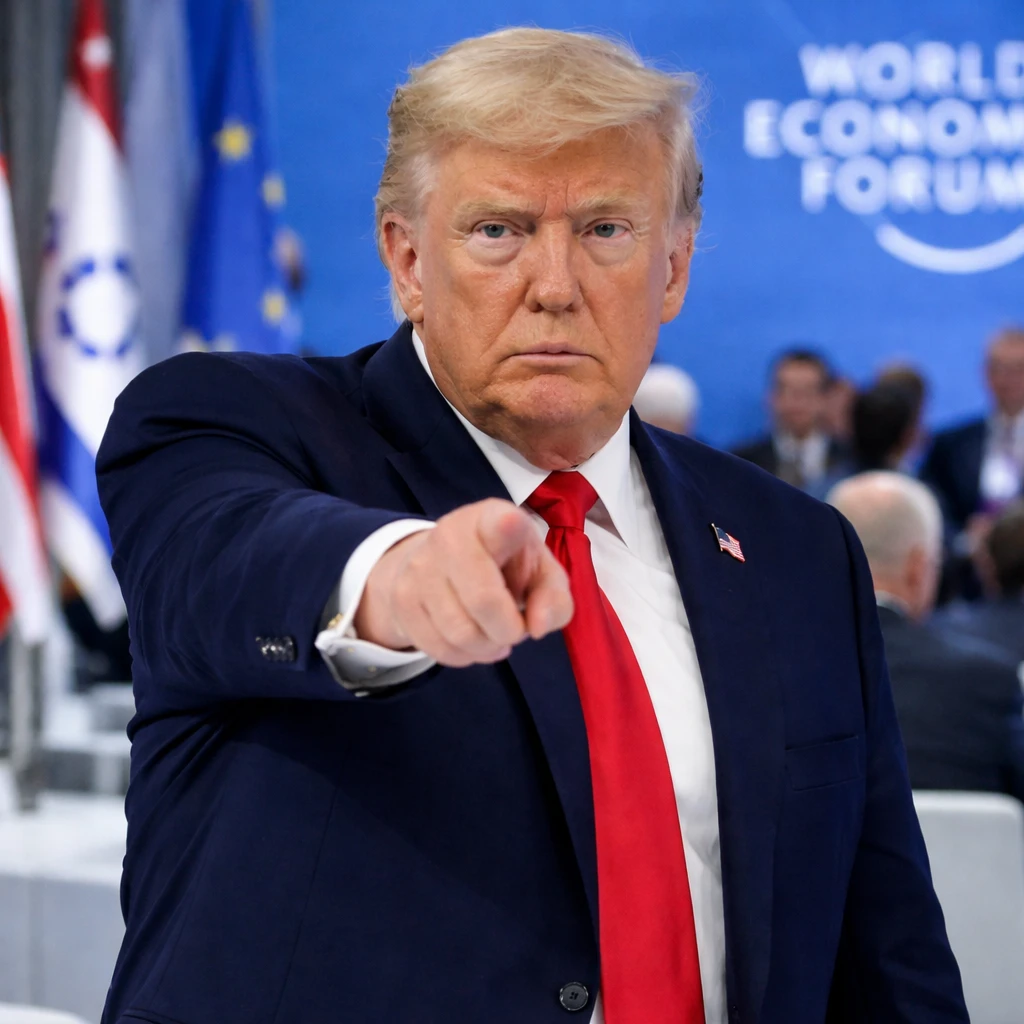

During a high-profile event at the World Economic Forum in Davos, Switzerland, President Donald Trump inaugurated the 'Board of Peace,' an international panel aimed at maintaining the fragile ceasefire in the ongoing conflict between Israel and Hamas, while planning for Gaza's reconstruction. He emphasized that the board is intended as a global initiative, stating, "This isn't the United States, this is for the world," and expressed hopes to expand the board's scope following progress in Gaza.
In the forum, Ali Shaath, appointed as the head of a nascent technocratic administration in Gaza, announced the upcoming opening of the Rafah border crossing in both directions. Though Israel had announced plans in early December to open this critical border between Gaza and Egypt, it had not yet implemented the opening. Shaath, an engineer with experience in the Palestinian Authority, oversees the Palestinian committee managing Gaza under U.S. supervision.
Originally designed as a modest assembly of world leaders to supervise the ceasefire, the 'Board of Peace' has since evolved into a more ambitious entity. However, skepticism about its membership composition and mandate has led some traditionally close allies of the United States to abstain from participation. President Trump highlighted that 59 countries had signed on, although only representatives from 19 nations plus the U.S. were present at the Davos event. He addressed these attendees, which ranged from Azerbaijan to Paraguay to Hungary, describing them as "the most powerful people in the world."
Trump has publicly suggested that this board could take over certain functions of the United Nations and might eventually replace it as the primary body for global peacekeeping efforts. Yet, in comments to the press during the forum, he tempered this by stating, "We'll do it in conjunction with the United Nations," despite also criticizing the U.N. for insufficiently addressing several global conflicts.
Secretary of State Marco Rubio explained that some countries withhold participation as their leaders await parliamentary approval, while others not yet invited have expressed interest. Notwithstanding Trump’s optimism, uncertainty persists over the board's final structure and legitimacy.
Russian President Vladimir Putin has withheld commitment pending consultations with strategic partners. He planned talks with Palestinian President Mahmoud Abbas in Moscow, where he is expected to discuss a proposed $1 billion contribution to the board meant for humanitarian aid, contingent upon U.S. authorization for the funds’ release.
Conversely, various Western nations have expressed reservations. Britain's foreign secretary, Yvette Cooper, articulated concerns about the implications of the board acting under a legal treaty context and questioned the inclusion of autocratic leaders like Putin, particularly given Russia's ongoing role in the Ukraine conflict. France, Norway, and Sweden have declined to join, with France supporting the Gaza peace plan but wary of the board supplanting the U.N.'s central position in conflict resolution.
Additional notable absences include Canada, Ukraine, China, and the executive branch of the European Union. The controversy surrounding earlier U.S. threats concerning Greenland may have exacerbated allied hesitance, though the recent de-escalation may mitigate some diplomatic frictions.
The 'Board of Peace' concept originated within Trump's 20-point Gaza ceasefire plan, which even garnered endorsement from the U.N. Security Council. Israeli Prime Minister Benjamin Netanyahu has agreed to join the board, despite prior criticisms from his office regarding its governance framework.
Despite the ceasefire, Gaza's more than two million inhabitants continue to endure a severe humanitarian crisis ensuing from years of conflict. While violence has subsided compared to the pre-ceasefire period, skirmishes persist. A fundamental condition for the truce's longevity remains the disarmament of Hamas, a prerequisite Israel insists upon and which Hamas has rejected. Trump reiterated warnings that failure to disarm will provoke severe consequences, while expressing cautious optimism about the war nearing its end, albeit acknowledging ongoing "little fires" that need addressing.
This peace initiative unfolds amidst heightened tensions involving Iran, which is currently suppressing widespread protests with significant casualties. Trump has recently threatened military action but has paused further strikes after assurances against imminent executions of detainees were received. He linked his prior aggressive posture toward Iran, which included strikes on nuclear facilities, as a contributing factor to the ceasefire's establishment, noting Iran's longstanding support of Hamas through financial and military aid.
Further in Davos, Trump engaged in a private meeting lasting approximately an hour with Ukrainian President Volodymyr Zelenskyy. While describing the discussion as "very good," Trump announced no major developments and acknowledged that the matter of European nations declining Board of Peace membership was not addressed. Senior U.S. emissaries, including Steve Witkoff and Jared Kushner, plan to visit Moscow soon for talks. Despite these efforts, Trump continues to express frustration over the difficulty in achieving peace terms between Ukraine and Russia after nearly four years of conflict, concluding, "We hope it's going to end."