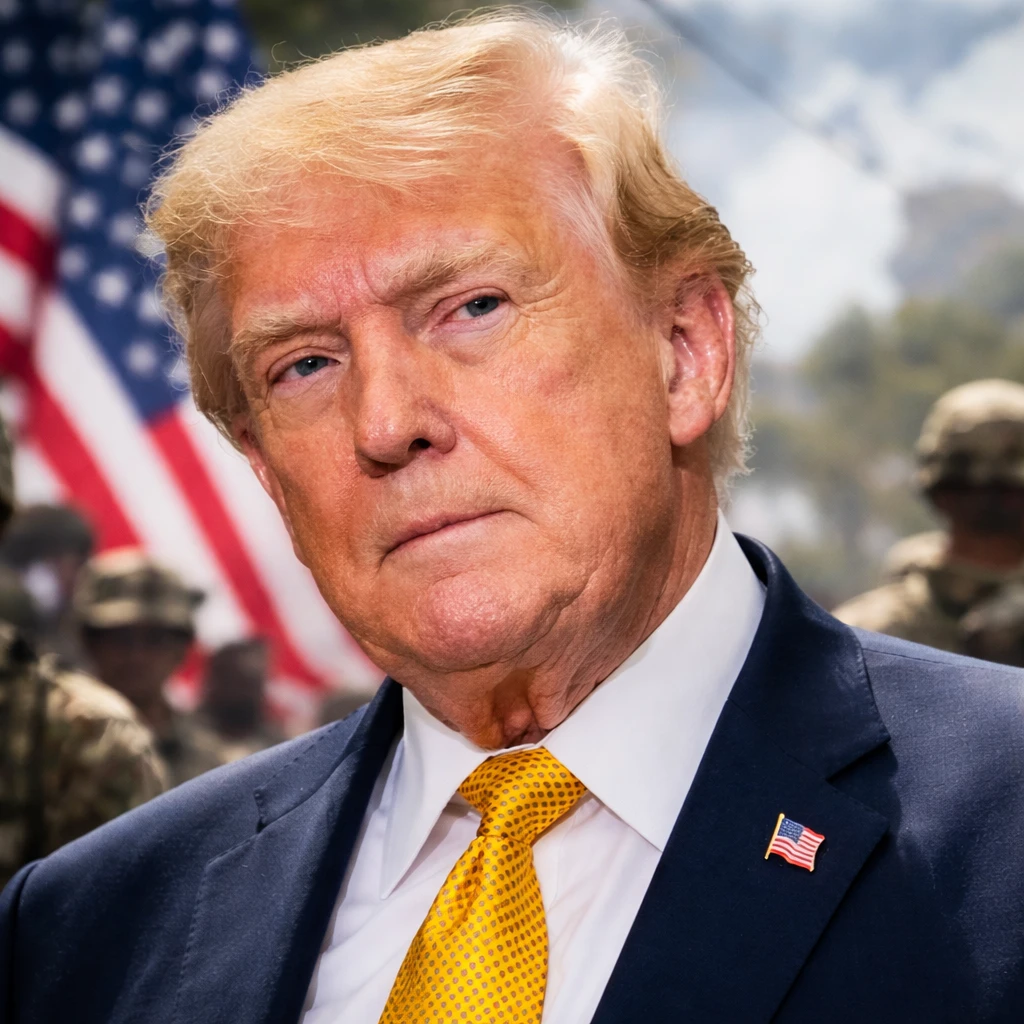
President Donald Trump has been unequivocal in articulating the broader significance of the recent U.S. military operation resulting in the apprehension of former Venezuelan president Nicolás Maduro and his subsequent transfer to the United States to face federal drug trafficking charges. "American dominance in the Western Hemisphere," Trump declared after Maduro's capture, "will never be questioned again."
Following this bold maneuver, the Trump administration has reinforced its message, indicating a sustained emphasis on American leadership within the region. President Trump has used Maduro’s removal as leverage to signal to neighboring countries the expectation of alignment with U.S. policies or the potential repercussions of defiance. This rhetoric evokes the assertive American foreign policy approaches of the late 19th and early 20th centuries, during which the U.S. government engaged in military actions across territories such as Cuba, Puerto Rico, Hawaii, Honduras, Panama, Nicaragua, Mexico, Haiti, and the Dominican Republic primarily for territorial and resource interests.
Scholars like Edward Frantz, a historian at the University of Indianapolis, note that while past military engagements such as those in Vietnam and Iraq raised concerns about American imperialism, those actions were typically framed with a democratic agenda. Trump’s open discourse, however, marks a pronounced return to a more blatant assertion of power unseen in recent decades.
Alongside these developments, Trump has focused his admonitions on regional partners and adversaries. In Greenland, where he renewed calls for U.S. acquisition for national security considerations, and towards Mexico, where he criticized the government’s efforts against drug trafficking, his rhetoric has been pointed. He has predicted the decline of Cuba subsequent to Maduro’s ousting, given the latter's provision of subsidized oil to the Cuban government. Further, Trump has expressed openness to a military engagement in Colombia, a key hub for cocaine production, amplifying regional unease.
The administration has signaled its intent to tightly control U.S. policy concerning Venezuela moving forward, issuing warnings to interim President Delcy Rodríguez about potential unfavorable outcomes should she fail to comply with expected directives. Trump envisions substantial involvement of major U.S. oil corporations in Venezuela’s energy sector, intending to invest billions to rehabilitate the country's failing oil infrastructure and generate profits, thereby intertwining energy policy with geopolitical strategy.
The operation against Maduro has polarized Latin American nations, splitting opinion largely along ideological lines. Right-leaning governments aligned with the U.S. have largely endorsed Maduro's removal, while others oppose it strongly, citing sovereignty concerns. This fissure has further fueled speculation about potential U.S. territorial ambitions, including in Greenland.
Danish Prime Minister Mette Frederiksen issued a stern warning about the consequences for the NATO alliance should the U.S. pursue a militarized acquisition of Greenland, emphasizing the historic importance of the transatlantic security partnership. Trump’s invocation of the Monroe Doctrine—originally designed to counter European influence in the Americas—further underlines his administration’s intent to assert control over regional affairs under the guise of protecting American interests.
The recent National Security Strategy outlined by the Trump administration presented a dual approach: a professed preference for non-interventionism alongside a concerted effort to restore the U.S. to a position of preeminent influence within the Western Hemisphere. In light of the Venezuela intervention, the administration appears to have prioritized the latter aim, as evidenced by statements from Secretary of State Marco Rubio emphasizing the necessity of preventing adversarial footholds in the region.
Global reactions have been mixed. At an emergency session of the U.N. Security Council convened in response to the Maduro capture, Colombia's ambassador criticized the operation as reminiscent of past unwarranted interventions in the Americas, affirming that democracy cannot be advanced through violence or domination motivated by economic interests. Simultaneously, some voices in the United States have expressed concerns that Trump's assertive moves may embolden leaders such as Russia's Vladimir Putin and China's Xi Jinping to pursue their own territorial ambitions unabated.
Russian representatives at the U.N. condemned the U.S. operation, denouncing any attempt by Washington to unilaterally position itself as a global arbiter. This broad spectrum of reactions underscores the delicate balance of power and the contentious dynamics unfolding as the United States reasserts a dominant stance in continental affairs.