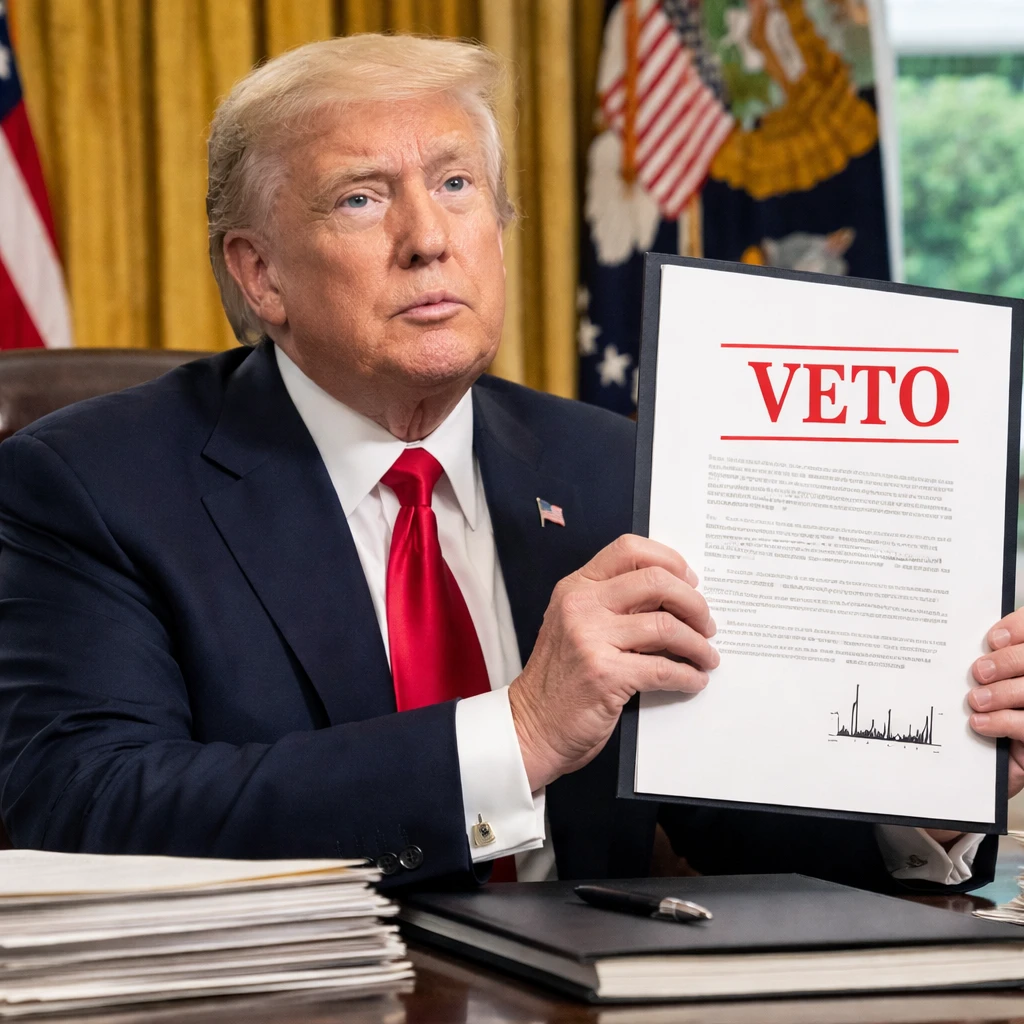

In a rare exercise of his veto authority during his second term, President Donald Trump on Tuesday rejected two bipartisan legislative measures that had previously gone largely uncontested. The first concerned the establishment of a water pipeline to improve drinking water access in eastern Colorado, and the second involved a land rights adjustment favoring the Miccosukee Tribe of Indians in Florida.
The water infrastructure bill was sponsored by Republican Representative Lauren Boebert of Colorado, a known ally of the President who had recently diverged from Trump by advocating for the release of classified files related to the convicted sex offender, Jeffrey Epstein. The tribal land bill, backed by bipartisan members including Republican Representative Carlos Gimenez of Florida, sought to increase the Miccosukee Tribe’s control over certain territories. Notably, the tribe has been a plaintiff in litigation opposing the administration’s immigration detention facility colloquially named “Alligator Alcatraz” located in the Everglades.
Though both bills had secured support across party lines and passed without significant opposition, the White House announcement detailing President Trump’s vetoes came as a surprise to many observers. In a communication to Congress, the President underscored the tribe’s opposition to immigration policies favored by his administration as a rationale for the land-related veto, stating that the tribe had actively worked against immigration reforms supported by the electorate during his election.
The President did not directly address Representative Boebert in his veto message regarding the water pipeline legislation. Instead, he highlighted concerns about the financial implications of the project, suggesting the expenditure was unwarranted. In a subsequent interview with Politico, President Trump criticized Colorado’s Democratic Governor Jared Polis, attributing the decision to veto the bill to fiscal mismanagement and broader demographic shifts characterized by population decline within the state.
The veto of Boebert’s legislation triggered speculation about potential political retaliation, given her earlier decision to support disclosure of Epstein-related materials despite the President’s objections. Boebert publicly expressed hope that her bill’s rejection was not motivated by retribution and emphasized her commitment to pursuing the issue further.
Representative Gimenez and the Miccosukee Tribe did not immediately respond to requests for commentary regarding the veto of their legislation. The White House declined to directly address whether the vetoes represented punitive actions, instead referencing the President's explanatory statements as justification.
Overriding a presidential veto requires a two-thirds majority vote in both the House and Senate. With the Republican Party controlling Congress and many members seeking to retain the President’s support in an impending midterm election cycle, the likelihood of successfully overturning these vetoes remains uncertain.
The water infrastructure bill titled the "Finish the Arkansas Valley Conduit Act" was designed to facilitate safe drinking water access improvements without authorizing new construction funds or expanding federal commitments. Bipartisan co-sponsors, including Republican Representative Jeff Hurd of Colorado, expressed disappointment over the veto, noting the bill's alignment with prior federal commitments and the broad legislative consensus it achieved.