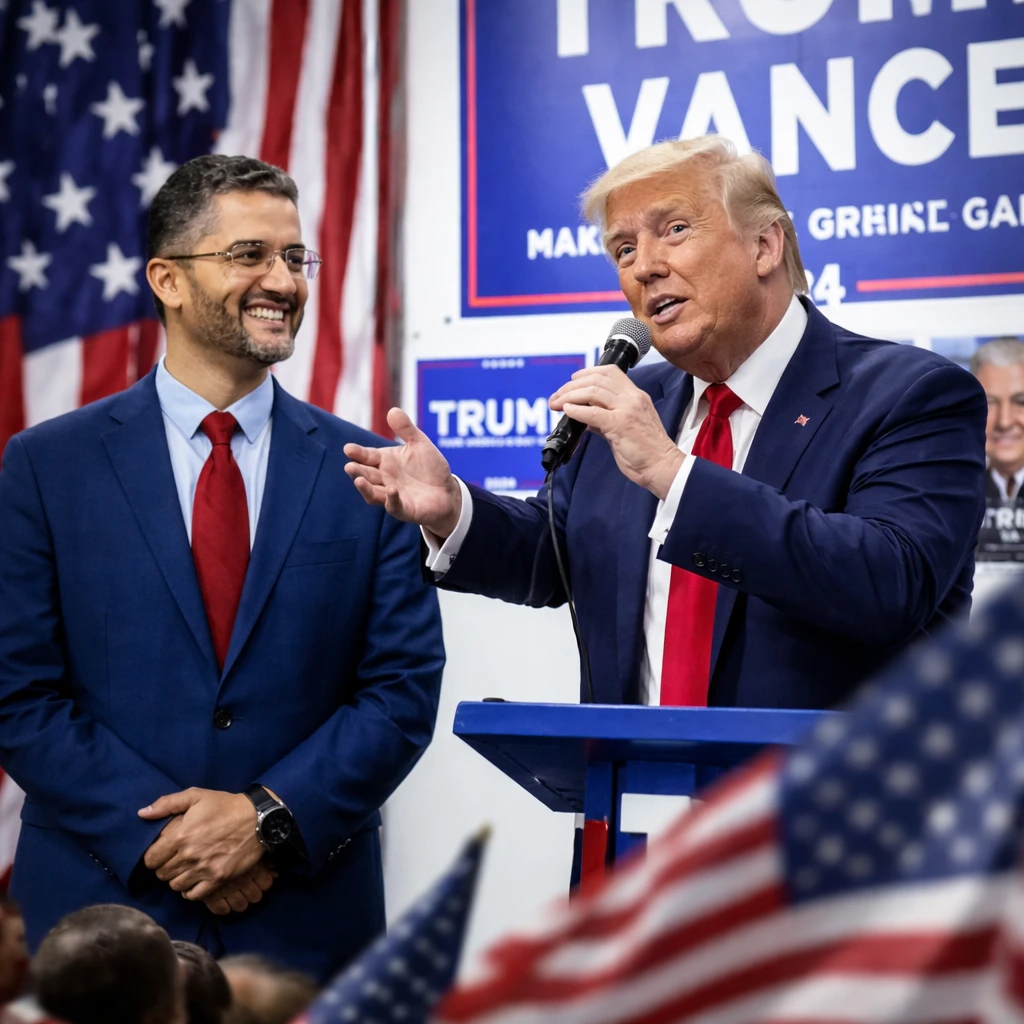
Donald Trump’s successful bid to reclaim the presidency in 2024 was partly attributed to his strengthened support from Michigan’s Arab American population, a shift credited in part to Amer Ghalib, mayor of the Detroit suburb Hamtramck. In recognition of Ghalib’s role, Trump nominated him to represent the United States as ambassador to Kuwait, a strategic ally in the oil-rich Persian Gulf region. However, this formal diplomatic appointment has yet to materialize, with Ghalib remaining in his hometown of roughly 30,000 residents due to opposition from members of Trump's own Republican Party on Capitol Hill.
The fate of Ghalib’s nomination remains uncertain, and he himself has expressed disinterest in pursuing the role further. The impasse over his confirmation has intensified existing strains between Republicans and the Arab American community—many of whose members favored Trump in 2024, disillusioned by President Joe Biden’s approach to the Israel-Gaza conflict. This rift poses potential challenges for Republican efforts to maintain support within this demographic in the upcoming 2026 midterm elections, which will determine control of Congress.
Bishara Bahbah, who chaired Arab Americans for Trump, voiced frustration with the current state of relations: "It's difficult for me to encourage the community to support Republicans again in 2026 and 2028 given the present circumstances."
Resistance in the Senate
At a final campaign rally before the 2024 election, Trump publicly lauded Ghalib, calling him "one of the greatest men in your state" during an early morning event in Michigan. This represented a notable evolution from Trump’s 2016 campaign stance, when he proposed imposing a ban on Muslim immigration to the United States.
Trump not only secured Michigan’s electoral votes but also garnered substantial Arab American support, including in Dearborn, a city where roughly half of its 110,000 residents are of Arab heritage.
Yet tensions emerged after the ambassadorial nomination was announced. During confirmation hearings, Senator Ted Cruz (R-Texas) openly opposed Ghalib, citing past views inconsistent with both President Trump’s perspective and U.S. policy. Cruz declared he could not back the nomination.
Senators from both parties raised concerns regarding Ghalib’s social media history and previous public comments, some of which were characterized as antisemitic. Specific scrutiny was given to Ghalib's admitted habit of 'liking' a Facebook comment comparing Jewish people to monkeys, a gesture he described as indiscriminate and not an endorsement of the content.
Further questions arose regarding his statements disputing reports of sexual violence associated with the October 7, 2023 Hamas attack on Israel, where Ghalib maintained he had not personally verified such allegations but condemned all abuses. Additional controversy followed his characterization of former Iraqi leader Saddam Hussein as a martyr. These issues contributed to a stalemate, as no Senate vote was taken, and Republican opposition effectively stalled the nomination.
A White House spokesperson, Anna Kelly, emphasized President Trump’s strong relationships with Arab world leaders and his fulfillment of promises, highlighting efforts to address inflation, border security, and national defense as key achievements benefiting Arab American and broader communities.
Community Discontent and Broader Effects
Bill Bazzi, another former mayor instrumental in boosting Trump’s Arab American support, successfully assumed the role of U.S. ambassador to Tunisia in October. Nevertheless, some critics argue that the administration appears to be marginalizing Arab American voices despite elevating them during the campaign.
Bahbah reported spending over a week in Michigan observing a pervasive sense of disappointment among Arab Americans. He noted that many campaign promises remain unfulfilled, immigration policies and visa issues are causing anxiety, and increased actions by Immigration and Customs Enforcement are unsettling even citizens within the community. Rising living costs, particularly grocery prices, add to the community’s concerns.
Local leaders in Michigan suggest that the impetus for Arab American votes in 2024 was driven less by enthusiasm for Trump than by dissatisfaction with President Biden's handling of Middle East conflicts. The uneven reactions to the recent ceasefire aimed at ending hostilities in Gaza further complicate community sentiment, with some viewing the accord as favoring one side disproportionately.
Immigration enforcement measures have also contributed to unease, with fears of raids and detentions noted within Arab American neighborhoods. Bahbah summarized this sentiment: "People are living in fear. This was not the community’s expectation or intention when supporting the election outcome."
Tensions Within the Republican Coalition
Though Ghalib acknowledges President Trump’s loyalty and backing, he criticizes his opponents within the Republican Party, suggesting their resistance has damaged the community’s trust in the GOP. "Those who opposed me for unfounded reasons have left the community upset, and repairing this relationship will require considerable effort," Ghalib observed.
This episode highlights the fragility of the broad coalition that powered Trump to victory, which included increased support not only from Arab Americans but also from Black and Latino voters. The rising dissatisfaction poses challenges to maintaining this diverse electoral base.
Osama Siblani, editor of The Arab American News based in Dearborn, expressed skepticism about the durability of Trump’s support within the community, stating, "Regardless of Ghalib's nomination status, Donald Trump lacks backing from this demographic moving forward."