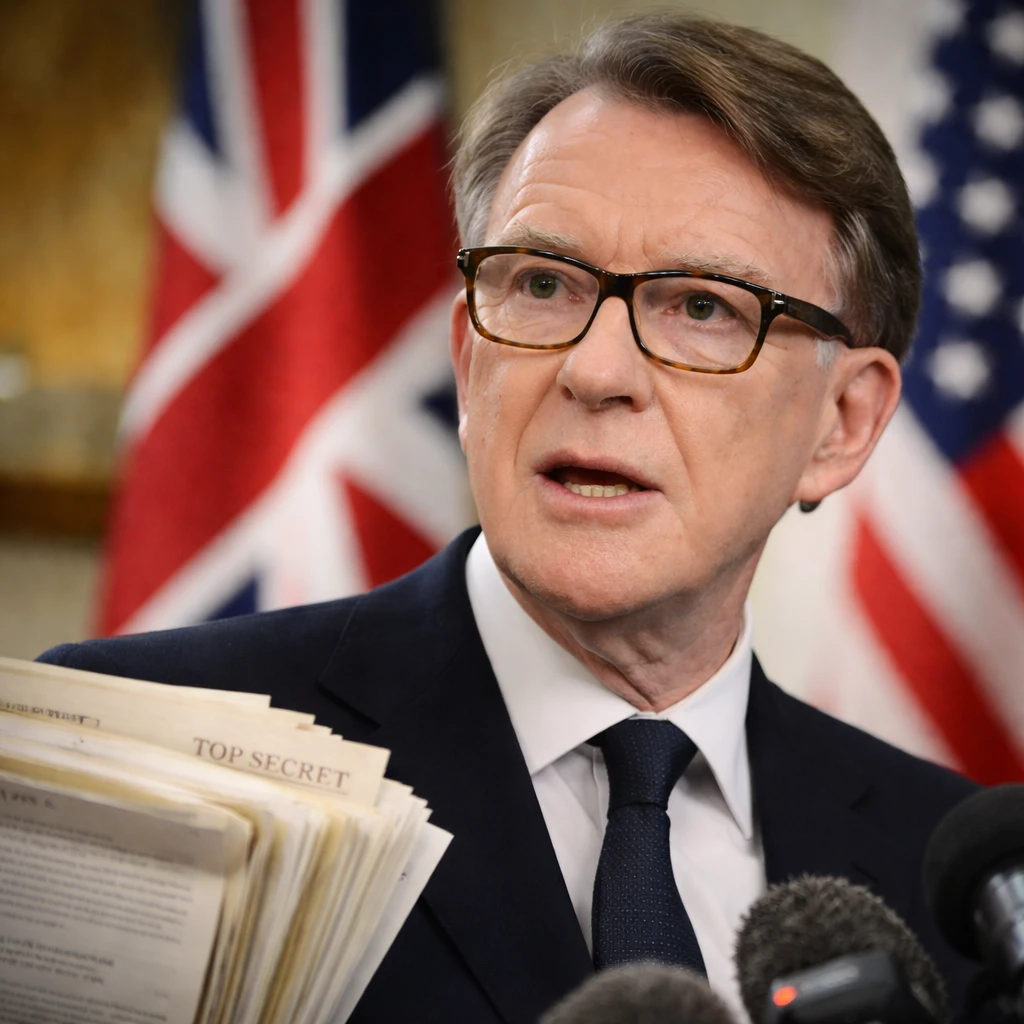

In a move to quell mounting criticism, the British government consented Wednesday to publish documents shedding light on the appointment of Peter Mandelson as the United Kingdom's ambassador to the United States in 2024, despite concerns about his relationship with convicted sex offender Jeffrey Epstein. This decision follows sustained political pressure arising from revelations about Mandelson’s association with Epstein.
Prime Minister Keir Starmer found himself at the center of fierce backlash from opposition parties and members within his own Labour Party. Starmer acknowledged he was aware of Mandelson’s connection to Epstein at the time of the ambassadorial appointment but maintained he did not comprehend the extent of their relationship. Additionally, Starmer accused Mandelson of repeatedly deceiving officials about his ties to Epstein.
Recently released documents from the US Department of Justice concerning Epstein have effectively ended Mandelson’s extensive political career. These disclosures have also called into question Starmer’s judgment in selecting Mandelson for one of Britain’s most critical diplomatic roles under the Trump administration.
During a House of Commons session largely devoted to the Epstein affair, Starmer condemned Mandelson’s actions, stating, "Mandelson lied repeatedly to my team when questioned about his relationship with Epstein before and while serving as ambassador." He further remarked that Mandelson had betrayed the nation, Parliament, and the Labour Party and expressed regret over the appointment, emphasizing that had he been fully informed, Mandelson would never have served in government.
The Conservative Party seized on the controversy, deeming Starmer’s response inadequate and pushing for a parliamentary vote to compel the release of relevant emails and documentation related to the decision-making process behind Mandelson's appointment.
Starmer pledged that all documents, excluding those that would compromise national security, international relations, or ongoing police investigations into Mandelson’s activities, would be published. Nevertheless, opposition members and some Labour backbenchers expressed skepticism, fearing national security claims might be used to withhold embarrassing information.
Conservative leader Kemi Badenoch criticized the government’s approach, asserting that all pertinent materials should be made public rather than selectively disclosed. She pointedly remarked, "The real national security risk was appointing Mandelson in the first place." Under political pressure, the government agreed that the Intelligence and Security Committee, comprising cross-party parliamentarians, would determine which documents to release, diverging from Starmer's initial proposal to assign this task to a senior civil servant.
Recent U.S. government files suggest that while serving as a UK government minister, Mandelson may have shared sensitive information with Epstein, including lobbying efforts to reduce a tax on bankers’ bonuses, sharing an internal report on potential government asset sales, and warning Epstein of an impending bailout of the Eurozone currency. The documents also indicate that Epstein transferred $75,000 in three installments to accounts associated with Mandelson or his partner between 2003 and 2004.
In light of these revelations, Mandelson resigned from the House of Lords and is under police investigation for alleged misconduct in public office, an offense punishable by life imprisonment. It is important to note that an investigation does not equate to charges or conviction. Starmer announced plans to introduce legislation to strip Mandelson of his hereditary title, Lord Mandelson, and confirmed Mandelson will be expelled from the Privy Council for damaging its reputation.
An inquiry requesting comment from Mandelson was submitted through the House of Lords. Meanwhile, the European Union has initiated a probe into potential violations by Mandelson during his tenure as the EU trade commissioner from 2004 to 2008, reflecting heightened scrutiny of his conduct and compliance with EU rules.