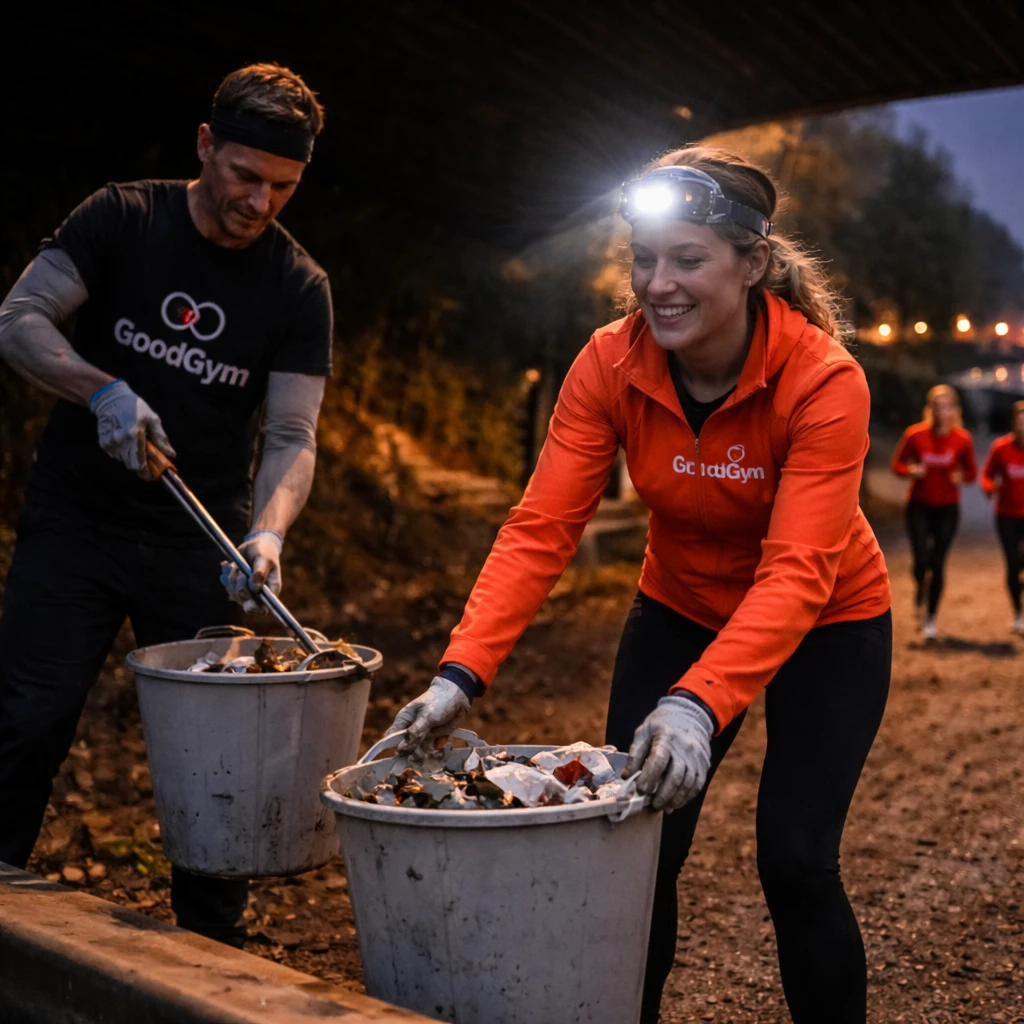

On a chilly and damp evening in London, a distinctive group of fitness enthusiasts trade conventional gym settings for an open-air community garden perched atop a rooftop, previously a neglected parking lot. Clad in running attire and equipped with headlamps, these volunteers warm up by jogging a mile before engaging in physical labor that includes shoveling compost and clearing weeds. This activity forms part of a weekly session blending exercise with local community service.
GoodGym, a UK-based charity, champions this method by promoting the slogan "get fit by doing good." Participants need not invest in traditional gym memberships or equipment; instead, they are encouraged simply to move— whether by walking, running, or cycling— and contribute to neighborhood projects. These tasks vary from sorting donations at food banks and tidying streets to visiting seniors and supporting other community needs.
Jason Kurtis, a 42-year-old participant, describes his weekly involvement as both enjoyable and compelling. He normally frequents standard gyms but finds this once-a-week commitment with GoodGym particularly motivating, especially during cold winter evenings when outdoor activity is less appealing.
With a network exceeding 26,600 members across 67 English and Welsh locations, GoodGym continues to expand, aiming to establish groups in Northern Ireland and Scotland. Weekly meetups take place throughout various regions. Recent projects include removing discarded Christmas trees from sidewalks, collecting plastic litter along the River Thames, planting fruit trees, and assembling cots for the homeless. Members consistently report that the sense of contributing to a positive cause encourages them to maintain regular physical activity.
GoodGym’s inception traces back to 2007, when founder Ivo Gormley began running to deliver newspapers to an elderly neighbor. At that time, Gormley was inactive and missed the camaraderie of team sports. Rejecting the idea of traditional gyms with their equipment-focused routines, he envisioned exercise that doubles as community service. Starting with poster removal campaigns in East London, the concept grew organically, culminating in GoodGym’s registration as a charity in 2015.
The organization adapted during the COVID-19 pandemic, suspending group runs while responding to increased requests to assist isolated older adults by delivering necessities and providing companionship. Although many assistance tasks involve solo visits—such as helping with furniture rearrangements or lawn mowing—volunteers are encouraged to incorporate physical movement through running, walking, or cycling to reach assignments.
Gormley emphasizes reducing barriers to participation. Membership does not require mandatory attendance, and donations remain voluntary. He highlights the ease with which newcomers can join, stating that one can sign up and participate on the same day without any pressure to continue if it does not suit them.
In London’s Battersea district, local GoodGym leader Anastasia Hancock guides members through warm-ups involving lunges, jumps, and stretches before leading a run to a community rooftop garden amid a dense residential area. The garden acts as a rare green space in the urban environment. Hancock organizes diverse volunteer opportunities, but her group frequently returns to garden maintenance, recounting physically demanding tasks such as hauling heavy compost bags up narrow stairways.
Members value the consistency and social safety the sessions provide, especially during winter months when outdoor exercise after dark can present challenges—particularly for women. Participant Sophie Humphrey describes the sessions as a positive weekly highlight, appreciating the collective motivation to assist strangers in need.
Gormley notes the relative uniqueness of GoodGym’s model in fusing fitness with volunteer work, although he acknowledges the concept’s simplicity, pointing to historical precedents where laboring on growing food inherently involved physical exertion. Beyond exercise, the social aspect attracts participants looking to disconnect from screens and foster in-person connections, with many groups engaging in social activities such as pub visits following volunteer work.
Research led by Christian Krekel, an assistant professor at the London School of Economics, evaluated GoodGym’s mental health impact. Surveys involving 3,600 individuals revealed improvements across six mental well-being metrics, including reduced loneliness, increased life satisfaction, and enhanced feelings of belonging. These effects exceeded typical benefits observed from volunteering or exercise alone. While further investigation is warranted, these findings suggest GoodGym’s integrated approach might inform public mental health strategies.