
UK Prime Minister Starmer Criticizes Trump’s Greenland Tariff Plans
January 19, 2026
News & Politics

UK Prime Minister Starmer Criticizes Trump’s Greenland Tariff Plans

Starmer calls U.S. tariffs over Greenland 'completely wrong,' stresses maintaining strong transatlantic relations

Summary

British Prime Minister Keir Starmer condemned U.S. President Donald Trump's announcement of import tariffs targeting several European countries, including the UK, in response to their opposition to American influence over Greenland. Starmer emphasized the importance of preserving constructive relationships while respecting the autonomy of Greenland and Denmark in determining the island's future, rejecting the notion of achieving partnership by disregarding fundamental differences.

Key Points

Prime Minister Keir Starmer publicly denounced President Trump's planned 10% tariffs on imports from several European nations, including the UK, as completely misguided.
The tariffs stem from disagreements over American influence and military presence in Greenland, an autonomous territory under Danish sovereignty.
Starmer emphasized preserving constructive diplomatic relations with the U.S. while respecting the rights of Greenland and Denmark to govern the island's future, rejecting passive acceptance of differences.

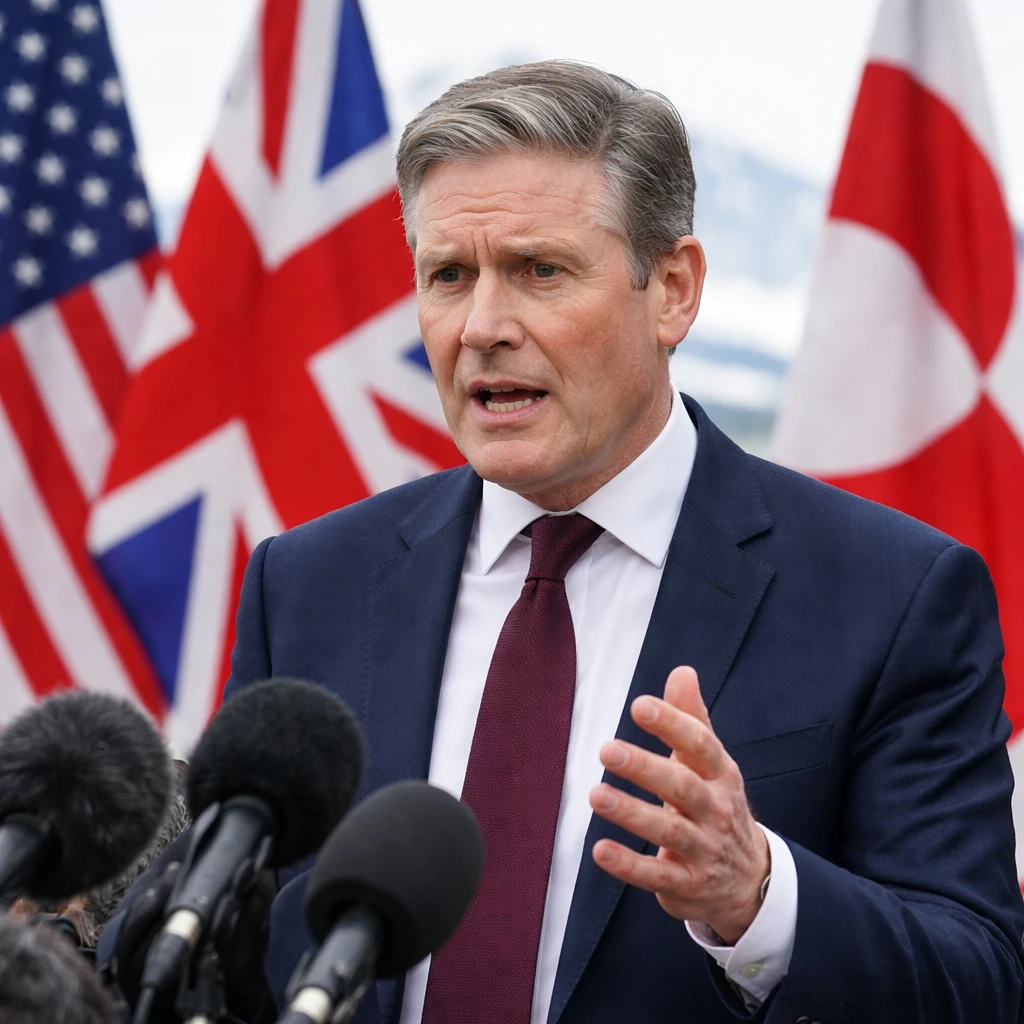
During a press briefing in London on Monday, British Prime Minister Keir Starmer voiced strong opposition to U.S. President Donald Trump’s proposed tariffs imposed on imports from eight European countries, including the United Kingdom, highlighting the move as "completely wrong." The tariffs, which Trump stated would begin in February at a rate of 10%, were put forward as a direct consequence of these nations' resistance to U.S. control over Greenland. This situation poses a potentially severe test to established alliances between the United States and its European partners.

Greenland holds a unique status as a semiautonomous territory within the Kingdom of Denmark, a NATO member. Trump's rationale for the tariffs centers on the recent deployment of symbolic troop contingents from these European countries to Greenland, a deployment he argues is critical for safeguarding the U.S. "Golden Dome" missile defense system. Furthermore, he has expressed concerns regarding strategic competition with Russia and China over the island.

Starmer, reflecting a position that underscores respect for sovereignty, affirmed the United Kingdom’s support for Greenland and Denmark’s "fundamental right" to determine the future direction and governance of the Arctic territory. While acknowledging the gravity of the tariffs, he underlined the UK's ongoing commitment to maintaining a robust and productive U.K.-U.S. partnership. He clarified that this commitment involves recognizing and engaging with differences rather than ignoring them.

Addressing how the UK plans to navigate these tensions, Starmer indicated that "being pragmatic does not mean being passive and partnership does not mean abandoning principles." In this spirit, he pledged that Britain will continue collaborative efforts with its European partners, NATO allies, and the United States, with an emphasis on keeping channels of communication open.

Regarding economic retaliation, the Prime Minister remarked that the UK currently has no intention to introduce reciprocal tariffs and aims to avoid escalating the situation to that level altogether. "We have not got to that stage. My focus is on making sure we don’t get to that stage," Starmer asserted.

Risks
  • The proposed tariffs introduce potential economic friction between the United States and its European allies, threatening trade stability and market confidence in sectors dependent on transatlantic commerce such as import/export industries and defense technology supply chains.
  • Escalation of tariff-related hostilities could imperil ongoing cooperative security arrangements, including those related to missile defense systems in the Arctic, impacting defense and security markets.
  • Uncertainty surrounding diplomatic ties and disagreements over strategic geopolitics in the Arctic region could increase volatility in sectors linked to resource exploration and infrastructure investments in Greenland and surrounding areas.
Disclosure
This article is based solely on the details provided regarding British Prime Minister Keir Starmer’s response to U.S. tariffs over Greenland and does not incorporate external interpretations or additional contextual information beyond what was supplied.
Search Articles
Category
News & Politics

News & Politics

Related Articles
Eddie Bauer Seeks Chapter 11 Protection Amid Rising Tariff and Inflation Challenges

Eddie Bauer LLC has filed for voluntary Chapter 11 bankruptcy protection in the District of New Jers...

FDA Initiates Review of BHA Food Additive Safety

The U.S. Food and Drug Administration (FDA) has announced plans to conduct a comprehensive reassessm...

Partisan Divide Deepens as White House Excludes Democratic Governors from NGA Meeting

The longstanding bipartisan forum of the National Governors Association (NGA) is facing disruption a...

Using Fireplace Ashes in Your Garden: Benefits and Considerations

Amidst a notably cold winter leading to increased fireplace use, many homeowners are seeking sustain...