
Understanding Frost Quakes: The Causes Behind Sudden Cold-Weather Booms
January 27, 2026
News & Politics

Understanding Frost Quakes: The Causes Behind Sudden Cold-Weather Booms

Rapid Freezing of Soil Moisture Triggers Rare Cryoseism Phenomena Amid Winter's Grip

Summary

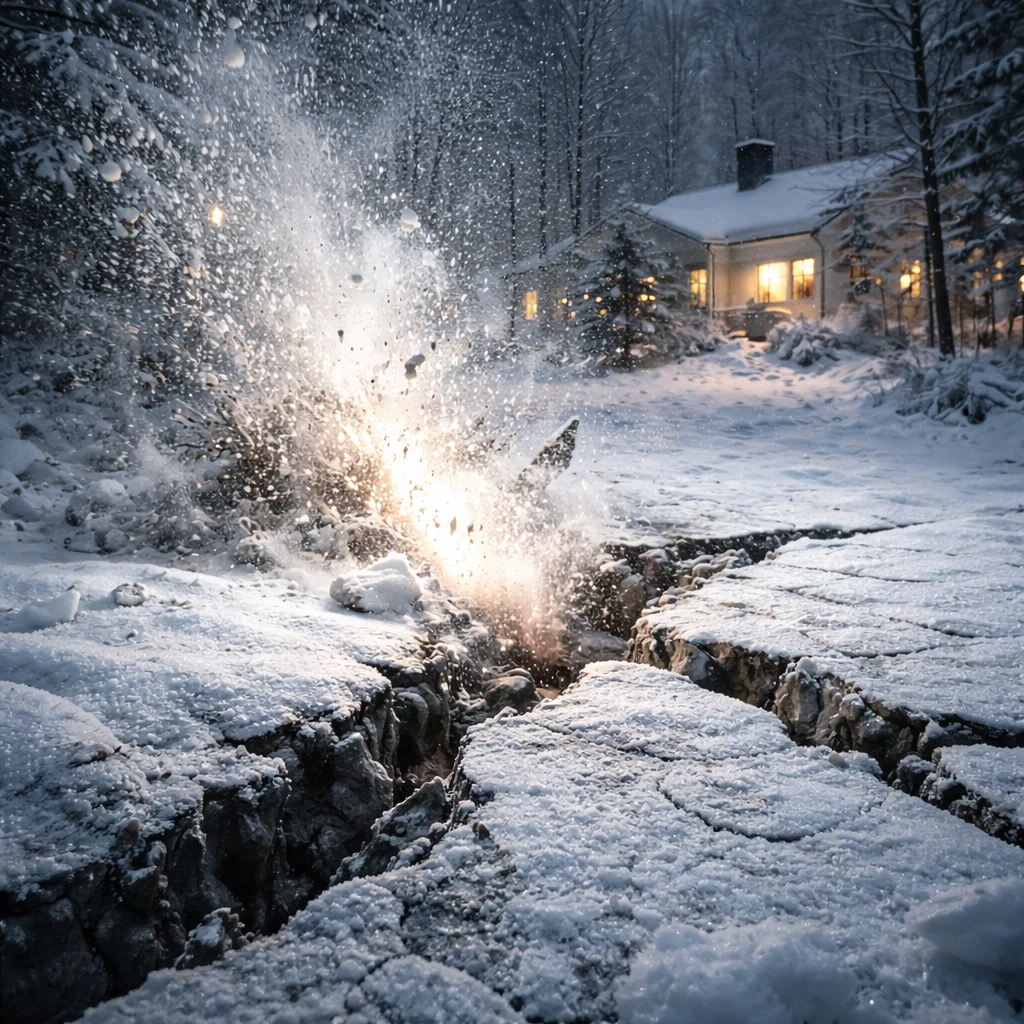
Frost quakes, also known as cryoseisms, produce sudden booming noises and slight ground vibrations in areas experiencing intense cold. These events occur when soil moisture, including rain or melted snow, rapidly freezes and expands, causing the surrounding earth to fracture. While relatively uncommon and mostly harmless, frost quakes can generate startling sounds that lead to public curiosity and concern during intense winter conditions.

Key Points

Frost quakes, or cryoseisms, originate from rapid freezing and expansion of moisture in the soil, causing cracking and booming noises along with light vibrations.
Such events are infrequent in regions like Kentucky due to the rare combination of saturated soil conditions and sudden temperature drops below freezing.
Meteorologists stress that frost quakes are mostly harmless, with severe cold temperatures and wind chill posing more substantive risks to people during winter weather conditions.

During periods of severe cold, unusual ground-shaking noises known as frost quakes or cryoseisms can occur as a result of rapid freezing of moisture in the soil. These events transpire when rain or melted snow embedded in the earth solidifies quickly after temperatures plunge below the freezing point. The process of water turning into ice causes expansion, creating significant pressure on the surrounding soil. As a consequence, the ground can crack, emitting loud booming sounds accompanied occasionally by light vibrations.

Evan Webb, a meteorologist with the National Weather Service office in Louisville, Kentucky, explained that their company has received multiple accounts of "loud booms" linked to cryoseisms during episodes of bitter cold weather. Webb pointed out that people often initially suspect "exploding trees" or other more dramatic causes for these noises when they occur.

Instances of frost quakes have been documented in various cold regions, though Webb noted they remain "relatively rare, especially in Kentucky." This rarity is attributed to infrequent conditions combining saturated soil during winter and a rapid temperature drop sufficient to freeze the moisture swiftly. The meteorologist emphasized that while frost quakes may be alarming, they are generally "mostly harmless". He added that the prevailing single-digit temperatures, especially when factoring in wind chill, pose a more significant threat than these brief seismic events.

Social media commentary from the National Weather Service office also mentions frost quakes, highlighting that although the sudden noises can be startling—particularly at night—there is no need for alarm. They clarified that these booming sounds are not paranormal occurrences but rather natural cryoseismic events caused by environmental conditions.

Photographic imagery from a winter storm event in Owensboro, Kentucky, captured scenes such as a bicyclist riding through snow-covered roads, underlining the severe weather conditions that can accompany frost quake phenomena.

Overall, frost quakes serve as a reminder of the complex interactions between meteorological patterns and geological responses during extreme cold. While they do not present significant physical risk, their occurrence provides insights into soil behavior when subjected to rapid freeze-thaw cycles.

Risks
  • The unexpected booming sounds may cause public concern or confusion, potentially straining local emergency communication channels during severe cold events.
  • Extreme cold weather conditions associated with frost quakes, including single-digit temperatures and wind chills, present health and safety risks to vulnerable populations.
  • Limited awareness of frost quakes might lead to misinterpretation of these natural phenomena, underscoring the need for timely and accurate meteorological communication.
Disclosure
This article is produced solely based on available meteorological data and expert insights provided by weather service personnel. No speculative or additional information beyond verified facts has been included.
Search Articles
Category
News & Politics

News & Politics

Related Articles
FDA Initiates Review of BHA Food Additive Safety

The U.S. Food and Drug Administration (FDA) has announced plans to conduct a comprehensive reassessm...

Partisan Divide Deepens as White House Excludes Democratic Governors from NGA Meeting

The longstanding bipartisan forum of the National Governors Association (NGA) is facing disruption a...

Using Fireplace Ashes in Your Garden: Benefits and Considerations

Amidst a notably cold winter leading to increased fireplace use, many homeowners are seeking sustain...