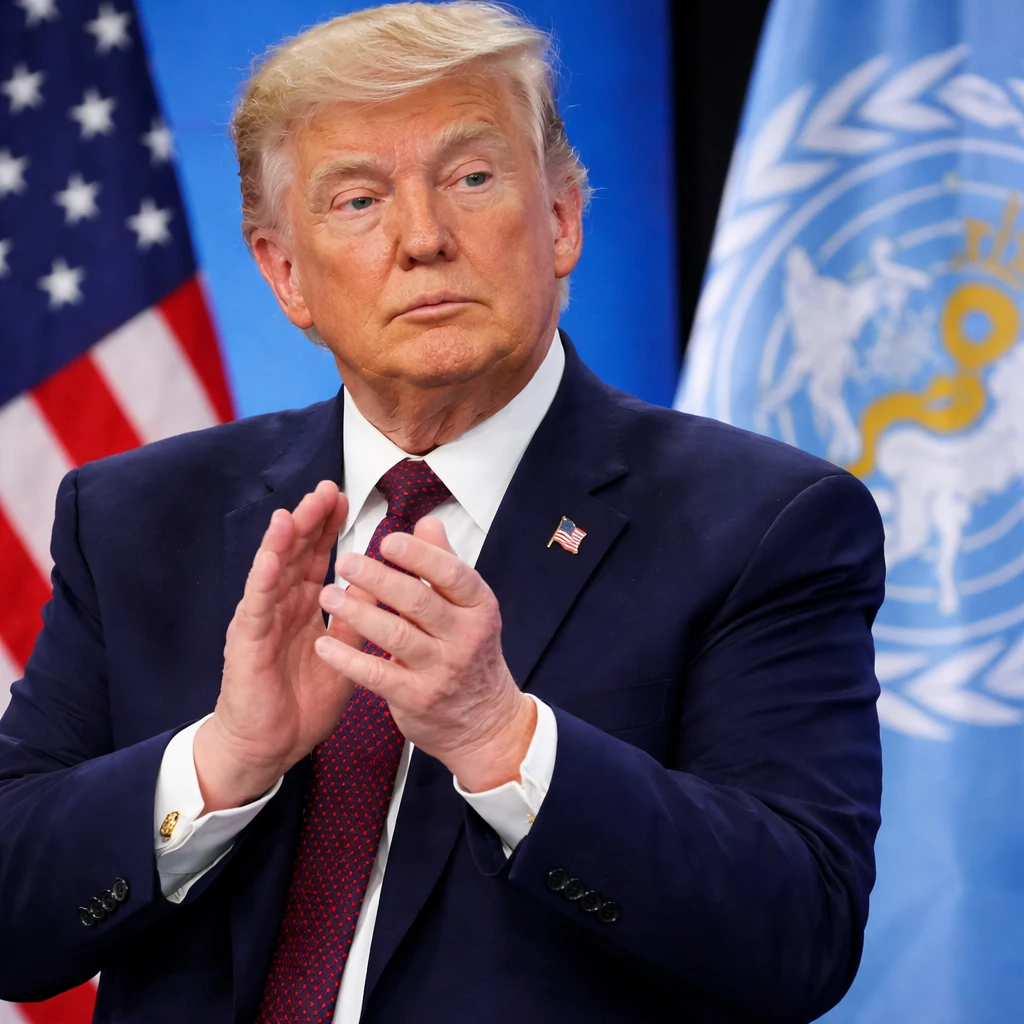
After a year of procedural steps following the announcement by former President Donald Trump, the United States has formally disengaged from the World Health Organization (WHO). Federal officials confirmed the completion of this withdrawal on Thursday, marking the end of nearly eight decades of American involvement. However, the separation is not without complications.
Currently, the United States owes the WHO an estimated $133 million in unpaid contributions. This lingering debt adds to the complex nature of disentangling the two entities, as acknowledged by representatives from the previous U.S. administration. Key concerns remain about diminished access to vital international health data, which historically have provided early indication of emerging pandemics.
Lawrence Gostin, a public health law scholar at Georgetown University, emphasized the gravity of this development, labeling the decision as exceptionally detrimental to the country’s public health interests. He underscored that this move could undermine global outbreak responses and impede American scientists and pharmaceutical firms in their efforts to develop vaccines and treatments for emerging health threats.
The WHO functions as the United Nations' dedicated agency for health matters, orchestrating global responses to infectious diseases like mpox, Ebola, and polio. It plays an essential role by offering technical support to low-income nations, coordinating the allocation of scarce vaccines and medical supplies, and establishing health guidelines for a wide range of conditions including cancer and mental health issues. Membership of the WHO encompasses nearly all nations worldwide.
The United States historically has been a foundational participant in the WHO’s establishment and remains one of its largest financial backers. Annual contributions from the U.S. government average approximately $111 million in mandatory dues, with an additional voluntary contribution of around $570 million as reported by the Department of Health and Human Services.
The Trump administration justified the withdrawal, citing the WHO’s perceived mismanagement of the COVID-19 pandemic and other health emergencies. Official critiques included the organization's inadequate reforms and failure to maintain independence amidst political pressures from member states. The administration also expressed discontent over the absence of American citizens among the WHO’s leadership, despite the significant financial and personnel support the U.S. provides.
During the pandemic, the WHO faced scrutiny for guidance that was later deemed flawed, such as its initial discouragement of mask use and delay in acknowledging airborne transmission of COVID-19 until 2024. These factors contributed to the decision to sever formal ties, a move public health experts warn is shortsighted.
Dr. Ronald Nahass, who leads the Infectious Diseases Society of America, characterized the U.S. withdrawal as both scientifically irresponsible and a setback for collective health efforts. The exit means that U.S. officials and agencies have ceased participation in WHO governance, committees, and technical groups—critical mechanisms for coordinated disease monitoring and response strategies.
A particularly notable loss is the U.S. absence from the WHO group responsible for flu surveillance and vaccine strain selection, which also entails no longer contributing to global information sharing on influenza outbreaks. Such data sharing has historically ensured the prompt availability of updated vaccines and therapeutics in the U.S.
Officials from the former U.S. administration have indicated that they maintain direct health communication channels with multiple countries, aiming to substitute WHO’s role in data facilitation. However, specifics on the breadth and effectiveness of these direct agreements remain unclear. Gostin expressed skepticism over the practicality of replacing global multilateral exchange with a limited number of bilateral arrangements, highlighting potential gaps in disease intelligence, especially from nations such as China or various African countries, where emerging viruses frequently originate.
Gostin additionally questioned the legal basis of the withdrawal, noting that the United States joined the WHO via congressional action and suggesting that withdrawal should require similar legislative approval.
Regarding financial obligations, while the U.S. adhered to the one-year notice period necessary for formal withdrawal, WHO officials have stated that outstanding dues for 2024 and 2025 have not been paid. Contrastingly, a U.S. administration representative denied a legal requirement to settle these dues prior to completing withdrawal.