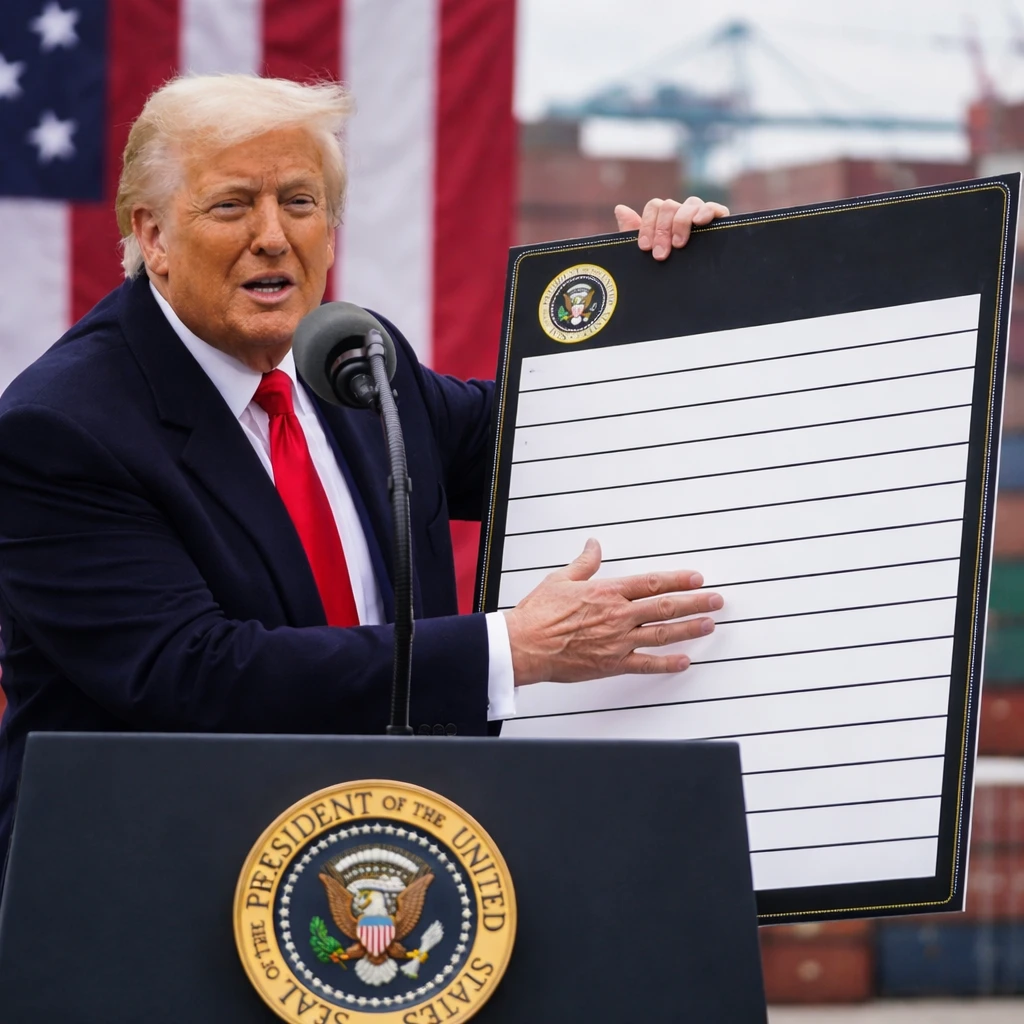

Throughout 2025, President Donald Trump repeatedly declared ambitious tariff initiatives intended to transform longstanding U.S. trade practices. Many such declarations resulted in the establishment of new import duties that disrupted decades of trade policy. Nonetheless, as the year draws to a close, some tariff threats announced by Trump remain unrealized, underscoring the complexity of executing such measures.
Trump’s approach frequently involved leveraging elevated tariffs as a bargaining tool to extract concessions from trade partners, retaliate against countermeasures, or signal displeasure with political adversaries. This tactic unfolded amid an expanding portfolio of tariffs, including significant levies on imported steel and aluminum, as well as tit-for-tat charges involving major trading partners such as China, contributing to global uncertainty for businesses and consumers.
Key unrealized tariff threats and their statuses at the end of 2025 are outlined below.
External Revenue Service Proposal
President Trump announced plans early in the year to establish an "External Revenue Service" (ERS) tasked with collecting tariffs, duties, and related revenues. On January 14, he posted on social media indicating the creation of this entity to ensure those profiting from U.S. trade pay their "fair share." He reiterated this in his January 20 inaugural address, describing the ERS as a mechanism to generate substantial revenue for the U.S. Treasury from foreign sources. However, by late December, the ERS had not been created. Despite continued affirmations from administration officials in the early months of the Trump administration, no formal establishment occurred during 2025. 200% Tariff on European Wines, Champagne, and Spirits
In a March 13 social media statement, Trump threatened a 200% tariff on wines, champagnes, and alcoholic products from France and other European Union countries if the EU did not remove a proposed 50% tariff on American whiskey. This EU tariff was introduced as retaliation for U.S. tariffs on steel and aluminum but was postponed, with the latest delay extending at least until February. Trump's threat of a 200% tariff on European alcoholic beverages was ultimately not implemented. Notably, the EU-U.S. trade deal concluded in summer 2025 set a 15% tariff rate on most European imports, excluding spirits. 100% Tariff on Foreign-Made Films
Claiming that the American movie industry was rapidly declining, Trump announced on May 4 that he authorized the Departments of Commerce and the U.S. Trade Representative to start instituting a 100% tariff on all foreign-produced films entering the United States. He reaffirmed this threat in a September 29 social media post, emphasizing the loss of American movie business to other countries and promising the tariff’s imposition. Despite these declarations, no 100% tariff on foreign films was enacted. The administration indicated no conclusive decisions had been reached on the matter, and ambiguity remained regarding how such a tariff would be practically applied to overseas productions. Tariffs on Pharmaceutical Drugs
During a Cabinet meeting on July 8, Trump stated that a forthcoming measure would impose high tariffs, potentially up to 200%, on pharmaceutical products not manufactured domestically. By September 25, he revised this with a social media post announcing a 100% tariff effective October 1 on patented pharmaceutical products unless produced in the United States. Nonetheless, no executive order or implementation of this 100% tariff occurred by the stipulated date or subsequently. Trump hinted that initial tariffs might be modest, potentially escalating to 250% over time. Meanwhile, trade agreements with countries like the United Kingdom provided exemptions such as a zero percent tariff on British medicines exported to the U.S. for three years. The administration also secured commitments from specific companies aimed at lowering drug prices. 100% Tariff on Computer Chips
On August 6, President Trump announced plans to impose approximately a 100% tariff on semiconductor chips and related products unless those products were manufactured within the United States. Specific timelines and implementation details were not provided. As of the end of 2025, this sweeping 100% tariff on computer chips and semiconductors has not been introduced. $2,000 Tariff Dividend Proposal
In a November 9 social media post, Trump proclaimed support for tariffs and proposed a $2,000 dividend paid to each qualifying individual, excluding high earners, funded by tariff revenues. To date, detailed explanations surrounding this tariff dividend have not been forthcoming. Economic experts expressed skepticism over the feasibility of such payments given fiscal constraints. Treasury Secretary Scott Bessent suggested the dividend might materialize as tax reductions rather than direct cash disbursements. Additionally, National Economic Council Director Kevin Hassett noted that Congressional approval would be necessary. Collectively, these unrealized tariff threats illustrate the administration's continued reliance on tariff rhetoric and plans as tools of trade policy. While some tariffs have reshaped import tax frameworks with tangible market impact, other promises remain unfulfilled, reflecting the complexity of domestic and international trade negotiations, logistical implementation challenges, and political considerations.
President Trump announced plans early in the year to establish an "External Revenue Service" (ERS) tasked with collecting tariffs, duties, and related revenues. On January 14, he posted on social media indicating the creation of this entity to ensure those profiting from U.S. trade pay their "fair share." He reiterated this in his January 20 inaugural address, describing the ERS as a mechanism to generate substantial revenue for the U.S. Treasury from foreign sources. However, by late December, the ERS had not been created. Despite continued affirmations from administration officials in the early months of the Trump administration, no formal establishment occurred during 2025. 200% Tariff on European Wines, Champagne, and Spirits
In a March 13 social media statement, Trump threatened a 200% tariff on wines, champagnes, and alcoholic products from France and other European Union countries if the EU did not remove a proposed 50% tariff on American whiskey. This EU tariff was introduced as retaliation for U.S. tariffs on steel and aluminum but was postponed, with the latest delay extending at least until February. Trump's threat of a 200% tariff on European alcoholic beverages was ultimately not implemented. Notably, the EU-U.S. trade deal concluded in summer 2025 set a 15% tariff rate on most European imports, excluding spirits. 100% Tariff on Foreign-Made Films
Claiming that the American movie industry was rapidly declining, Trump announced on May 4 that he authorized the Departments of Commerce and the U.S. Trade Representative to start instituting a 100% tariff on all foreign-produced films entering the United States. He reaffirmed this threat in a September 29 social media post, emphasizing the loss of American movie business to other countries and promising the tariff’s imposition. Despite these declarations, no 100% tariff on foreign films was enacted. The administration indicated no conclusive decisions had been reached on the matter, and ambiguity remained regarding how such a tariff would be practically applied to overseas productions. Tariffs on Pharmaceutical Drugs
During a Cabinet meeting on July 8, Trump stated that a forthcoming measure would impose high tariffs, potentially up to 200%, on pharmaceutical products not manufactured domestically. By September 25, he revised this with a social media post announcing a 100% tariff effective October 1 on patented pharmaceutical products unless produced in the United States. Nonetheless, no executive order or implementation of this 100% tariff occurred by the stipulated date or subsequently. Trump hinted that initial tariffs might be modest, potentially escalating to 250% over time. Meanwhile, trade agreements with countries like the United Kingdom provided exemptions such as a zero percent tariff on British medicines exported to the U.S. for three years. The administration also secured commitments from specific companies aimed at lowering drug prices. 100% Tariff on Computer Chips
On August 6, President Trump announced plans to impose approximately a 100% tariff on semiconductor chips and related products unless those products were manufactured within the United States. Specific timelines and implementation details were not provided. As of the end of 2025, this sweeping 100% tariff on computer chips and semiconductors has not been introduced. $2,000 Tariff Dividend Proposal
In a November 9 social media post, Trump proclaimed support for tariffs and proposed a $2,000 dividend paid to each qualifying individual, excluding high earners, funded by tariff revenues. To date, detailed explanations surrounding this tariff dividend have not been forthcoming. Economic experts expressed skepticism over the feasibility of such payments given fiscal constraints. Treasury Secretary Scott Bessent suggested the dividend might materialize as tax reductions rather than direct cash disbursements. Additionally, National Economic Council Director Kevin Hassett noted that Congressional approval would be necessary. Collectively, these unrealized tariff threats illustrate the administration's continued reliance on tariff rhetoric and plans as tools of trade policy. While some tariffs have reshaped import tax frameworks with tangible market impact, other promises remain unfulfilled, reflecting the complexity of domestic and international trade negotiations, logistical implementation challenges, and political considerations.