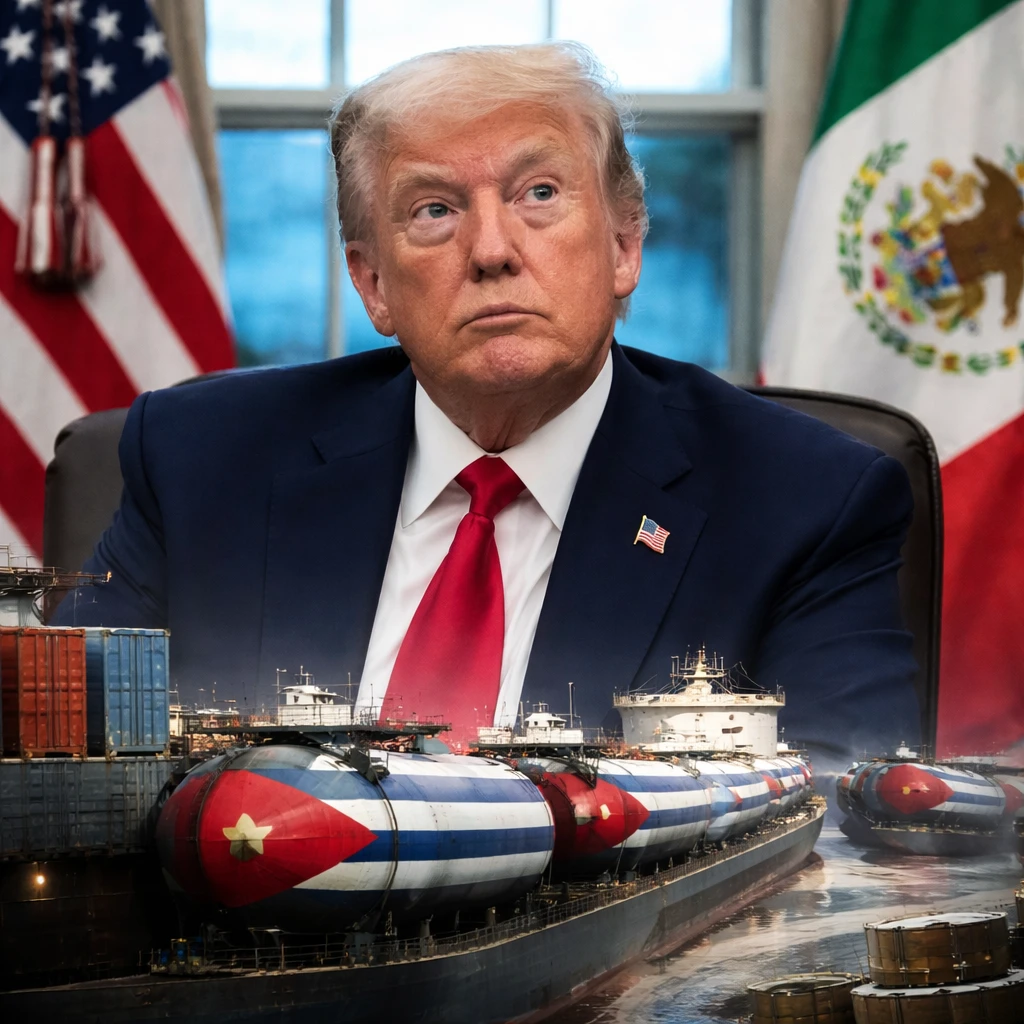

In a decisive policy action on Thursday, the President of the United States authorized an executive order that imposes tariffs on imports originating from any nation that continues to sell or supply oil to Cuba. This strategic move constitutes an escalation of economic measures designed to exert pressure on countries maintaining energy transactions with the island.
The implementation of this directive particularly impacts Mexico, a nation that has historically maintained oil shipments to Cuba. Earlier in the week, Mexican President Claudia Sheinbaum publicly declared that her administration had at least temporarily ceased its delivery of oil supplies to Cuba. She characterized this cessation as a sovereign choice unprompted by any coercion or external pressure from the United States, highlighting Mexico's independent decision-making capabilities amid intensifying diplomatic relations.
This development is situated within a broader US campaign to compel Mexico to distance itself politically and economically from the Cuban government. The aim is to further isolate Cuba, which, prior to this move, has been subjected to comprehensive and stringent economic sanctions from the US government. These sanctions already restrict Cuba's economic activities and international trade opportunities.
In parallel, the US has conducted military operations targeting the governmental leadership of former Venezuelan President Nicolás Maduro, actions which President Trump asserts have brought the Cuban government to the brink of collapse. The current tariff enforcement on countries trading oil with Cuba complements these efforts by targeting Cuba's vital energy supplies, thereby attempting to exacerbate existing economic strains on the island.
The ramifications of such measures extend beyond immediate geopolitical concerns, potentially influencing trade flows, energy markets, and diplomatic relations within the Western Hemisphere. The executive order serves as a tool to reinforce US foreign policy objectives regarding Cuba, emphasizing economic pressure as a means to achieve political shifts within the Gulf region.