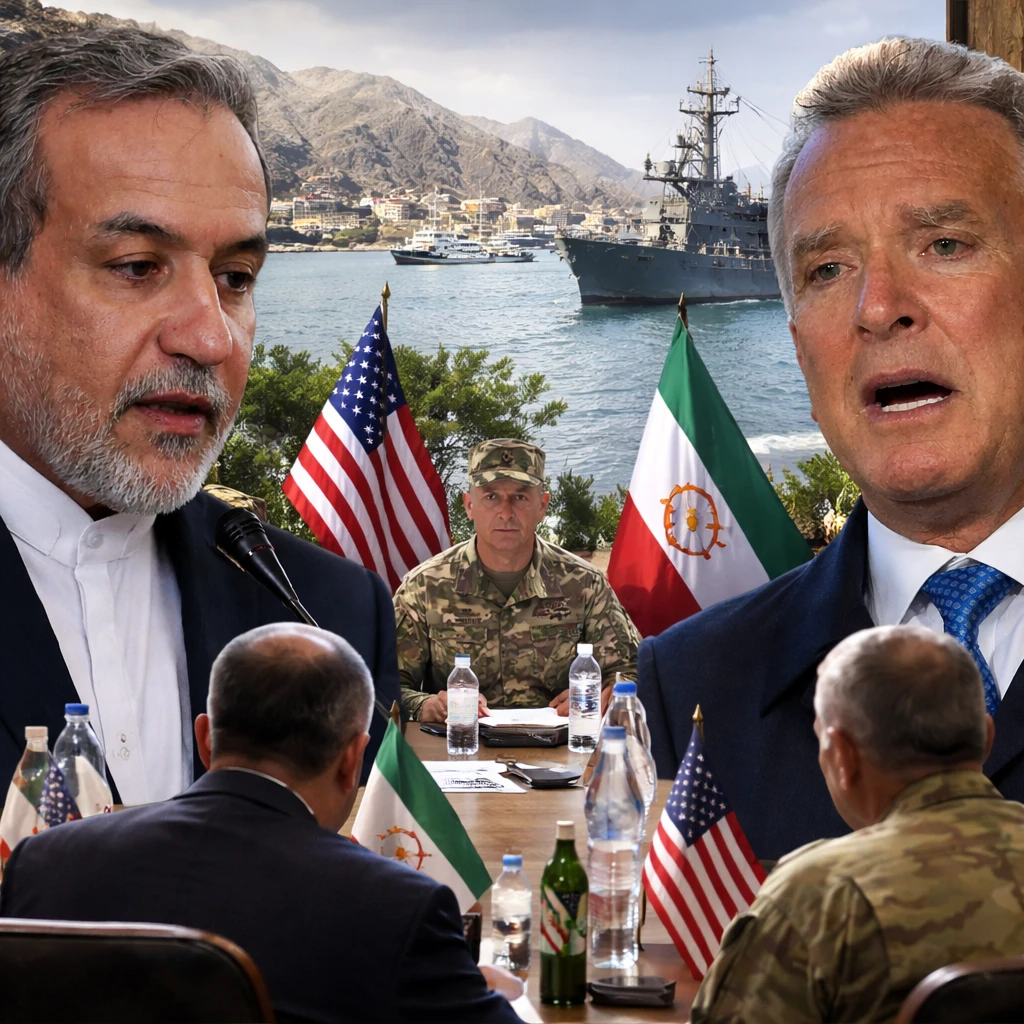

In the Omani capital of Muscat on Friday, officials from Iran and the United States convened for indirect discussions addressing concerns over Iran's nuclear ambitions. The deliberations seemed to circle back to initial positions regarding the framework and methodology for future dialogue.
Perhaps the most striking aspect of these meetings was the involvement of U.S. Navy Admiral Brad Cooper, the commander of the U.S. Central Command. Adorned in his formal dress uniform, Admiral Cooper's presence served as a tangible reminder that, concurrently, U.S. naval assets including the aircraft carrier USS Abraham Lincoln and other warships were stationed in the Arabian Sea, off the Iranian coast.
Recent weeks have seen President Donald Trump issue repeated threats to use military force to pressure Iran into negotiating terms on its nuclear program. The deployment of the carrier to the region followed Iran's severe response to widespread protests across the country, actions that led to thousands of fatalities and tens of thousands detained within the Islamic Republic.
The Gulf Arab states, neighboring Iran, harbor significant apprehension that any military engagement could escalate into a broader conflict engulfing the region. Incidents accentuating this risk occurred shortly before the talks: U.S. forces downed an Iranian drone near the Abraham Lincoln, and Iran made an attempt to halt a U.S.-flagged vessel navigating the strategic Strait of Hormuz.
Post-discussion, Iranian Foreign Minister Abbas Araghchi emphasized the necessity of progressing nuclear negotiations in an environment free from intimidation and hostilities, stating, "We did note that nuclear talks and the resolution of the main issues must take place in a calm atmosphere, without tension and without threats." This statement highlighted the challenge of balancing diplomatic overtures with the prevailing military and political tensions in the region.