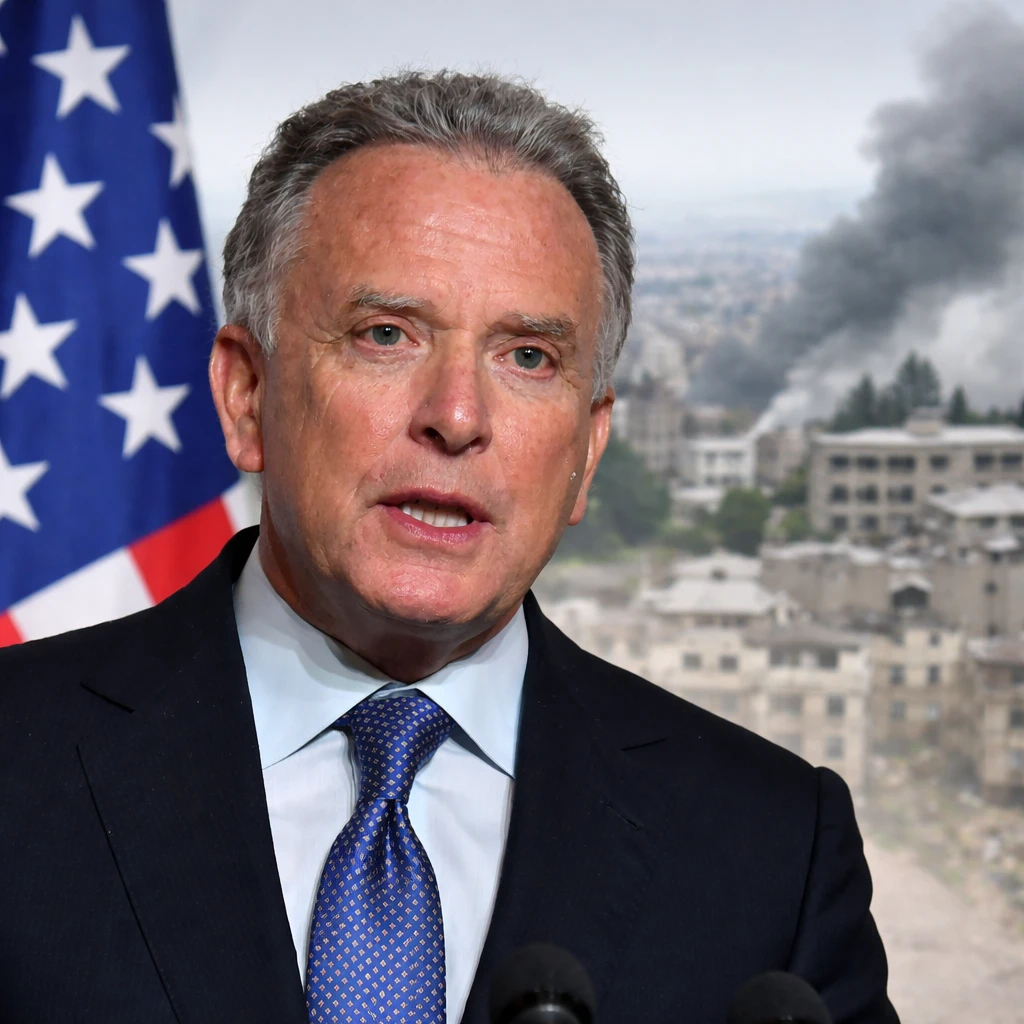

On Wednesday, U.S. officials confirmed the movement into a subsequent stage of a ceasefire initiative concerning Gaza. This phase centers on the disarmament of Hamas, rebuilding the territory severely affected by conflict, and launching a group of Palestinian experts responsible for the day-to-day administration of Gaza under American oversight.
Steve Witkoff, President Donald Trump's envoy, announced on the social media platform X that the ceasefire deal, which the Republican president helped facilitate, had entered its second stage. This follows two years of hostility between Israel and Hamas, with the new phase encompassing the formation of a technocratic government within Gaza. However, despite marking significant progress, the establishment of this government and the ceasefire agreement confront considerable challenges. These include the coordination and deployment of an international security force tasked with overseeing the agreement and the complexities inherent to disarming Hamas.
Details about the membership or structure of the new transitional Palestinian administration charged with governing Gaza remain undisclosed, with neither Witkoff nor the White House providing further specifics. Conversely, other mediators involved in the ceasefire agreement, namely Egypt, Turkey, and Qatar, expressed approval for the creation of the Palestinian technocratic committee. They indicated that Ali Shaath, a former deputy minister within the Palestinian Authority, would lead this committee.
In a collective statement, these three nations described the formation of the technocratic committee as a "significant step aimed at fostering stability and enhancing the humanitarian situation in the Gaza Strip." Ali Shaath, originally from Gaza, served as deputy minister for transportation under the internationally recognized Palestinian Authority. His background includes expertise in economic development and reconstruction, as noted on the Palestine Economic Policy Research Institute's profile.
Witkoff emphasized the expectation that Hamas would promptly release the remaining Israeli hostage in accordance with its commitments under the agreement, cautioning that failure to comply would result in "serious consequences."
Hamas spokesperson Hazem Qassem communicated to Al-Jazeera Live that Witkoff’s statement represented a positive and meaningful advancement. He added that Hamas is prepared to transfer administrative control of Gaza to the independent technocratic committee and support its operations. Moreover, Qassem indicated that Hamas is willing to engage in internal Palestinian discussions regarding its resistance weaponry, as shared via his Telegram channel.
The last Israeli hostage, Ran Gvili, a 24-year-old police officer who died during the October 7, 2023, Hamas attack initiating the conflict in Gaza, was mentioned by Israeli Prime Minister Benjamin Netanyahu. Netanyahu held a conversation with Gvili’s parents, highlighting the priority of recovering their son's remains. The Prime Minister's office reiterated that establishing a technocratic committee does not impede efforts to bring Ran back to Israel. It further mentioned that Israel will act upon any information received from mediators, holding Hamas responsible under the ceasefire agreement to facilitate the return of all hostages.
The ceasefire, implemented following a 20-point plan brokered by Trump, commenced in October and significantly reduced hostilities. During the first phase of this three-step plan, Hamas released nearly all hostages it held in exchange for hundreds of Palestinians detained by Israel.
The formation of a technocratic committee is an integral part of a broader strategy to end Hamas’ control over Gaza, which has lasted for 18 years. Appointed members will manage daily public services for Gaza’s population of over 2 million under the supervision of a Trump-led "Board of Peace," whose membership remains undisclosed.
Despite the announcement, this new governing body faces considerable challenges and unanswered questions related to its operational capacity and financial backing. The United Nations estimates that reconstruction costs will exceed $50 billion, a process anticipated to take several years with limited funding pledged to date.
Additionally, a more immediate issue involves transitioning the provision of basic services previously managed by Hamas, a responsibility complicated by nearly two decades of Hamas governance and repeated conflicts with Israel.