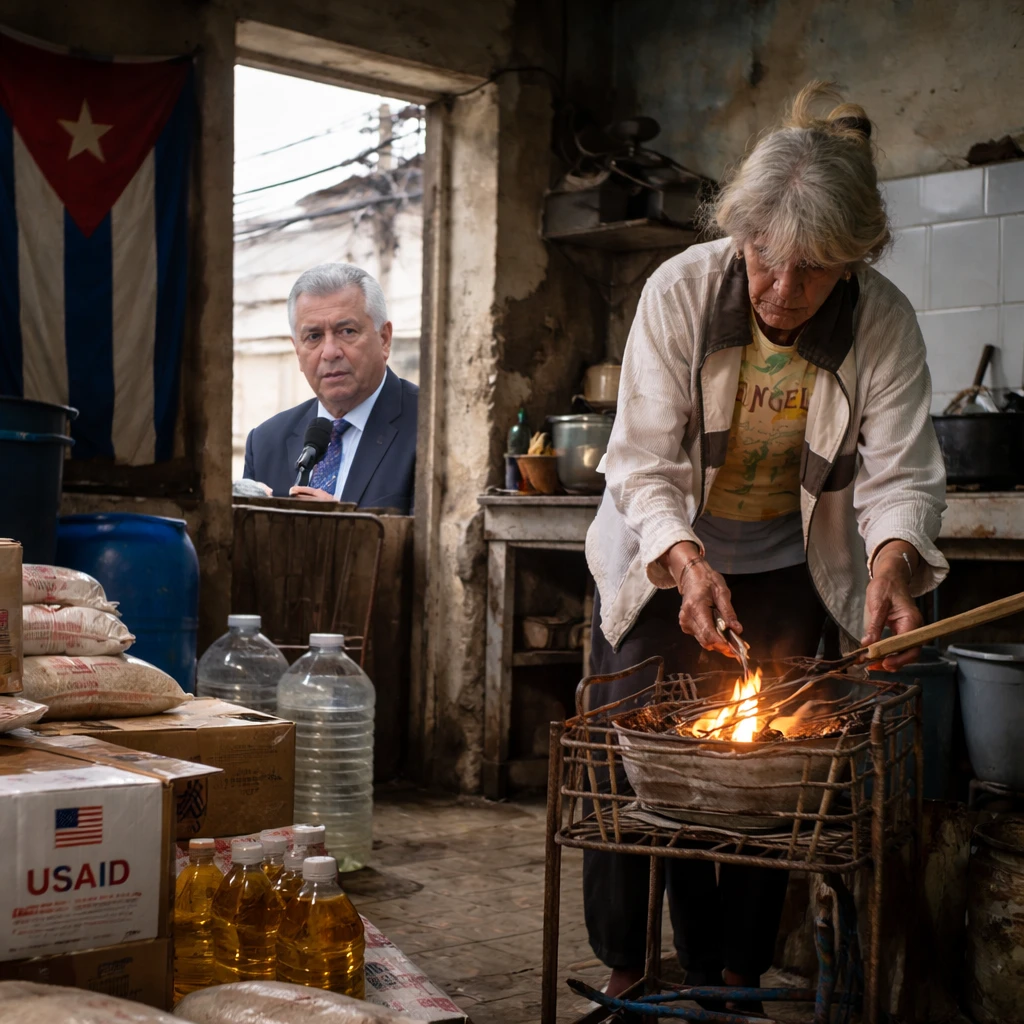
The US government announced on Thursday a further allocation of $6 million in aid destined for Cuba, intensifying its response to the deepening crisis affecting the island nation. This tranche of assistance focuses primarily on the eastern provinces devastated by Hurricane Melissa, which struck the region late last year. The aid package consists of essential food items such as rice, beans, pasta, and canned tuna, supplemented by solar lamps intended to address ongoing power shortages. Distribution responsibilities fall to charitable entities including the Catholic Church and Caritas, according to Jeremy Lewin, a senior official at the US Department of State.
Lewin emphasized that personnel from the US Embassy in Havana will actively monitor the aid’s distribution to ensure that the Cuban government does not hijack or politicize the supplies destined for the civilian population. This follows a prior US humanitarian contribution of $3 million directed to those affected by the same hurricane. Despite criticisms, Lewin dismissed assertions that the suspension of oil deliveries from Venezuela, subsequent to US interventions and the detention of Venezuela’s former leadership, is the root cause of Cuba’s current hardships.
He accused the Cuban leadership of austerely reserving resources for an elite circle comprising aging government officials, security forces, and external political activities, including involvement in Venezuela. Lewin noted, "For years, the island has stockpiled all of the resources for the few senile old men that run the country, for their henchmen, for the security apparatus," attributing Cuba’s difficulties to internal governance rather than external pressures.
Lewin further questioned the government’s financial priorities, citing the paradox where Cuba possesses substantial financial resources but fails to allocate them effectively to food procurement for its citizens. "They have billions of dollars, but they don't use it to buy food for ordinary Cubans," he remarked, explicitly referencing former president Raúl Castro in this context. Lewin’s remarks came shortly before Cuban President Miguel Díaz-Canel engaged in a tightly controlled press session, excluding widespread media participation including the Associated Press.
In this rare, private briefing, Díaz-Canel described a sustained "psychological war" against Cuba, highlighting a recent declaration by US President Donald Trump threatening tariffs on countries supplying Cuba with oil. The Cuban leader characterized such measures as an "energy blockade," which has severely hindered transportation systems, healthcare facilities, educational institutions, tourism, and agricultural productivity. The comprehensive impact includes chronic power outages and economic losses attributed to US sanctions, which escalated during Trump's administration, reportedly costing Cuba over $7.5 billion between March 2024 and February 2025.
Díaz-Canel noted the cessation of oil shipments following the onset of a US maritime blockade targeting Venezuela in December, leading to critical shortages of fuel required not only for electricity generation but also for essential services and economic activity. He acknowledged the emerging difficulties but expressed confidence in Cuba’s capacity for "creative resilience," pledging to provide further details about government strategies to address these challenges within a week.
The Cuban president addressed concerns about increasing hardships, stating, "There’s a lot of fear," and acknowledged public sentiments of repeated sacrifices amid ongoing adversity. He appealed to national solidarity, asking, "Well, if we don’t sacrifice, and if we don’t resist, what are we going to do? Are we going to give up?"
Lewin concluded that meaningful engagement and additional US aid would depend on the Cuban government’s willingness to prioritize its citizens' welfare over confrontational rhetoric. "They should be focused on providing for their people, not making these blustery statements," he said. Affirming that responsible governance starts with meeting the basic needs of a country’s population, Lewin suggested potential for further assistance if Havana demonstrates receptiveness.
During his remarks, Díaz-Canel indicated a conditional openness to dialogue with Washington, stipulating respect for Cuba’s sovereignty and a refusal to address matters perceived as interference in domestic affairs. He emphasized that "Cubans do not hate the American people" and asserted, "We are not a threat to the United States." The diplomatic tension persists as both leaderships remain entrenched in their narratives concerning the causes and handling of Cuba’s pressing economic and energy issues.