
At a recent emergency session of the United Nations Security Council, the United States sharply criticized Russia for what it called a “dangerous and inexplicable escalation” in the conflict that has spanned nearly four years in Ukraine. This denunciation comes as ongoing efforts pursued by the previous U.S. administration aim to facilitate negotiations towards a peaceful resolution.
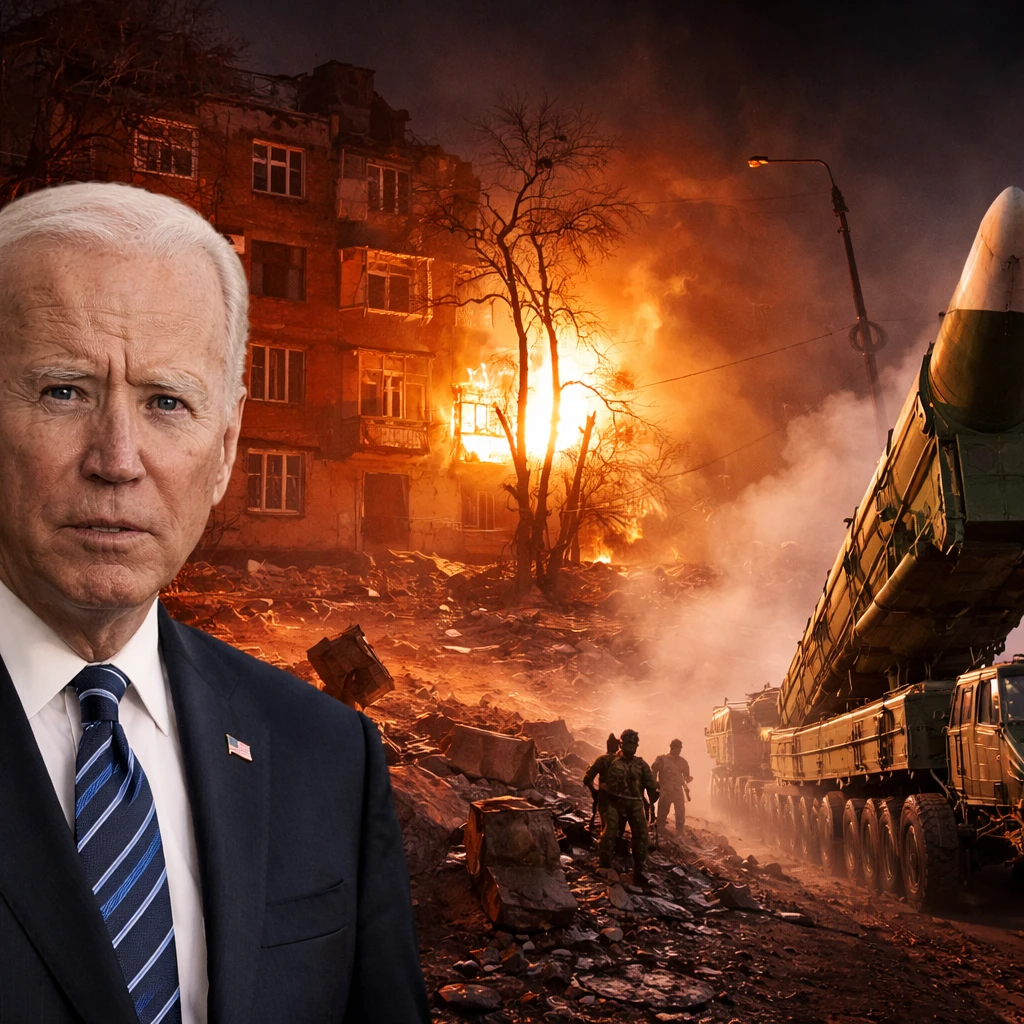
Specifically, U.S. Deputy Ambassador to the UN Tammy Bruce highlighted Russia’s use last week of an Oreshnik ballistic missile, equipped with nuclear capabilities, fired close to the border separating Ukraine and Poland, a key NATO member. This launch marked only the second recorded instance of this missile’s deployment, signaling a stark warning directed at Kyiv’s NATO allies.
Ukraine had called for this urgent Security Council meeting in response to a large-scale Russian offensive the previous Thursday night. This assault involved hundreds of drones alongside numerous missiles, including the recently introduced hypersonic Oreshnik missile, amplifying the threat perception from Moscow’s forces.
The intensity of this military action follows days after Ukraine and allied nations disclosed significant progress in discussions on strategies to safeguard Ukraine from further Russian advances, should a peace agreement, led by the United States, be finalized.
These attacks arose in the context of a deteriorating relationship between Moscow and Washington, exacerbated recently by Russia's condemnation of the United States' seizure of an oil tanker in the North Atlantic. Concurrently, U.S. President Donald Trump expressed support for a stringent sanctions package intended to impair Russia’s economy.
Despite these developments, Moscow has not demonstrated any readiness to moderate its comprehensive demands concerning Ukraine. Russia’s U.N. envoy attributed the ongoing diplomatic deadlock to Ukraine’s stance. Meanwhile, European leaders uniformly denounced the Oreshnik missile attack as both escalatory and unacceptable, mirrored by firm rebukes from the U.S. delegation.
Deputy Ambassador Bruce stressed that at a moment filled with potential for resolution, driven by the Trump administration’s dedication to peace, all parties should prioritize de-escalation efforts. Nevertheless, she warned that Russia’s recent conduct risks broadening and heightening the conflict.
Addressing the Security Council, Bruce recalled that Russia had supported a resolution nearly a year prior that called for an end to hostilities in Ukraine. She urged Russia to align its actions with its previously stated commitments, emphasizing the necessity for Russia, Ukraine, and European nations to engage earnestly in peace efforts to end the crisis.
Conversely, Russia’s Ambassador to the UN, Vassily Nebenzia, accused Ukrainian President Volodymyr Zelenskyy of failing to approach negotiations realistically and warned that Russia would continue to address the situation through military means. He indicated that with each day Zelenskyy delays, negotiation conditions deteriorate, and corresponding Russian responses to attacks on its civilians would intensify.
Ukraine’s representative to the UN, Andriy Melnyk, rebutted these claims by asserting that Russia is currently more vulnerable than it has been since the February 2022 full-scale invasion began. He pointed to Russia’s slowing economy and declining oil revenues, dismissing Russian portrayals of invincibility as illusory and disconnected from reality.