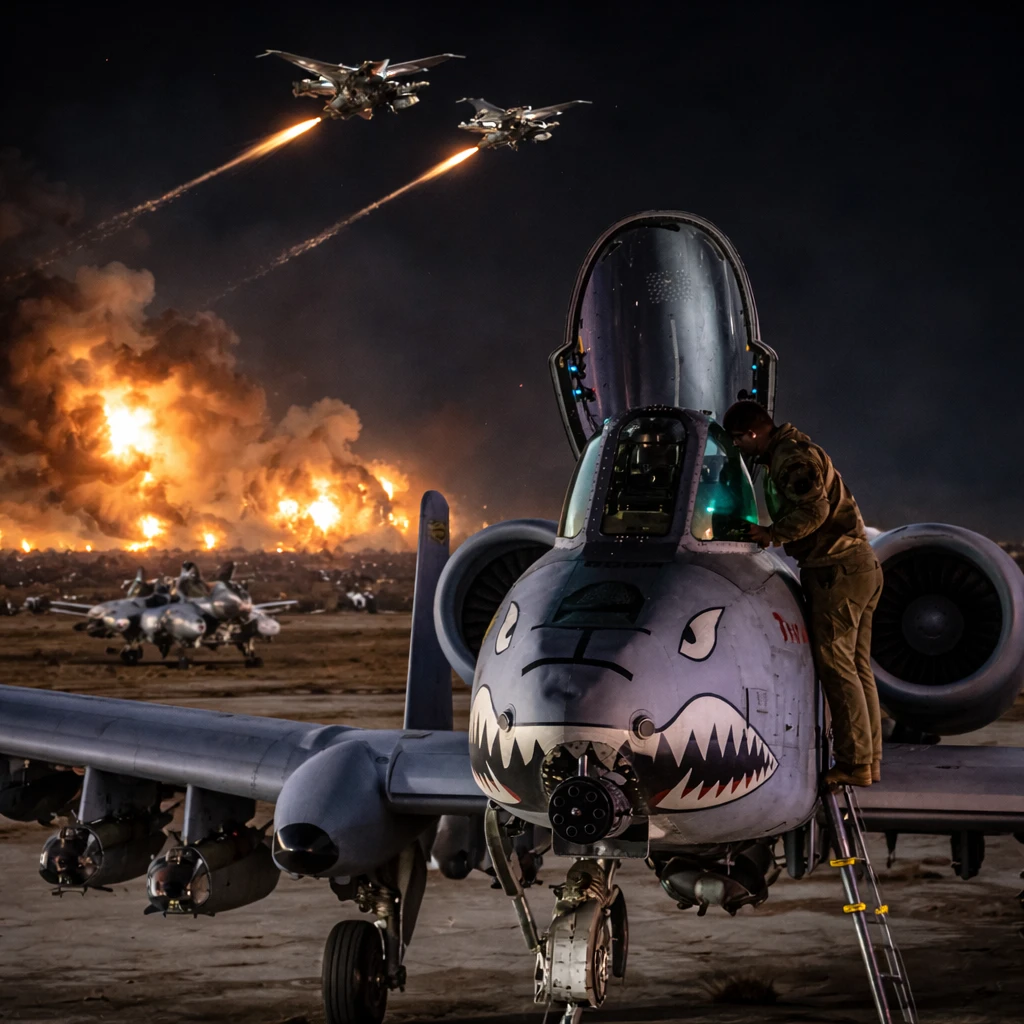

US Conducts Extensive Retaliatory Strikes in Syria Targeting ISIS Following Fatal Ambush
January 10, 2026
News & Politics

US Conducts Extensive Retaliatory Strikes in Syria Targeting ISIS Following Fatal Ambush

Operation Hawkeye Strike exemplifies continued US military commitment to targeting ISIS post-Palmyra attack

Summary

In a decisive military response to an attack that resulted in the deaths of two US soldiers and a civilian interpreter, the United States has executed a series of extensive strikes against ISIS targets in Syria. Conducted alongside allied forces, these actions underscore the US commitment to combating terrorism and protecting its personnel in Syria amid evolving regional partnerships.

Key Points

The United States has launched renewed military strikes targeting multiple ISIS positions across Syria as part of Operation Hawkeye Strike, a campaign initiated in response to an ISIS ambush killing two U.S. soldiers and a civilian interpreter.
These strikes represent collaboration between U.S. forces and allied partners, though specific participating forces have not been publicly disclosed by the U.S. military.
Coordination efforts by the U.S. have broadened to include engagement with Syria's central government following Bashar Assad's ouster and Syria’s inclusion in the international coalition against ISIS.

In response to the lethal ambush last month in Palmyra, Syria, which claimed the lives of two American soldiers and a civilian interpreter, the United States has initiated another significant wave of military strikes against the Islamic State across the region. U.S. Central Command reported that these coordinated operations occurred around 12:30 p.m. Eastern Time and involved multiple ISIS targets dispersed throughout Syrian territory.

These strikes are a component of a wider campaign endorsed by the Trump administration designated as Operation Hawkeye Strike. This operation is intended as a direct answer to the December 2024 attacks that killed Sgt. Edgar Brian Torres-Tovar and Sgt. William Nathaniel Howard, both affiliated with the Iowa National Guard, and Ayad Mansoor Sakat, who served as a civilian interpreter. The administration is signaling a resolute stance against ISIS, emphasizing the message that threats or attacks against American forces will provoke targeted and persistent military responses.

U.S. Central Command reiterated this position in its official communication, affirming the United States' resolve to locate and engage ISIS operatives globally regardless of their efforts to avoid detection or justice. While the statement reaffirmed the lethal global pursuit of ISIS elements, it did not identify specific partners involved in the recent strikes, only indicating collaboration with allied forces on the ground.

The day prior to this escalation, Syrian authorities confirmed the apprehension of the individual leading ISIS’s military activities in the Levant region. This development marks a significant disruption to ISIS’s operational leadership in Syria, coinciding with the intensification of U.S.-led military efforts.

Previously, Operation Hawkeye Strike commenced with a substantial assault on December 19, targeting approximately 70 ISIS-related locations concentrated across central Syria, focusing on hubs of ISIS infrastructure and weapons capabilities. The sustained operations illustrate an ongoing strategy to degrade ISIS's capacity through comprehensive and large-scale air and ground campaigns.

Historically, the U.S. has worked closely with the Kurdish-led Syrian Democratic Forces as its principal ground partner in combating ISIS within Syria. However, following the removal of former Syrian President Bashar Assad in December 2024, a shift has occurred in U.S. engagement strategies. Washington has, over recent months, increased its coordination with Syria’s central government. Syria’s accession to the global coalition against ISIS represents a notable evolution in regional cooperation, potentially impacting future operational dynamics.

Risks
  • The ongoing combat operations against ISIS in Syria carry the risk of further targeting and casualties among U.S. and coalition personnel, highlighting security concerns for military and defense sectors.
  • Shifts in alliance structures and U.S. coordination with Syria's government may entail diplomatic and strategic uncertainties impacting regional stability and defense cooperation frameworks.
  • Continuous hostile actions by ISIS could lead to renewed instability, affecting geopolitical risk assessments and defense expenditure in affected and neighboring regions.
Disclosure
This article is a factual report based on officially available information without additional interpretations or speculative content. The information included represents the situation as publicly stated by military and government sources at the time of writing.
Search Articles
Category
News & Politics

News & Politics

Related Articles
FDA Initiates Review of BHA Food Additive Safety

The U.S. Food and Drug Administration (FDA) has announced plans to conduct a comprehensive reassessm...

Partisan Divide Deepens as White House Excludes Democratic Governors from NGA Meeting

The longstanding bipartisan forum of the National Governors Association (NGA) is facing disruption a...

Using Fireplace Ashes in Your Garden: Benefits and Considerations

Amidst a notably cold winter leading to increased fireplace use, many homeowners are seeking sustain...