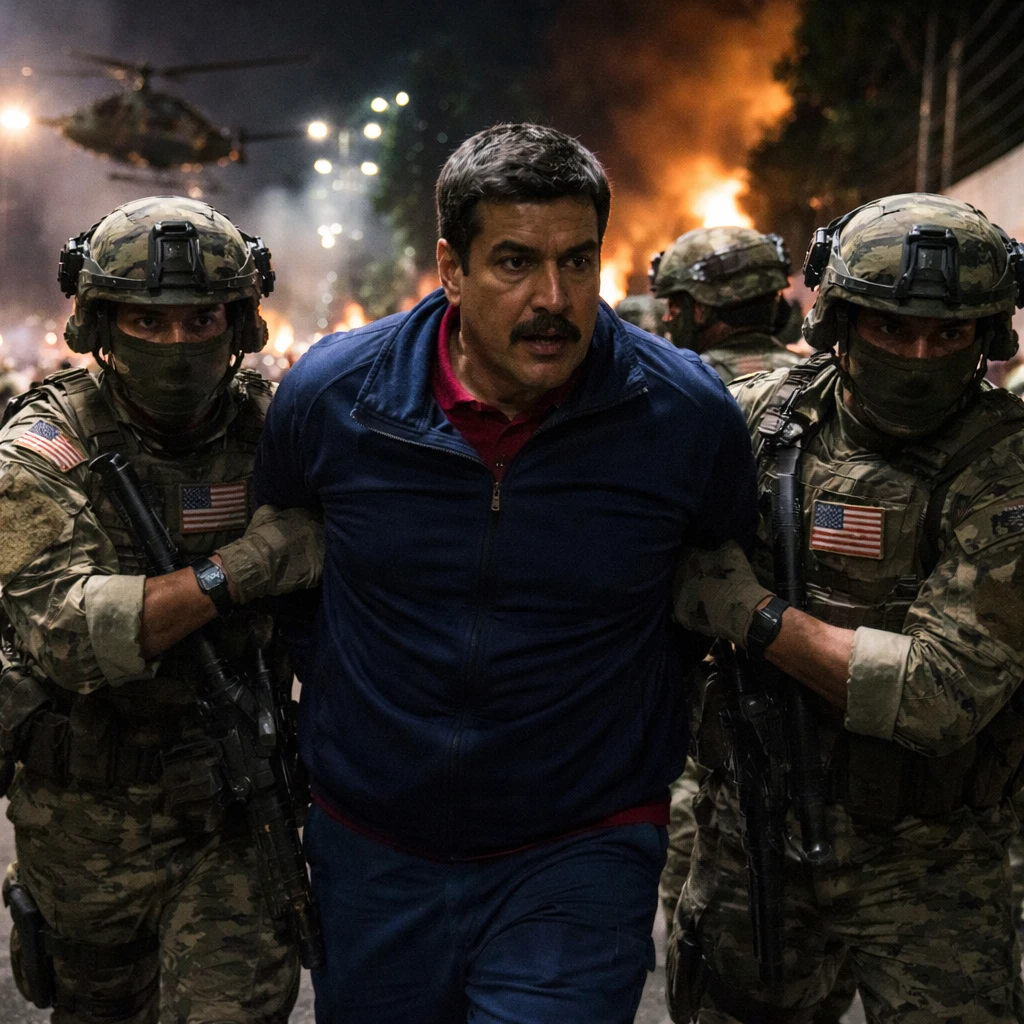

U.S. Conducts Major Operation in Venezuela; President Nicolás Maduro Captured and Removed
January 3, 2026
News & Politics

U.S. Conducts Major Operation in Venezuela; President Nicolás Maduro Captured and Removed

Pentagon confirms detainment of Venezuelan leader amid escalating U.S. pressure and overnight military strikes in Caracas

Summary

In the early hours of Saturday, the United States initiated a significant military operation targeting Venezuela, resulting in the capture of President Nicolás Maduro and his subsequent removal from the country. The events unfolded amid increased tensions between Washington and Caracas, with explosions and low-flying aircraft reported over the capital. The U.S. government announced the operation's success shortly after it took place, while the Venezuelan administration condemned the strikes as imperialist aggression.

Key Points

The United States executed a large-scale military operation in Venezuela resulting in the capture and removal of President Nicolás Maduro.
Explosions and low-flying aircraft were reported over Caracas, leading to widespread public reaction and condemnation from the Venezuelan government.
Tensions have escalated following accusations of narcoterrorism against Maduro and prior CIA drone strikes targeting drug cartel operations in Venezuela.

CARACAS – Early Saturday morning witnessed a large-scale military intervention by the United States in Venezuela, culminating in the capture and extraction of the nation’s president, Nicolás Maduro. This event came after several months of mounting pressure from Washington aimed at Maduro’s regime.

The strike began with multiple detonations and the sound of low-altitude aircraft circling over Caracas, the Venezuelan capital. Within moments, Maduro's government accused the United States of directly assaulting civilian and military installations, branding the act an "imperialist attack" and urging citizens to take to the streets in response.

In the immediate aftermath, the leadership status of Venezuela remained unclear, as did Maduro's whereabouts. However, shortly after 4:30 a.m. Eastern Time, former U.S. President Donald Trump released a statement on Truth Social confirming the operation.

According to Trump, “Alongside his spouse, Nicolás Maduro has been captured and transported out of the nation.” He stated that the mission was executed in coordination with U.S. security forces and promised further information in the near future. Trump indicated plans to hold a press briefing later on Saturday morning.

At least seven explosions shook Caracas in the initial hours of January 3, 2026, prompting residents to flee outdoors and share their experiences on various social media platforms. At this time, there has been no official confirmation regarding casualties resulting from the strikes. The assault lasted under 30 minutes; nevertheless, it remains uncertain whether subsequent operations will follow, although Trump’s announcement framed the mission as successful.

Prior to these events, the Federal Aviation Administration had imposed a temporary ban on U.S. commercial flights traversing Venezuelan airspace, citing ongoing military activity.

The operation follows escalating actions by the White House against Maduro’s administration, which U.S. authorities have accused of involvement in narcoterrorism. The CIA reportedly conducted a previous drone strike the week before targeting a Venezuelan dock believed to be utilized by drug cartels, marking the first direct action within Venezuelan territory since Washington initiated its campaign in the preceding September.

For many months, Trump had threatened imminent strikes on Venezuelan targets, concurrently sanctioning vessels accused of drug trafficking. Maduro had previously condemned these maneuvers as covert attempts to unseat his government.

Risks
  • Uncertainty regarding the political leadership and stability of Venezuela following Maduro's capture, impacting regional geopolitical dynamics.
  • Potential for increased instability and unrest in Venezuela, which could affect regional trade and security.
  • Possible disruption in the aerospace and defense sectors due to heightened military activity and geopolitical tensions in the region.
Disclosure
This article is based on information officially confirmed by governmental sources and public statements issued early on January 3, 2026. No additional details were available at the time of publication regarding the ongoing situation or its broader implications.
Search Articles
Category
News & Politics

News & Politics

Related Articles
Cryptocurrency Market Holds Steady Amid Anticipation of US-Iran Developments

The cryptocurrency market demonstrates a cautious stance as Bitcoin approaches the $69,000 mark. Oth...

FDA Initiates Review of BHA Food Additive Safety

The U.S. Food and Drug Administration (FDA) has announced plans to conduct a comprehensive reassessm...

Partisan Divide Deepens as White House Excludes Democratic Governors from NGA Meeting

The longstanding bipartisan forum of the National Governors Association (NGA) is facing disruption a...

Using Fireplace Ashes in Your Garden: Benefits and Considerations

Amidst a notably cold winter leading to increased fireplace use, many homeowners are seeking sustain...