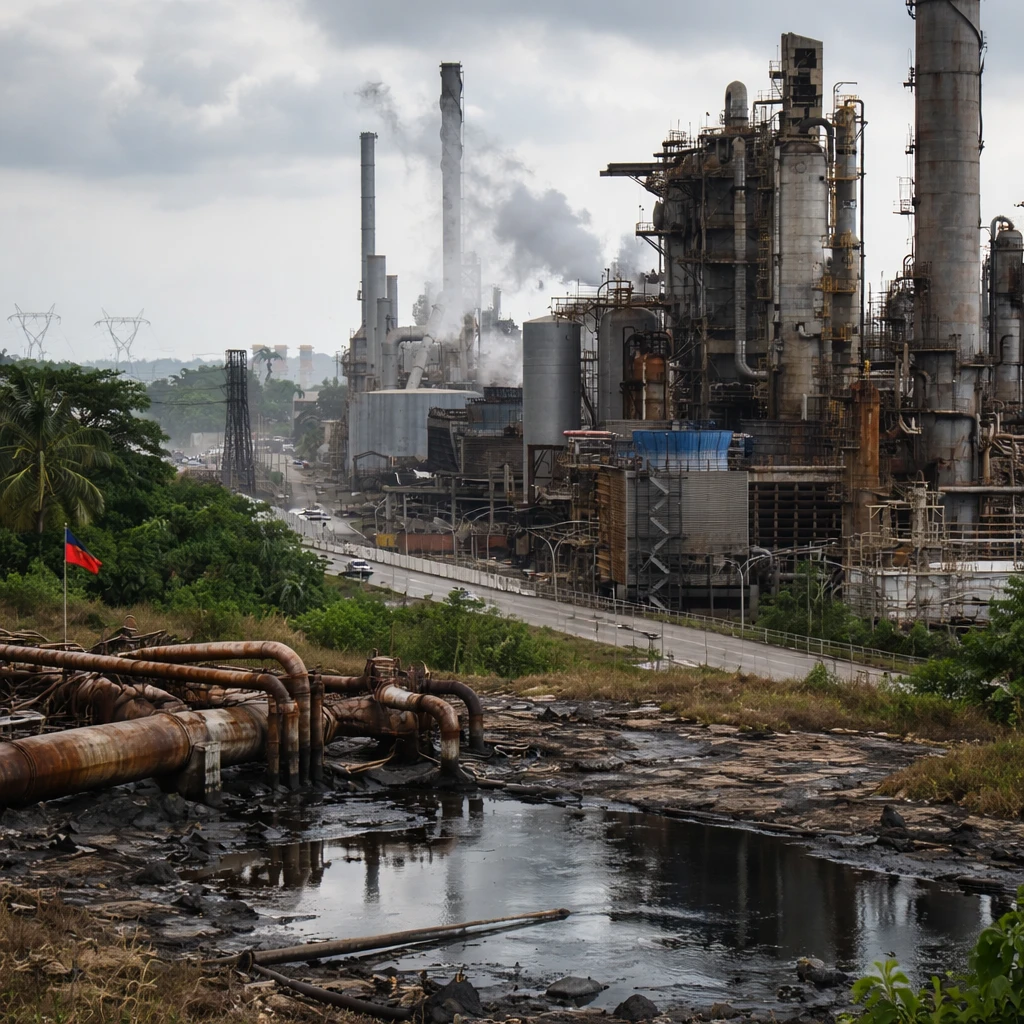

In Bogotá, Colombia, environmental specialists are raising alarms about the recent U.S. initiatives aimed at revitalizing Venezuela’s extensive oil reserves. They warn that expanding production could exacerbate environmental degradation and intensify greenhouse gas emissions, compounding the longstanding ecological issues linked to Venezuela's protractedly declining petroleum sector.
This development comes amidst escalated American pressure in the wake of the arrest of former Venezuelan leader Nicolás Maduro last weekend. In response, the United States has undertaken measures to assert influence over Venezuela's predominant revenue source: its oil exports. Actions include the seizure of tankers accused of violating U.S. sanctions by transporting crude and signaling intentions to channel Venezuelan crude oil supplies back into global markets under enhanced American oversight.
The Trump administration has outlined plans to sell between 30 million and 50 million barrels of Venezuelan crude oil internationally, though it has not provided specific timelines for this volume. The proceeds from such sales would be maintained in accounts controlled by the U.S. government, with the administration asserting that these funds would benefit both the Venezuelan people and American interests.
However, experts in the petroleum industry express skepticism about the feasibility and timeframe of substantially scaling up Venezuelan oil production. They emphasize that major investments—on the scale of billions of dollars—are necessary to rehabilitate Venezuela's deteriorated oil infrastructure, which has severely declined over several decades. This raises significant questions about how soon, or indeed if, the plans articulated by the Trump administration can be realized.
Paasha Mahdavi, an associate professor specializing in political science at the University of California, Santa Barbara, noted the extent of infrastructure dilution impeding progress. "You’ve got storage facilities literally sinking into the ground, broken wellheads and degraded infrastructure across the board," she explained. Her observations underscore the complexity of restoring functional oil extraction and export capabilities in Venezuela.
The environmental impact of boosting oil production in Venezuela is of particular concern. The country’s heavy crude oil demands more energy-intensive processing, which may worsen ecological harm and increase emissions contributing to global warming. These factors, coupled with the challenges posed by aged and failing oil infrastructure, create a multifaceted dilemma for policymakers and stakeholders involved in the U.S.-Venezuela oil dynamics.
In summation, the initiative to increase Venezuelan crude exports under U.S. direction intersects with substantial environmental risks and logistical hurdles rooted in dilapidated infrastructure. The success and environmental sustainability of this plan remain uncertain, pending massive investments and operational recovery that will likely span several years.