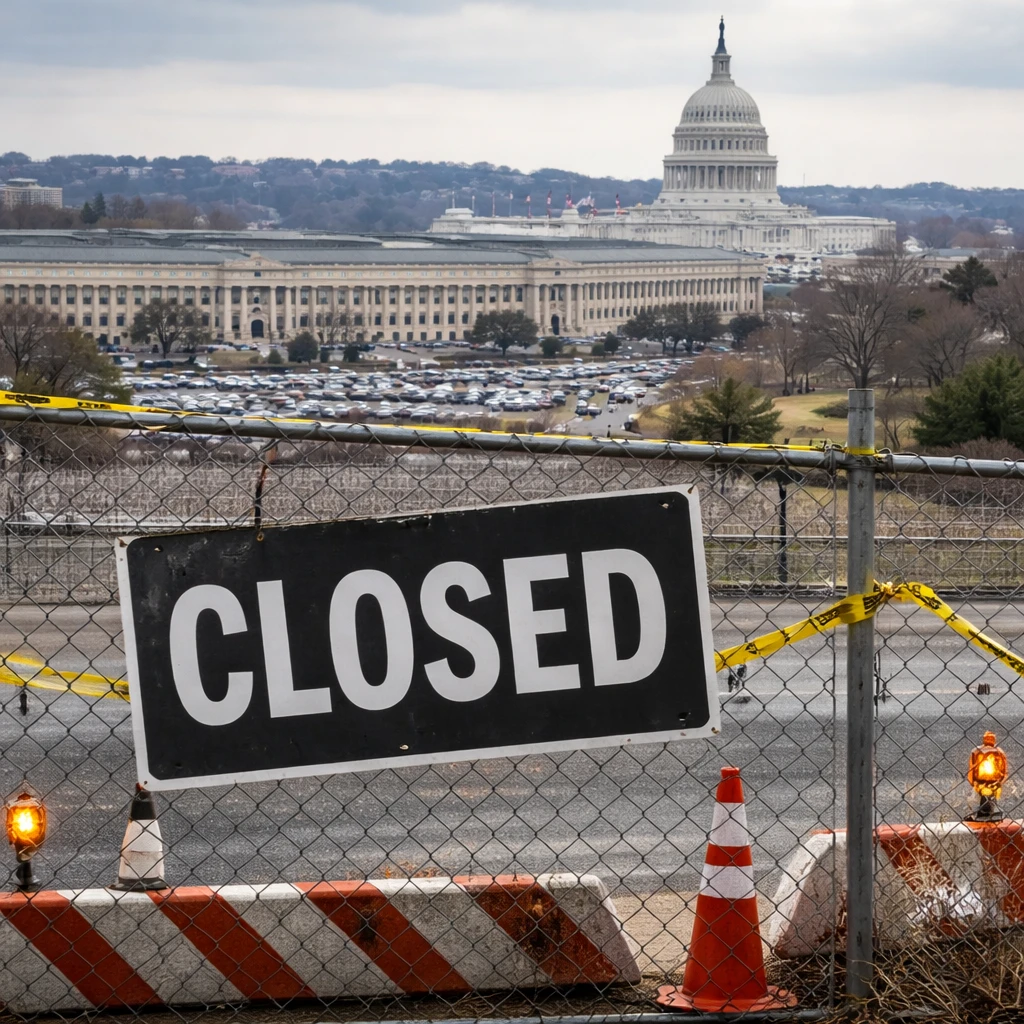

The United States experienced a partial government shutdown starting this past Saturday, a situation that contrasts significantly with the extended government closure seen last fall. This current shutdown is characterized by its anticipated brief duration, owing mainly to the House of Representatives' intention to expedite funding legislation upon their return to session on Monday. Such prompt legislative action is expected to resolve the shutdown swiftly.
To date, Congress has approved half of the annual funding bills for the fiscal year, ensuring uninterrupted operation of several essential federal agencies and programs through the end of September. For instance, vital nutrition aid initiatives are unaffected by this temporary lapse in funding. However, specific departments, including the Department of Defense and agencies under the Department of Homeland Security (DHS) and the Department of Transportation, face a funding gap that could impact their operations. Although critical functions within these agencies will continue, personnel may face delayed salary payments if the budgetary impasse persists, and furloughs could be implemented.
The origins of this new shutdown stem from a disruption in the previously smooth government funding process. Initially, bipartisan agreement had been reached on key legislation in both the House and Senate. However, recent events, particularly the deaths of two U.S. citizens, Alex Pretti and Renée Good, during encounters with federal agents in Minneapolis, catalyzed significant political tension. In response, Democrats have demanded the removal of the DHS funding bill from the overall package passed by the House, asserting that this bill should incorporate reforms to immigration enforcement. These proposed reforms include establishing a code of conduct for federal agents and mandating that agents display identification during operations.
Aiming to prevent a prolonged shutdown, the White House, led by President Donald Trump, negotiated a compromise with Democrats. This agreement provides for temporary funding of DHS at existing levels for two weeks while negotiations continue. The Senate approved a five-bill funding package on Friday that encompasses most government functions, but the package requires ratification by the House to become law. Because the House did not reconvene until Monday, some government segments experienced a temporary suspension of funding.
Multiple brief or weekend shutdowns have occurred under prior administrations, including during the early days of the Trump presidency. In January 2018, a weekend shutdown arose from a dispute over immigration protections, leading to some federal workers being furloughed or working without immediate compensation. Benefits such as Social Security and Medicare were unaffected, and federal offices reopened once an agreement was forged. A notably brief shutdown in February 2018 lasted approximately nine hours overnight, resulting in minimal to no public disruption. The brevity of that shutdown prevented furlough notices from being fully executed, and normal operations continued throughout business hours.
The current funding lapse predominantly impacts the Department of Defense, the Department of Transportation, and DHS, including the Federal Emergency Management Agency (FEMA). Experts indicate that FEMA retains sufficient resources, estimated between $7 billion and $8 billion, dedicated to disaster response and recovery, along with personnel funding. This reserve is particularly critical in light of the ongoing widespread winter storm affecting large portions of the country. However, should the shutdown extend, these funds may experience added strain, especially if new disasters arise requiring emergency response.
Other operational areas of FEMA would be curtailed, such as the capacity to issue or renew National Flood Insurance Program policies, which were also paused during the prolonged 43-day shutdown last year. That lengthy shutdown disrupted travel as delays and cancellations increased substantially. Presently, the Department of Transportation's funding gap raises concerns about potential air travel disruptions. Air traffic controllers will continue to work without pay until a budget resolution is enacted, as the pending spending bill responsible for their salaries awaits House approval.
Importantly, critical food assistance programs like the Supplemental Nutrition Assistance Program (SNAP) remain fully funded for the fiscal year. This is a significant change from the fall shutdown, during which many recipients faced reduced or suspended benefits in the final weeks. The current budget legislation approved earlier funded the Department of Agriculture and its administered programs through to September 30, ensuring that SNAP continues uninterrupted. This program benefits approximately 42 million Americans, providing an average of $190 monthly per individual in low-income households. Additionally, the Special Supplemental Nutrition Program for Women, Infants, and Children (WIC), which offers nutritional support and counseling to pregnant women and young children, remains fully operational with secured funding for the year.