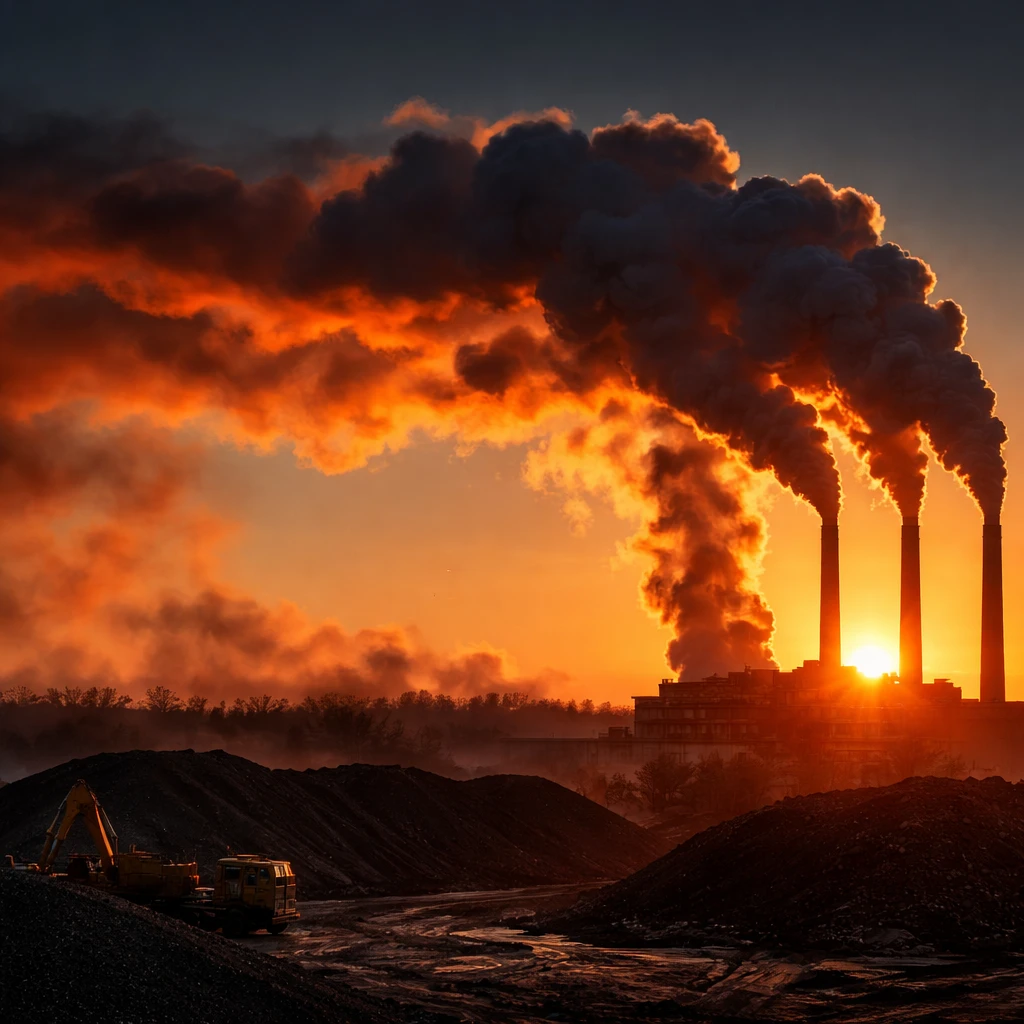

The United States experienced a reversal in its multi-decade trend of declining greenhouse gas emissions in 2025, releasing 2.4% more heat-trapping gases from fossil fuel combustion compared with the previous year, according to analysis published on Tuesday by an independent research organization.
This emission increase is linked to several factors, including an unusually cold winter that led to heightened demand for building heating, rapid expansion in electricity consumption by data centers and cryptocurrency mining operations, and elevated natural gas prices that encouraged a rise in coal-based power generation. Despite recent environmental policy rollbacks by the federal government, those changes did not significantly influence emissions in 2025 as many were implemented only during that year.
Carbon dioxide and methane emissions in the US had previously fallen by 20% between 2005 and 2024, interrupted by occasional modest annual increases. Historically, fossil fuel emissions tended to correlate directly with economic growth, but more recent efforts to expand cleaner energy production had decoupled the two metrics, allowing emissions to decline even as gross domestic product rose.
Ben King, a director within the Rhodium Group's energy division and co-author of the study, noted that last year’s emissions grew at a rate exceeding economic output. He estimated the nation emitted approximately 5.9 billion tons (5.35 billion metric tons) of carbon dioxide equivalent gases in 2025, an increase of 139 million tons (126 million metric tons) over 2024 levels.
The severe winter conditions drove up heating requirements predominantly met by natural gas and fuel oil, both significant sources of greenhouse gas emissions. Simultaneously, the surge in power demand from data centers and crypto mining sectors necessitated increased electricity generation, including from coal-fired plants, which emit higher levels of carbon pollution than other fuel sources.
Rising natural gas costs contributed to a 13% increase in coal-generated power output last year, reversing much of coal's steep decline since its 2007 peak. King emphasized that this did not signify a coal resurgence dominating the energy sector but acknowledged that its uptick played a substantial role in elevating power sector emissions.
The environmental policy adjustments introduced by the current administration had not been active long enough in 2025 to impact emission data significantly but may influence future trends. The growth in solar energy generation outpaced hydroelectric power by 34%, with zero-emission sources now providing approximately 42% of the nation's electricity.
King observed that, despite efforts to curtail federal support for renewables, the underlying economic advantages of solar and wind energy remain strong. Before these policy changes, projections estimated a 38% to 56% reduction in emissions by 2035 compared to 2005 levels; however, updated estimates suggest this reduction might now be approximately one-third less.
External experts expressed concern over the emission increase, cautioning that favoring fossil fuels could impede economic progress and exacerbate air pollution, particularly as global energy markets shift toward low-carbon solutions. Persistent reliance on legacy fossil fuel infrastructure was characterized as a significant misstep with potentially adverse environmental and economic consequences.
The Environmental Protection Agency stated it was not familiar with the research findings but affirmed its commitment to protecting public health amidst ongoing environmental challenges.