
US Initiates Diplomatic Engagement with Cuba Amid Enhanced Sanctions on Oil Supply
January 31, 2026
News & Politics

US Initiates Diplomatic Engagement with Cuba Amid Enhanced Sanctions on Oil Supply

Trump Administration Intensifies Pressure on Cuba by Targeting Oil Imports from Venezuela and Mexico

Summary

President Donald Trump announced that the United States has begun diplomatic discussions with Cuban officials while increasing economic pressure through restrictions on oil supplies. Recent executive actions impose tariffs on countries supplying oil to Cuba, directly affecting Mexico and Venezuela, the island’s principal oil providers. The administration's strategy aims to prompt Cuba into negotiations, though specific objectives remain undefined.

Key Points

The United States has initiated talks with Cuban officials as part of a broader effort to increase pressure on the communist-led island nation.
New executive sanctions impose tariffs on countries that continue to sell or supply oil to Cuba, notably impacting Mexico, which has become Cuba’s principal crude oil source following the cessation of Venezuelan shipments.
The administration’s strategy aims to force Cuba into negotiations, although the specific objectives and outcomes sought remain vague and unarticulated.

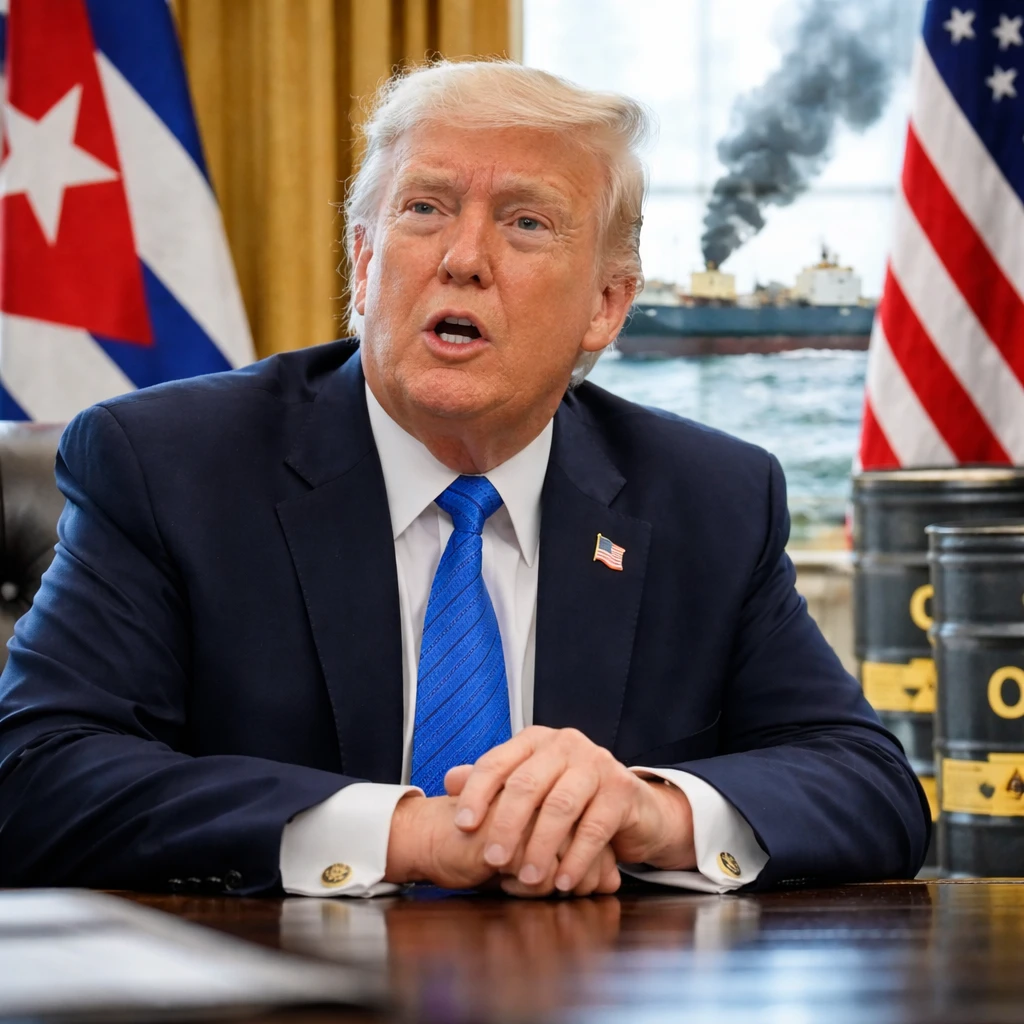
During a flight to Florida on Saturday night, President Donald Trump revealed that the United States has commenced dialogue with Cuban leaders amid a heightened campaign of economic pressure against the island nation, which operates under a communist government. This declaration follows a series of actions by the administration aimed at restricting critical oil shipments to Cuba.

Trump’s recent policies have targeted the cessation of oil imports from both Venezuela and Mexico, two key suppliers to Cuba. The president suggested that these measures are intended to compel Cuba to the negotiating table, although he did not specify the particular goals of these discussions or the nature and scope of the current communications.

The increased focus on Cuba coincides with the administration’s more confrontational stance toward countries it identifies as adversaries, particularly after the early January capture of Venezuela’s then-President Nicolás Maduro by U.S. forces. Trump has suggested that the Cuban government is on the verge of collapse and has expressed optimism about the possibility of Cuba becoming 'free again.'

Specific details regarding the level or content of the talks with Cuban officials were not provided. The president stated simply, “We’re starting to talk to Cuba,” leaving the timing and progress of these exchanges unclear.

Meanwhile, the administration’s economic measures are exerting significant strain on Cuba’s economy. Last week, an executive order was signed to impose tariffs on any nations that sell or supply oil to Cuba, thereby intensifying pressure on Mexico. Since the suspension of Venezuelan oil shipments following Maduro’s downfall, Cuba’s dependence on Mexican oil has increased substantially.

Mexican President Claudia Sheinbaum cautioned that these sanctions could provoke a humanitarian crisis. In response, she indicated efforts would be made to find alternative means for continuing support to Cuba. Trump downplayed this concern, stating, “It doesn’t have to be a humanitarian crisis,” and expressed hope that the sanctions would encourage Cuba to reach an agreement with the United States. He concluded by assuring that any such deal would be approached with kindness.

As the situation develops, the implications for Cuba’s energy security and broader economic stability remain significant, with potential humanitarian consequences underscored by regional leaders.

Risks
  • The imposition of tariffs on oil suppliers to Cuba raises concerns about a potential humanitarian crisis due to energy shortages, highlighted by warnings from Mexican President Claudia Sheinbaum.
  • Uncertainty exists regarding the extent and effectiveness of diplomatic engagement with Cuba, with no detailed information on negotiation progress or terms.
  • The sanctions may provoke geopolitical tensions or retaliatory actions among affected nations, potentially impacting regional stability and economic relations.
Disclosure
This analysis is based on publicly available information regarding recent U.S. diplomatic and economic actions involving Cuba and its oil supply chain.
Search Articles
Category
News & Politics

News & Politics

Related Articles
Equinor (EQNR): A Dividended, Buyback-Supported Long with Reserve and Licensing Upside

Equinor combines scale (2.1 mmboe/d production in 2024, 6.1 billion barrels proven reserves) with gr...

FDA Initiates Review of BHA Food Additive Safety

The U.S. Food and Drug Administration (FDA) has announced plans to conduct a comprehensive reassessm...

Partisan Divide Deepens as White House Excludes Democratic Governors from NGA Meeting

The longstanding bipartisan forum of the National Governors Association (NGA) is facing disruption a...

Using Fireplace Ashes in Your Garden: Benefits and Considerations

Amidst a notably cold winter leading to increased fireplace use, many homeowners are seeking sustain...