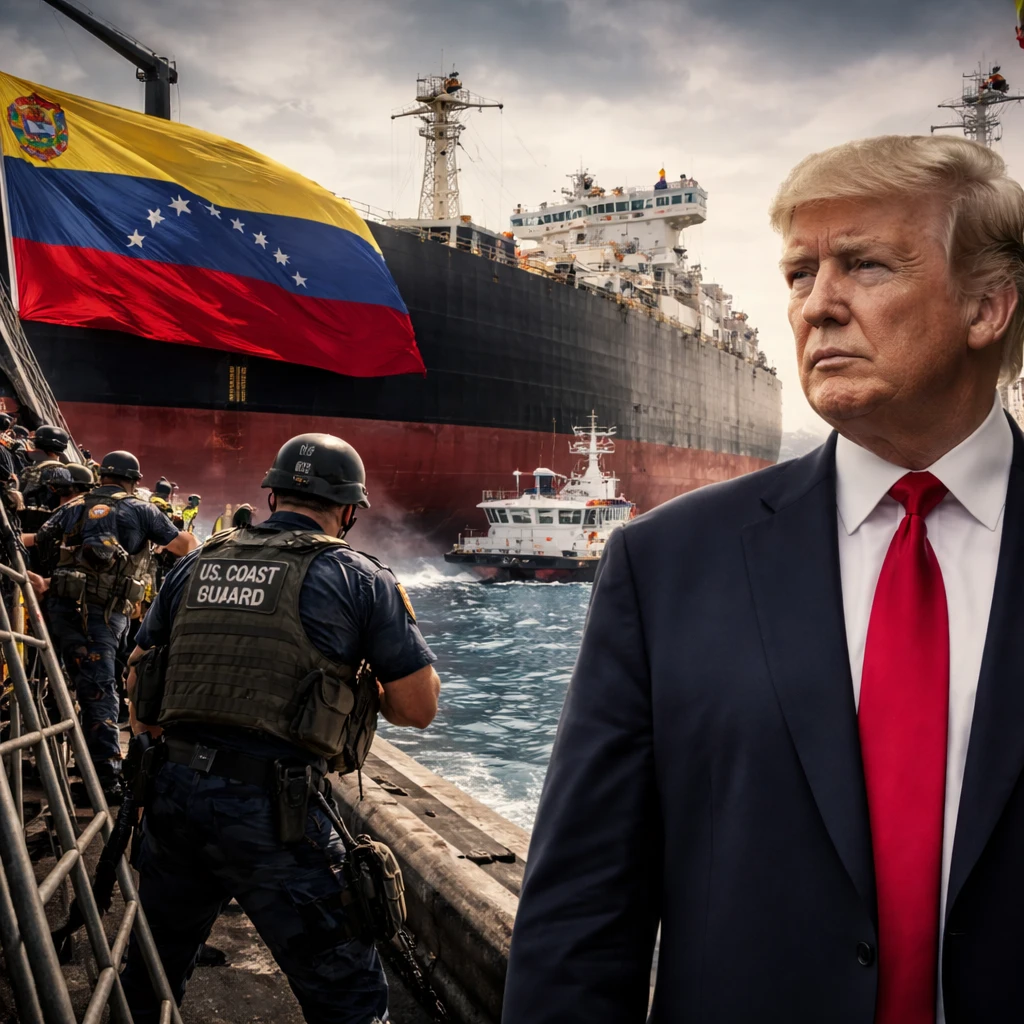

On Wednesday, the U.S. government executed a dual approach to strengthen its hold over Venezuelan oil resources, including the seizure of two sanctioned tankers carrying petroleum products and intentions to ease certain sanctions. These measures are designed to ensure that all Venezuelan oil exports align with legal frameworks and U.S. national security priorities.
This move followed a surprise covert operation that led to the removal of President Nicolás Maduro, signaling the U.S. administration's resolve to take a dominant role in managing Venezuela's vast crude reserves. According to the Energy Department, the administration's stance is unequivocal: oil movement in and out of Venezuela must strictly occur through sanctioned and approved channels.
Such control over the largest proven crude oil reserves worldwide grants the U.S. significant leverage in global energy markets. This level of intervention could allow the administration to influence global oil prices more directly, underpinning its broader strategic objectives in the region.
U.S. Secretary of State Marco Rubio elaborated that oil cargoes seized from tankers in the North Atlantic and Caribbean Sea are expected to be sold under a recently announced arrangement whereby Venezuela would supply up to 50 million barrels of oil for U.S. use. Rubio emphasized that the interim Venezuelan authorities support this deal, recognizing that cooperation with the U.S. is essential to sustain oil sales and avoid economic collapse.
"One of the seized vessels laden with oil in the Caribbean is central to the interim government's request," Rubio stated after briefing congressional members about the operations concerning Maduro's regime. "They acknowledge that effective oil movement and revenue generation hinges on alignment with the United States," he added.
Further enforcement actions included the seizure of the merchant ship Bella 1 by U.S. European Command, following its efforts to circumvent sanctions and evade a blockade on oil shipments around Venezuelan waters. Authorities revealed that the Bella 1 had been under pursuit for over a month prior to its capture in the North Atlantic for violating U.S. sanctions.
These assertive measures by the U.S. underscore a tightening grip on the Venezuelan oil supply chain, aimed at preventing illicit exports and channeling revenues through official avenues deemed acceptable by Washington.